
Trump, Xi, and Putin hold first trilateral summit in Shenzhen, focusing on nuclear arms and global conflicts
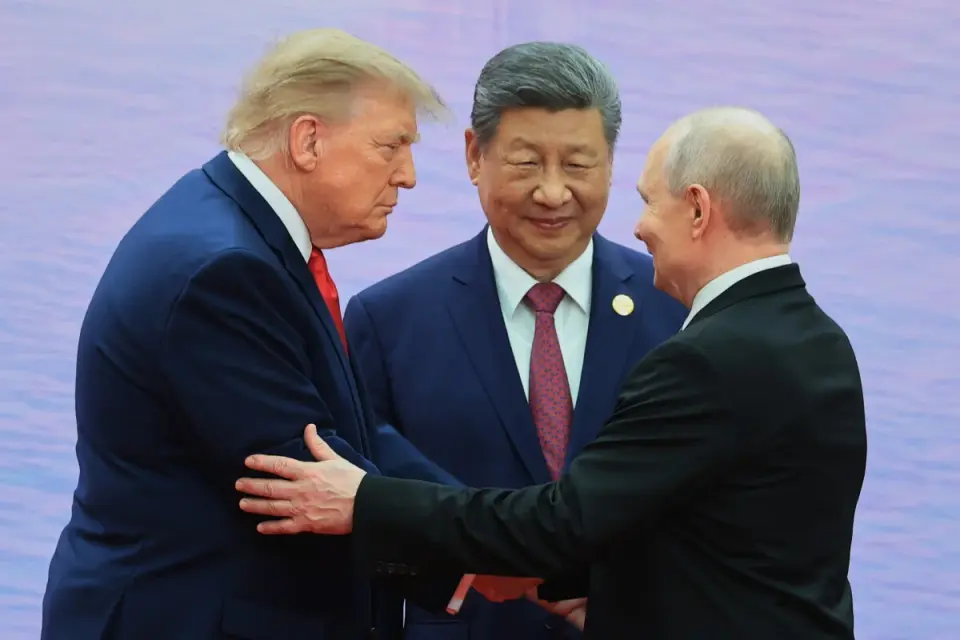
US President Donald Trump, Chinese President Xi Jinping, and Russian President Vladimir Putin held their first-ever trilateral meeting in Shenzhen, China, on November 19, 2026, on the sidelines of the Asia-Pacific Economic Cooperation (APEC) summit. The leaders discussed nuclear arms reduction, the Russia-Ukraine war, and the conflict in Iran. While Trump framed the meeting as a historic opportunity to reduce nuclear weapons and promote peace, analysts and officials from China and Russia expressed limited interest in binding new arms control agreements. The summit included separate bilateral talks between Trump and Xi, and Trump and Putin, but no major breakthroughs were expected due to conflicting strategic interests.
Key points
- The first-ever trilateral meeting between the leaders of the US, China, and Russia took place in Shenzhen, China, on November 19, 2026, during the APEC summit.
- Trump emphasized the need to reduce nuclear weapons, stating the three nations are 'uniquely positioned' to do so, while Xi and Putin expressed less interest in new limitations.
- The last US-Russia nuclear arms pact, New START, expired in February 2026, and Trump has sought a new agreement that includes China.
- China has approximately 600 nuclear warheads, compared to over 5,000 each for the US and Russia, making it less motivated to accept new limits.
- The leaders also discussed the Russia-Ukraine war, the conflict in Iran, and trade issues, including US agricultural exports and rare earth minerals.
- Trump and Xi held a separate one-on-one meeting before the trilateral session, with Trump praising their friendship and discussing oil shipments through the Strait of Hormuz.
Background
The meeting follows the expiration of the New START treaty in February 2026 and occurs amid ongoing conflicts in Ukraine and Iran. Previous US-China and US-Russia talks have failed to yield significant progress on nuclear arms or conflict resolution. The summit is part of a broader pattern of Trump prioritizing personal diplomacy over multilateral frameworks, as noted in earlier coverage of his interactions with Xi and Putin.
How outlets are covering it
AP News and CNBC highlight Trump's emphasis on nuclear arms reduction and his framing of the meeting as historic, while NBC News notes the lack of interest from China and Russia in new arms control agreements. AP and NBC both mention the limited motivation for China to accept limits due to its smaller arsenal. CNBC and NBC note the separate bilateral talks and the focus on trade and AI tensions. AP and NBC emphasize the lack of major breakthroughs expected, while CNBC highlights Xi's call for 'correct' international diplomacy. All sources agree on the historic nature of the meeting but differ on the likelihood of substantive outcomes, with NBC and AP being more skeptical of immediate progress.
Why it matters
The trilateral meeting represents a significant shift in global diplomacy, as the three largest nuclear powers engage in direct talks on arms control and conflict resolution. The outcome could influence future negotiations on nuclear arms, the Russia-Ukraine war, and US-China trade relations. The meeting also highlights the growing multipolar order and the potential for great power politics to shape global security and economic policies.
What to watch
The US and China are expected to continue negotiations on trade and AI, with a trade truce set to expire by January 10, 2027. Trump and Xi are scheduled to meet again in December at the G20 summit in Florida. The outcome of the nuclear arms discussions could lead to further bilateral or multilateral negotiations, though major breakthroughs are not expected in the short term. The Russia-Ukraine war and the conflict in Iran will remain key issues in future diplomatic engagements.
- Nuclear arms and ending wars in Iran and Ukraine will top the agenda at Trump-Xi-Putin meeting AP News
- Trump says U.S., China, Russia ‘uniquely positioned’ to discuss reducing nuclear weapons at historic meeting CNBC
- China Airport Greetings Show How Xi Views Trump, Putin, Takaichi Bloomberg
- Live Updates: Trump, Xi and Putin to Hold First-Ever Joint Meeting at China Summit The New York Times
- Trump pushes for three-way nuclear deal as Russia and China show little interest NBC News
Want the full story? Read the original reporting
Read on AP News