Tag

Account Takeover

All articles tagged with #account takeover

Fider 0.40.0 Patch Closes Critical OAuth Account Takeover Flaw
cybersecurity6 hours ago

Fider 0.40.0 Patch Closes Critical OAuth Account Takeover Flaw

Fider versions prior to 0.40.0 contain a critical vulnerability (CVE-2026-136165) allowing unauthenticated attackers to hijack accounts, including those of tenant administrators, by linking Google OAuth identities with unverified email addresses. The flaw, rated 9.1 on the CVSS 4.0 scale, exploits improper authentication in the OAuthToken handler. A patch is available in version 0.40.0.
EUSurvey 1.6 Critical Flaw Lets Attackers Reuse Reset Links for 24 Hours
security22 hours ago

EUSurvey 1.6 Critical Flaw Lets Attackers Reuse Reset Links for 24 Hours

A critical vulnerability in EUSurvey versions 1.6 and earlier allows attackers to hijack accounts by reusing valid password reset links. The flaw, identified as CVE-2026-101864, stems from a weak recovery mechanism that fails to invalidate reset codes after a password change. Attackers can exploit this to lock out legitimate users and gain unauthorized access.

n8n Patched for High-Severity Account Takeover via Invitation Endpoint
security22 hours ago

n8n Patched for High-Severity Account Takeover via Invitation Endpoint

n8n released versions 1.123.90 and 2.14.0 to fix a high-severity vulnerability (CVE-2026-130166) that allowed authenticated members to hijack pending user accounts. The flaw, rated 7.7 on the CVSS 4.0 scale, stemmed from the invitation acceptance endpoint accepting user IDs without a signed token, enabling attackers to reset passwords and assume administrative roles if the invitation included admin privileges.

Weblate 2026.11 Patch Fixes Unicode Email Flaw Enabling Account Takeover
cybersecurity1 day ago

Weblate 2026.11 Patch Fixes Unicode Email Flaw Enabling Account Takeover

Weblate has released version 2026.11 to address a high-severity vulnerability (CVE-2026-134838) that allowed unauthenticated attackers to hijack accounts. The flaw exploited case-insensitive Unicode email matching in the password reset process, enabling attackers to intercept reset links sent to lookalike mailboxes. The issue, rated 7.4 on the CVSS 3.1 scale, affected all versions prior to 2026.11 and required no prior authentication or user interaction.

WPO365 Plugin Flaw Allows Unauthenticated Login via OIDC Bypass
cybersecurity2 days ago

WPO365 Plugin Flaw Allows Unauthenticated Login via OIDC Bypass

A critical vulnerability in the WPO365 WordPress plugin, affecting versions prior to 45.0, allows unauthenticated attackers to take over accounts, including administrator roles. The flaw stems from a failure to verify that Microsoft ID tokens were issued for the site's specific application and tenant when multi-tenant sign-in is enabled with an empty allowed tenant list. Attackers can exploit this by presenting tokens issued to applications they control, bypassing authentication entirely. The issue was disclosed on November 22, 2026, and a patch is available in version 45.0.

Mailflare Patch Fixes High-Severity Host Header Injection in Password Reset
cybersecurity2 days ago

Mailflare Patch Fixes High-Severity Host Header Injection in Password Reset

Mailflare has patched a high-severity vulnerability (CVE-2026-134654) in its password reset mechanism. The flaw allowed unauthenticated attackers to inject malicious Host headers, poisoning reset links to steal single-use tokens and take over accounts if the APP_URL variable was unset. The fix is available in commit 48957fb.

Beyond Passwords: Six Vectors for Account Takeover in 2026
technology24 days ago

Beyond Passwords: Six Vectors for Account Takeover in 2026

Cybersecurity expert Kurt Knutsson warns that stolen passwords are no longer the primary method for account breaches. Attackers now exploit active login sessions, SIM swaps, MFA fatigue, malware, malicious app permissions, and OAuth consent phishing. While passkeys mitigate traditional phishing, they do not protect against session hijacking or compromised devices. Users must regularly audit active sessions, connected apps, and recovery settings, as changing a password alone may not revoke unauthorized access established through other vectors.

Generative AI Enables Sophisticated Fake Login Pages to Bypass MFA
cybersecurity28 days ago

Generative AI Enables Sophisticated Fake Login Pages to Bypass MFA

Generative AI is lowering the barrier for creating highly convincing fake login pages that steal credentials and bypass multi-factor authentication. Attackers now use AI to replicate brand-specific login screens and tailor phishing messages to specific employees, making detection difficult. These tools can capture MFA codes or hijack active sessions via Adversary-in-the-Middle techniques, allowing access even when MFA is enabled. The 2026 Verizon Data Breach Investigations Report notes that phishing accounts for 44% of AI-assisted initial access techniques. Traditional email filters and security awareness training are increasingly ineffective against these rapid, customized attacks. Organizations are advised to adopt phishing-resistant MFA, such as FIDO2 security keys and passkeys, and implement browser-level protections to detect suspicious domains before users enter credentials. Continuous monitoring of authentication activity and strict least-privilege policies are also recommended to limit the impact of compromised accounts.

Keycloak Patched for Critical Flaw Allowing Unauthenticated Account Takeover
security3 months ago

Keycloak Patched for Critical Flaw Allowing Unauthenticated Account Takeover

Red Hat and the Keycloak project have released patches for a critical vulnerability (CVE-2026-18963) that allows unauthenticated attackers to take over any user account, including administrative ones, by exploiting a flaw in the password reset flow. The vulnerability, rated 9.1 on the CVSS scale, stems from improper state validation that bypasses the email action token requirement. Patches are available for upstream version 26.7.2 and specific Red Hat builds. No active exploitation has been confirmed, but temporary mitigation involves disabling the 'Forgot password' feature across all realms.

Chrome Deploys Silicon-Bound Credentials to Neutralize Session Cookie Theft
technology3 months ago

Chrome Deploys Silicon-Bound Credentials to Neutralize Session Cookie Theft

Google Chrome has introduced device-bound session credentials (DBSCs) in recent Windows and macOS updates to prevent attackers from stealing session cookies. By storing encryption keys in hardware security modules like TPMs or secure enclaves, the feature ensures that even if a cookie is stolen, it cannot be used to authenticate without the device's private key. Currently limited to a small user group, this measure addresses the rising threat of infostealer malware and man-in-the-middle attacks that bypass traditional two-factor authentication.

Zoom rolls out urgent Windows patches to block account takeover and privilege escalations
technology4 months ago

Zoom rolls out urgent Windows patches to block account takeover and privilege escalations

Zoom released security updates for Windows to fix a critical flaw (CVE-2026-53412, CVSS 9.8) in Zoom Workplace for Windows and related VDI components that could allow an unauthenticated attacker to take over accounts via network. The patch also addresses three high-severity issues (CVE-2026-53411, CVE-2026-53410, CVE-2026-53409) that could enable privilege escalation for authenticated users or via local access across Zoom Workplace, VDI, VDI plugin, and Zoom Rooms for Windows. Affected version details are provided for each product, and Zoom notes no active exploitation so far. The update also removes Meeting SDK for Windows from the affected scope. Users should install the latest versions to stay protected.

Hackers weaponize Meta's AI chat to hijack celebrity Instagram accounts
technology5 months ago

Hackers weaponize Meta's AI chat to hijack celebrity Instagram accounts

Hackers used a prompt-injection flaw in Meta's AI support chatbot to trigger email-address changes via password resets, enabling takeover and resale of high-value Instagram accounts before Meta pushed an emergency patch on May 29; the incident highlights security risks of AI agents with broad account-modification permissions, though accounts with MFA were more resistant.

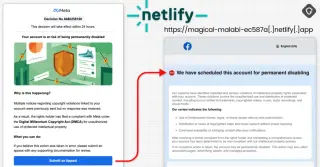
AppSheet-Driven Phishing Campaign Exposes 30,000 Facebook Accounts
technology6 months ago

AppSheet-Driven Phishing Campaign Exposes 30,000 Facebook Accounts

A Vietnamese-linked operation hijacks Facebook accounts by using Google AppSheet as a phishing relay, targeting Business account owners to capture credentials and 2FA data, with roughly 30,000 victim records spread across several clusters (Netlify, CAPTCHA-gated pages, and Canva-generated PDFs) that feed the stolen data to Telegram channels and facilitate resale on underground markets; the campaign illustrates evolving tactics and the repurposing of trusted platforms in a dark, criminal economy.

Lovense Faces Privacy Breach with User Email Leak and Account Risks
technology1 year ago

Lovense Faces Privacy Breach with User Email Leak and Account Risks

Lovense, a major maker of internet-connected sex toys, failed to fully fix security flaws that exposed users' email addresses and allowed account takeovers, risking privacy and safety, especially for vulnerable users like cam models. The bugs were disclosed by security researcher BobDaHacker, who received a bug bounty but went public after Lovense delayed fixing the issues for 14 months.