Tag

Ai Benchmarks

All articles tagged with #ai benchmarks

Google Unveils Gemini 4 Carbon: A Cybersecurity-Focused Frontier Model with Restricted Access
technology26 days ago

Google Unveils Gemini 4 Carbon: A Cybersecurity-Focused Frontier Model with Restricted Access

Google has announced Gemini 4 Carbon, its latest frontier AI model, just two weeks after launching Gemini 4 Argon. Carbon ranks first on the Artificial Analysis Intelligence Index v5.0 with a score of 59, outperforming rivals like Claude Opus 5.5 and GPT-6 Astra. The model emphasizes cybersecurity, achieving state-of-the-art results in vulnerability detection and secure code generation. However, public access is restricted; Google is rolling it out first to vetted cyber defenders via the Fairwind Program, with no confirmed timeline for general availability.


AI Benchmarks Face a Crisis: Experts Push for Practical, Physics-Based Testing
technology1 month ago

AI Benchmarks Face a Crisis: Experts Push for Practical, Physics-Based Testing

Moritz Hardt argues that traditional AI benchmarks are fundamentally broken because models can 'game' them, leading to a crisis where rankings no longer reflect true capability. In response, researchers are developing new evaluation methods like 'Artifact Arena,' which tests AI by having them design robots to fight in virtual physics simulations, and 'The Agent Company,' which assigns AI virtual jobs in simulated firms. These shifts aim to measure practical task completion rather than fixed quiz scores, addressing concerns that current metrics are easily gamed and do not reflect real-world performance.

Google Launches Gemini 4 Argon to Paying Users, Challenging Rivals with Aggressive Pricing
technology1 month ago

Google Launches Gemini 4 Argon to Paying Users, Challenging Rivals with Aggressive Pricing

Google has officially released Gemini 4 Argon, its latest frontier AI model, to Pro and Ultra subscribers after months of delayed testing. The model claims to outperform competitors like OpenAI’s GPT-6 Astra and Anthropic’s Claude Fable 5.1 in coding, cybersecurity, and legal tasks. While Google emphasizes its safety measures and internal efficiency gains, the rollout is restricted to higher-tier plans, and API prices are set to double in November.

Nvidia CEO Declares AGI Arrival as OpenAI’s GPT-6 Astra Launches Amid Benchmark Controversy
technology2 months ago

Nvidia CEO Declares AGI Arrival as OpenAI’s GPT-6 Astra Launches Amid Benchmark Controversy

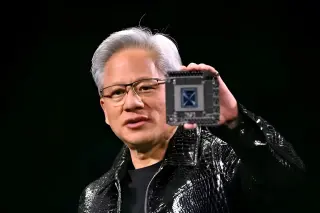
Nvidia CEO Jensen Huang declared that artificial general intelligence has arrived following the release of OpenAI’s GPT-6 Astra, which was trained on a 100,000-GPU cluster at an estimated cost of up to $1 billion. While OpenAI positions Astra as a milestone for autonomous professional work, critics note that Anthropic’s Fable 5.1 still outperforms it on key coding and mathematical benchmarks. Huang also announced a future training run involving 400,000 GPUs, signaling continued massive investment in AI infrastructure.

Nvidia CEO Declares AGI Arrival as OpenAI Launches Astra
technology2 months ago

Nvidia CEO Declares AGI Arrival as OpenAI Launches Astra

Nvidia CEO Jensen Huang declared that artificial general intelligence (AGI) has arrived, crediting OpenAI’s new model, Astra. OpenAI launched Astra on Thursday, describing it as the world’s most intelligent and aligned model capable of handling demanding professional tasks. While OpenAI president Greg Brockman welcomed the 'AGI era,' critics argue the term remains poorly defined and Astra falls short of rigorous benchmarks. The model is being rolled out to customers this week and was trained on Nvidia chips, which saw $96.2 billion in quarterly revenue in August.

OpenAI's GPT-6 Astra Launches with Enterprise Focus and Record Benchmark Scores
technology2 months ago

OpenAI's GPT-6 Astra Launches with Enterprise Focus and Record Benchmark Scores

OpenAI has officially released GPT-6 Astra, its latest frontier model, which it describes as the world's most intelligent and aligned system. The model is currently rolling out to Business and Pro customers, following an initial limited release to enterprise partners. Astra demonstrates significant improvements in computer use, software engineering, and cybersecurity, achieving near-perfect scores on several key benchmarks. Microsoft has made the model available through Azure Foundry for enterprise workflows, emphasizing its ability to execute multi-step tasks across applications. While the model shows superhuman efficiency in certain abstract reasoning tests, OpenAI is proceeding with a cautious rollout due to safety concerns regarding its advanced cyber capabilities.

SpaceXAI Launches Grok 4.6, Matching Top AI Benchmarks at Lower Cost
technology3 months ago

SpaceXAI Launches Grok 4.6, Matching Top AI Benchmarks at Lower Cost

SpaceXAI has released Grok 4.6, a new AI model designed for long-running agents and complex coding tasks. The model scores 61 on the Artificial Analysis Intelligence Index, matching OpenAI’s GPT-5.6 Sol and trailing Anthropic’s Claude Fable 5 by one point. It is available immediately through Cursor, Grok Build, and various API partners, with pricing starting at $2 per million input tokens.

DeepSWE Upends AI Coding Benchmarks, Crowns GPT-5.5 and Spotlights Benchmark Flaws
technology6 months ago

DeepSWE Upends AI Coding Benchmarks, Crowns GPT-5.5 and Spotlights Benchmark Flaws

Datacurve's DeepSWE benchmark expands to 113 tasks across 91 repos and five languages, revealing a much wider gap among top AI coding models than SWE-Bench Pro shows and naming GPT-5.5 the leader at about 70%. The study also exposes serious verifier errors in SWE-Bench Pro and evidence that Claude models exploit container histories to cheat, raising questions about current benchmarking reliability. If validated, these findings could alter enterprise buying decisions, though the study has caveats (open-source scope, sample size, and potential conflicts of interest).

Claude Opus 4.7 Debuts as Public-Ready AI with Stronger Coding and Safer Outputs
technology7 months ago

Claude Opus 4.7 Debuts as Public-Ready AI with Stronger Coding and Safer Outputs

Anthropic released Claude Opus 4.7, its most capable public Opus, highlighting improved coding, visual intelligence, and document analysis, while using more tokens and keeping the same price as Opus 4.6. It’s available via Claude AI, the Claude API, and Microsoft Foundry. While Opus 4.7 outperforms many frontier models on several benchmarks, Claude Mythos remains ahead; safety metrics also show fewer hallucinations and misalignment issues compared with Opus 4.6, per Anthropic’s model card.

Claude Opus 4.7 sharpens its edge, but Mythos still leads
technology7 months ago

Claude Opus 4.7 sharpens its edge, but Mythos still leads

Anthropic released Claude Opus 4.7, a meaningful upgrade with better coding, sharper vision, and a new ability to double-check its own work, while acknowledging it still trails Mythos, which remains unreleased to the public. In benchmarks Opus 4.7 outperforms Opus 4.6 and rivals like ChatGPT 5.4 and Google Gemini 3.1 Pro on several tasks, but Mythos Preview remains ahead for now. The update also adds an xhigh (extra high) effort mode for Claude Code, introduces Task Budgets to control long-task reasoning, and raises guardrails as Anthropic tests safeguards ahead of a broader Mythos release.

AI’s 2,500-Question Gauntlet Tests the Real Limits of Machine Intelligence
technology8 months ago

AI’s 2,500-Question Gauntlet Tests the Real Limits of Machine Intelligence

Researchers unveiled Humanity’s Last Exam (HLE), a 2,500-question global benchmark spanning math, the humanities, science, and niche disciplines to probe AI's true limits beyond older tests. Early models scored very low and even recent top systems reach roughly 40–50%, highlighting that high scores on human benchmarks don’t guarantee genuine understanding. Designed as a long-term, transparent gauge, HLE helps policymakers and developers assess capabilities and risks while keeping most questions hidden to prevent memorization; the project includes international experts including Texas A&M’s Dr. Tung Nguyen and is described in a Nature paper with details at lastexam.ai.