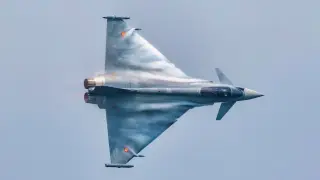
The Eurofighter consortium is targeting over 200 new aircraft sales, with potential deals from Turkey, Saudi Arabia, and Austria, despite losing multiple tenders to the F-35 and facing criticism over combat performance.
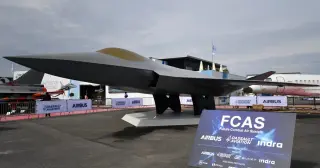
Germany must choose between joining the UK-led Global Combat Air Programme or launching a new project with Sweden and Spain after the collapse of its joint fighter initiative with France. While the defense ministry favors the Swedish option for industrial control, the chancellery leans toward London for diplomatic stability. Airbus is pushing for a swift decision as talks with BAE Systems begin.
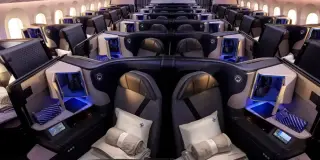
A surge in demand for premium travel has driven airlines to install complex new business-class suites, but regulatory certification delays are causing significant operational headaches. Carriers like United, American, and Lufthansa have faced months-long waits for approval, forcing them to fly with sliding doors locked open or seats disabled. Boeing and Airbus report that these delays are holding back aircraft deliveries, as manufacturers cannot hand over planes until seat certifications are finalized. While regulators acknowledge the backlog, they emphasize that safety and evacuation standards must be strictly met, leading to a temporary mismatch between production capacity and customer delivery schedules.
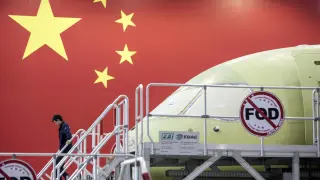
China's state-owned COMAC launched its first scheduled international commercial flight on Wednesday, operating an Air China C919 from Beijing to Ulaanbaatar, Mongolia. This marks the first time the narrow-body aircraft has operated outside Chinese territory. While the move signals progress in Beijing's push to challenge Boeing and Airbus, the C919 remains heavily reliant on foreign components and lacks certification from major Western regulators, limiting its global market reach.
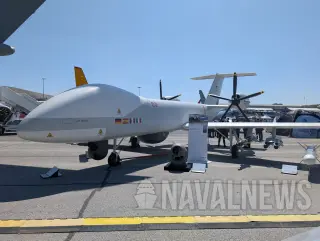
Airbus has signed a Memorandum of Understanding with Kawasaki Heavy Industries to study a Japanese anti-submarine warfare variant of the Eurodrone, leveraging Japan’s observer status in the program. The collaboration would explore configurations and the integration of Japanese sensors and effectors, plus potential production and sustainment work shares, enabling sovereign operation if pursued. The Eurodrone, developed by Germany, France, Italy and Spain with India as an observer and OCCAR oversight, targets a 2029 first flight and a broad maritime mission profile including ASW.
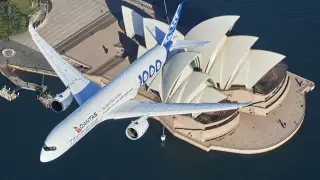
Airbus and Qantas are pursuing 10,000-nautical-mile nonstop flights using the A350-1000ULR, adding a 20,000-liter fuel tank and a higher takeoff weight to enable ~22-hour routes such as Sydney–New York and London–Sydney; a first test flight occurred in June 2026 near Toulouse, with commercial service targeted for 2027, featuring a 238-seat cabin (140 economy, 40 premium economy, 52 business, 6 first-class) and a Wellbeing Zone for long-haul comfort.
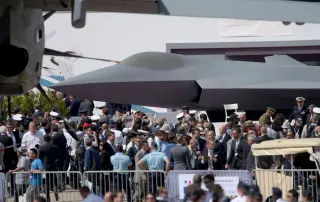
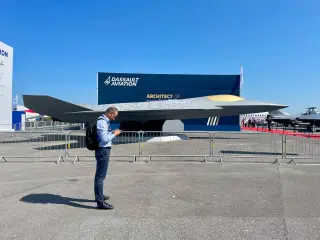
German and Spanish FCAS leaders urge continued funding to preserve sixth-generation fighter expertise after Berlin and Paris dropped the fighter segment, warning that halting support would erode European capabilities; they advocate for a new multinational setup—potentially joining GCAP or an Airbus-led project—and keep the door open to partners like Saab, while Germany weighs options such as purchasing F-35s, GCAP membership, or a European-led program.
With FCAS dead, Germany is weighing three options to replace its next-gen fighter: buy additional F-35s as a bridge to a future capability, join an existing sixth-generation program (likely GCAP), or start a German-led program with Airbus; defense officials cited IP disputes with Dassault and diverging requirements as the key factors behind FCAS's demise.
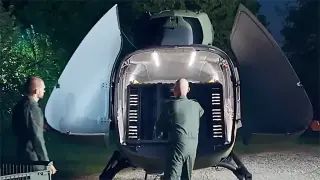
Airbus unveiled the U145, an autonomous, uncrewed variant of the H145 aimed at high-volume cargo with a 2,600-pound payload and no cockpit. The company plans a late-2026 first flight with a safety pilot and an entry into service in early 2030s, targeting civil and military cargo roles including armed scouting and surveillance. Airbus is also exploring a drone mothership concept with MBDA and crewed–uncrewed teaming, leveraging the H145’s commonality to reduce costs while expanding Europe’s sovereign autonomous rotorcraft capabilities.
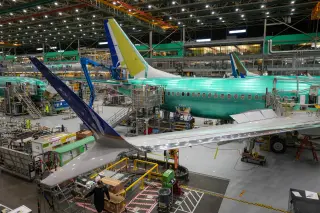
Boeing is studying increasing 737 output beyond the current 63 jets per month toward about 70, possibly near Airbus’s 75-jet target for 2027, a plan that would test the shared supply chain and airlines’ ability to absorb deliveries; the move is early-stage and may not be adopted.
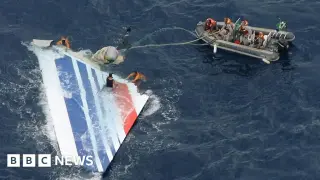
A Brazilian father whose son died in the 2009 Air France Flight 447 crash says justice remains elusive even after Airbus and Air France were found guilty, as families continue seeking accountability and memory for the 228 victims.
A Paris Court of Appeal has convicted Air France and Airbus of involuntary manslaughter in the 2009 Rio‑Paris AF447 crash that killed 228 people, issuing €225,000 fines to each company and signaling accountability despite prior acquittals; both firms said they will appeal as families welcomed the ruling but noted no executives were charged.
A Paris appeals court found Air France and Airbus guilty of corporate manslaughter in connection with the 2009 AF447 crash that killed 228 people, imposing the maximum €225,000 fines on each company; the verdict closes a 17-year legal battle with families seeking recognition, while further appeals are anticipated and could prolong the case.
France's Paris Court of Appeal convicted Airbus and Air France of manslaughter in the 2009 AF447 crash that killed 228 people, ruling them solely responsible and ordering €225,000 per passenger; the penalties are largely symbolic as both companies plan to appeal the 2023 acquittal.
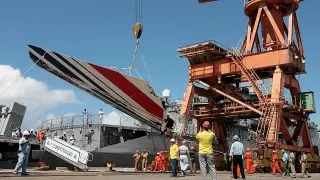
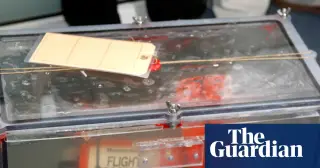
France’s Paris Appeals Court has found Air France and Airbus solely responsible for the 2009 AF447 crash that killed 228 people, after an eight‑week trial, and ordered the maximum fines of €225,000 for each company; Airbus said it would appeal. The verdict follows a decade-long search for the wreckage and black boxes and marks a rare acknowledgment of accountability in a major aviation disaster.