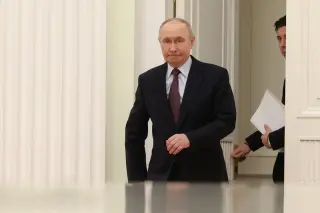
Ahead of September parliamentary elections, Moscow cracks down on anti‑war voices, barring candidates who oppose the Ukraine war and targeting figures like Boris Nadezhdin; authorities accuse dissenters of extremism while Putin’s approval falters due to economic strains and Ukraine’s drone strikes, signaling intensified political control amid public dismay over the war.
Nicaragua’s Daniel Ortega said at a rally that the country is moving toward not holding a presidential election next year, as he tightens his grip on power with co-president Rosario Murillo and constitutional reforms that extend terms. The announcement follows years of crackdowns on opponents and a disputed 2021 vote, drawing strong condemnation from the United States and others who say the regime is eroding democracy and human rights.
Nicaragua’s President Daniel Ortega announced there will be no future elections, solidifying a two-decade grip on power with his wife Rosario Murillo as co-president after constitutional reforms; critics describe the move as a dynastic, one-party dictatorship, with opposition leaders exiled or jailed and the 2021 vote widely disputed.
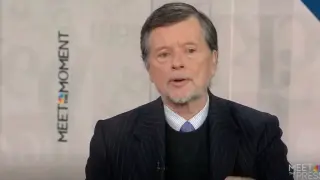
Ken Burns told Meet the Press that the drafters of the Constitution would be abjectly disappointed by how far the United States has drifted toward authoritarian power, noting the executive has expanded while Article I's power has weakened. While praising progress on rights, he warned that current division and anti-education rhetoric threaten democracy and urged lifelong learning and a marketplace of ideas to sustain a healthy republic, saying the founders anticipated such risks and would want stronger checks on power.
On Meet the Press, Ken Burns says the Founders would be abjectly disappointed by today’s concentrated executive power and partisan division, warning of authoritarian temptations, while noting progress on rights and urging lifelong learning as a safeguard for democracy.
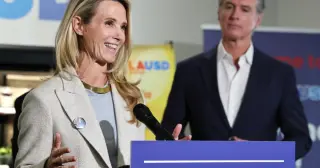
LA Times columnist Anita Chabria argues that the DOJ probe of Jennifer Siebel Newsom reflects a forward‑looking, selective prosecution aimed at neutralizing Gavin Newsom as a potential 2028 rival, signaling a more authoritarian tactic than past grievances; the piece cites Harvard’s Steven Levitsky and notes that right‑wing media have attacked Siebel Newsom, while Newsom frames the investigation as baseless and urges resilience to defend democracy.
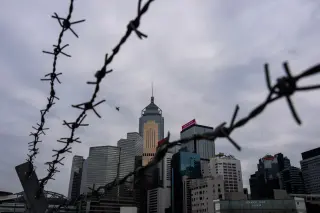
The Washington Post’s Editorial Board argues that Hong Kong’s national security law, already suppressive, is being intensified by Beijing’s push, expanding retroactive prosecutions for acts that didn’t exist as crimes when committed and deepening the coercive climate around civil rights and political life.
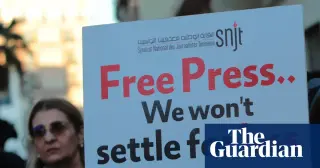
RSF’s World Press Freedom Index shows global press freedom at its lowest level in 25 years, with more than half of the 180 countries rated as “difficult” or “very serious” and less than 1% of people living in “good” conditions. The decline is driven by expansive national-security laws, restrictive legal tools, hostile politics, and a struggling media business model, impacting democracies as well as autocracies. The US drops to 64nd place; Russia under Putin uses anti-terror and other laws to curb reporting. Argentina and El Salvador are singled out for significant declines, and more than 220 journalists have been killed in Gaza since October 2023. The report calls for ending journalism criminalisation and SLAPPs, protecting reporters, and ensuring access during conflict, noting safety concerns in the UK and highlighting Syria’s notable improvement while Eritrea remains last.
Hungary’s parliamentary election pits Viktor Orban—backed by Donald Trump and Vladimir Putin—as he seeks to extend his 16-year rule, with polls suggesting he trails in the race. The outcome could influence Hungary’s EU relations and signal the reach of Trump’s global political movement.
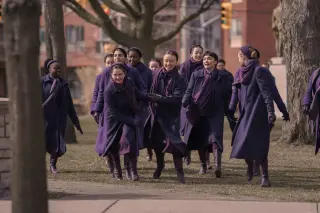
Monica Hesse argues that The Testaments, Hulu’s Handmaid’s Tale sequel, widens the scope by shifting to the enforcers—the Aunt Lydia who becomes regime architect, Agnes's journey from a Gilead plum to potential leader, and Daisy’s encounters with the Pearl Girls—probing how ordinary people are drawn into authoritarian power, and while it risks echoing the original’s missteps, it offers a sharper look at the narratives people tell to justify oppression.
More than 8 million people joined about 3,300 No Kings protests—the largest single-day demonstration in U.S. history—yet experts say lasting change comes from sustained, cross-movement organizing at local and national levels, using tactics like mutual aid, know-your-rights trainings, boycotts, walkouts, and policy advocacy to keep momentum going beyond the day of demonstrations.
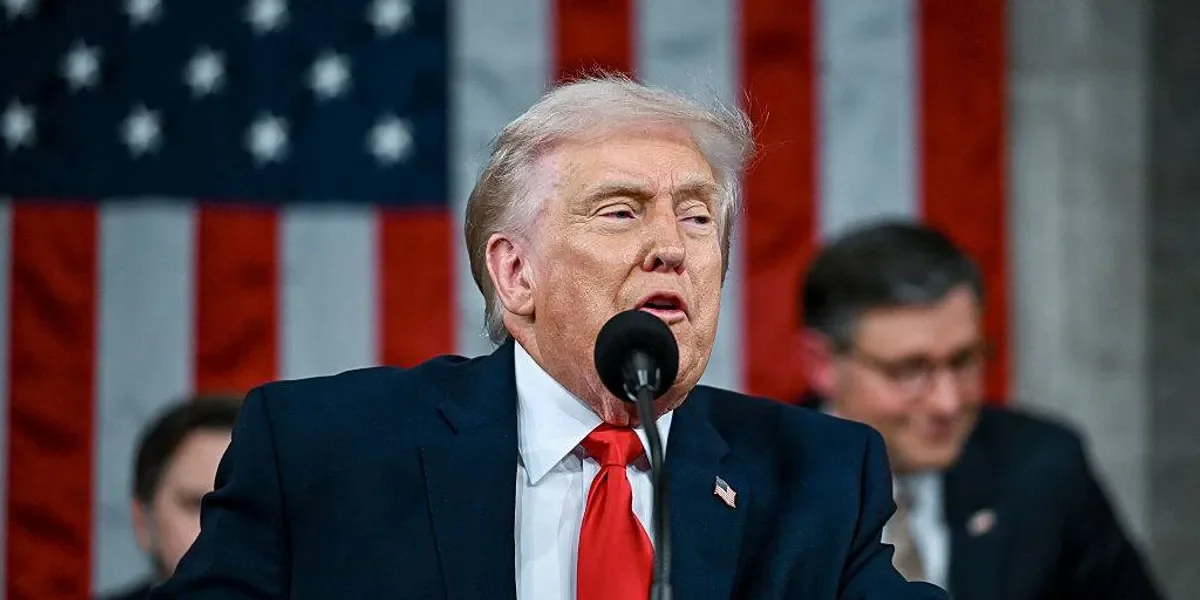
According to a Washington Post report, Trump allies are drafting an executive order that would let the president unilaterally ban mail-in ballots and voting machines ahead of the 2026 midterms, granting him extraordinary power over elections. Critics say it would be unconstitutional and undermine state control of elections, while watchdogs warn it could erode democracy, despite some signals of coordination with the White House.
Illinois Governor J.B. Pritzker used the State of the State to link the budget speech to a broader fight over democracy, invoking John Peter Altgeld’s progressive legacy to defend equal rights and criticize Trump-era policies, while detailing plans to ease housing and energy costs and noting Illinois’ economic resilience (GDP over $1.2 trillion) and recent debt relief. He urged Americans to love their country through empathy and everyday courage—citing community actions from Little Village bicyclists to churches and school parents—as the country’s best antidote to rising authoritarianism.
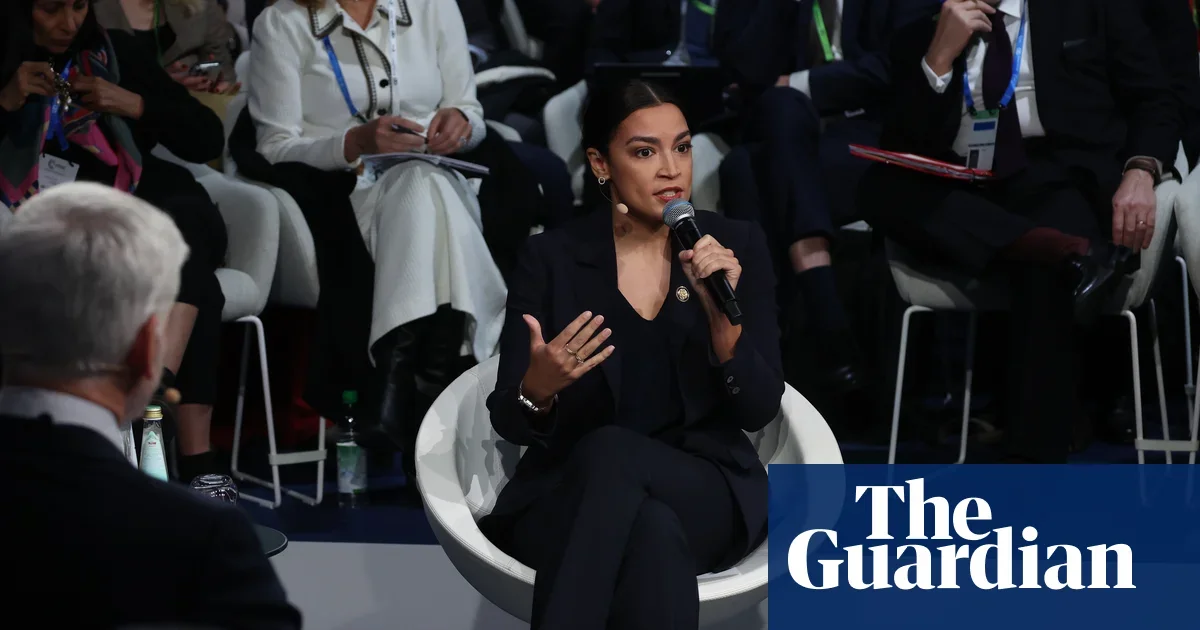
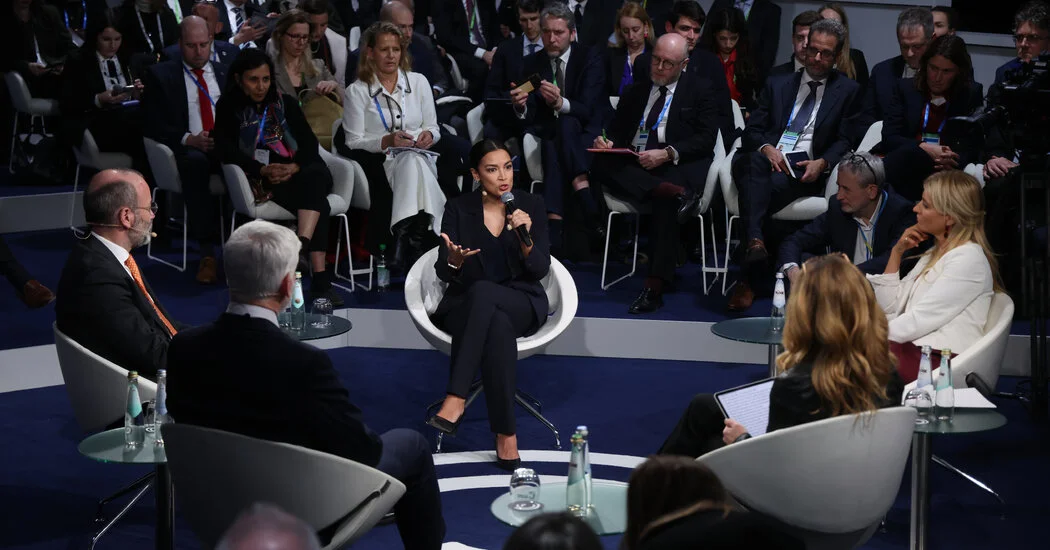
At the Munich Security Conference, Alexandria Ocasio-Cortez accused Donald Trump of tearing apart the transatlantic alliance and pursuing an 'age of authoritarianism,' urging a left-leaning, rules-based US foreign policy and addressing inequality to counter rising populism. She criticized U.S. actions from Maduro in Venezuela to threats against Greenland and the Iraq War, advocating a 'working-class-centered' approach to global affairs.
At Munich Security Conference, Ocasio-Cortez linked rising income inequality to the appeal of authoritarians and urged stronger Western alliances and domestic reforms, but faltered on foreign-policy specifics like Taiwan and Iran, underscoring her economic focus and relative inexperience on international crises.