Tag

Alopecia Areata

All articles tagged with #alopecia areata

WWE NXT Star Thea Hail Shaves Head Live to Address Alopecia Diagnosis
entertainment1 day ago

WWE NXT Star Thea Hail Shaves Head Live to Address Alopecia Diagnosis

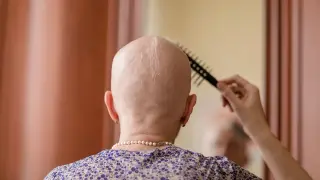
On the November 24, 2026, episode of WWE NXT, 23-year-old wrestler Thea Hail shaved her head live on television after delivering an emotional monologue about her alopecia areata diagnosis. The act followed a storyline feud with Chantel Monroe, who had mocked Hail for her hair loss. Hail used the moment to reject societal pressure for perfection, stating she would not let cruelty make her ashamed. The segment concluded with Hail embracing the condition, receiving cheers from the audience, and being commended by NXT overseer Shawn Michaels.
Upadacitinib Shows 100% Hair Restoration Potential in Severe Alopecia Trials
health2 months ago

Upadacitinib Shows 100% Hair Restoration Potential in Severe Alopecia Trials

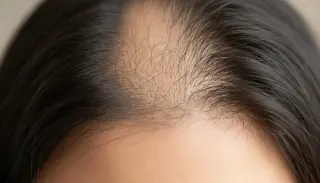
A new study in JAMA Dermatology confirms that upadacitinib, an arthritis drug, effectively treats severe alopecia areata. In two Phase 3 trials, 55% of patients on the higher dose achieved 80% scalp coverage, with some reaching full regrowth. The treatment showed early efficacy and improved quality of life, though long-term safety data remains limited.

Rinvoq Trial Shows 23% Complete Hair Regrowth in Severe Alopecia
health2 months ago

Rinvoq Trial Shows 23% Complete Hair Regrowth in Severe Alopecia

Upadacitinib, a JAK inhibitor originally developed for rheumatoid arthritis, has demonstrated significant efficacy in treating severe alopecia areata. Phase 3 trials published in JAMA Dermatology indicate that 55% of patients on the 30 mg dose achieved 80% scalp coverage within 24 weeks, with up to 23% experiencing complete hair regrowth. The drug is already approved in Europe but remains under FDA review in the United States.

Arthritis drug upadacitinib restores full hair coverage in 20% of severe alopecia patients
health2 months ago

Arthritis drug upadacitinib restores full hair coverage in 20% of severe alopecia patients

Two international Phase 3 trials demonstrate that upadacitinib, an oral JAK inhibitor originally developed for arthritis, significantly reverses severe alopecia areata. Published in JAMA Dermatology on August 12, 2026, the study found that 55% of patients achieved 80% scalp coverage within 24 weeks, with 20% reaching complete hair restoration. While the drug is already approved in Europe, it remains under FDA review in the US, and researchers caution that long-term safety data is still required.

Q32’s IL-7R target yields durable alopecia signals, lifting shares
business4 months ago

Q32’s IL-7R target yields durable alopecia signals, lifting shares

Q32 Bio’s phase 2 readout of bempikibart for alopecia areata shows 30.3% SALT-20 and 33.3% SALT-50 responses by 36 weeks (40% in a prespecified modified ITT of 25 patients), with early durability signals after off-drug periods and no treatment-related serious adverse events; the most common adverse event was mild injection-site reactions. The news sparked a roughly 63% intraday stock gain, opening at $18.31 from $11.21. Q32 also announced a registration-directed program for bempikibart in 1H 2027 and continues to market the therapy as a potentially more durable option than JAK inhibitors. The asset is licensed from Bristol Myers Squibb after a prior phase 2 failure in atopic dermatitis, which led the company to shift focus to alopecia areata.

Nektar's rezpeg shows promising hair regrowth in alopecia, moving toward Phase 3
biotech7 months ago

Nektar's rezpeg shows promising hair regrowth in alopecia, moving toward Phase 3

Nektar Therapeutics reported that extended treatment with its experimental drug rezpeg led to meaningful hair growth in severe alopecia areata after one year, with 27% of participants reaching SALT Score 20 (80%+ scalp coverage). The response is comparable to or better than low-dose Olumiant, though not tested head-to-head, and Nektar plans to begin a Phase 3 trial later this year.

"Proven Methods to Combat Hair Loss: Backed by Science"
health3 years ago

"Proven Methods to Combat Hair Loss: Backed by Science"

Science-backed methods to combat hair loss include platelet-rich plasma (PRP) injections to wake up dormant hair follicles, low-level laser therapy (LLLT) to stimulate hair growth, topical Minoxidil and oral Finasteride to treat pattern baldness, and JAK inhibitors to target alopecia areata, an autoimmune condition causing sudden hair loss. While a cure for baldness remains elusive, advancements in understanding and treating different forms of hair loss offer hope for those seeking to combat this common issue.

FDA Approves Groundbreaking Hair Loss Drug for Adolescents and Adults
health3 years ago

FDA Approves Groundbreaking Hair Loss Drug for Adolescents and Adults

The FDA has approved LITFULO, a hair loss drug, to treat alopecia areata, an autoimmune disease that causes hair loss on the scalp, face, and body. The drug is approved for adults and adolescents aged 12 and over with severe alopecia areata. The drug inhibits two types of enzymes, blocking inflammatory signaling and cell-killing activity from T cells, which have been implicated in the development of alopecia areata. The clinical trial showed a statistically significant increase in hair coverage for those taking 50 mg of LITFULO compared to placebo.

Toddler diagnosed with alopecia areata due to autoimmune disorder.
health3 years ago

Toddler diagnosed with alopecia areata due to autoimmune disorder.

A 2-year-old girl was diagnosed with alopecia areata, an autoimmune condition that attacks hair follicles, causing bald spots and thinning eyebrows. While there is no cure for alopecia, some treatments are available, including steroid pills, creams, shots, and a new systemic treatment. However, options for children are limited, and some treatments have side effects. Hair regrowth is unpredictable, and some hairs may grow back white at first. Stress is a significant factor in alopecia flare-ups or initiation, and children with eczema have an increased risk of developing alopecia.