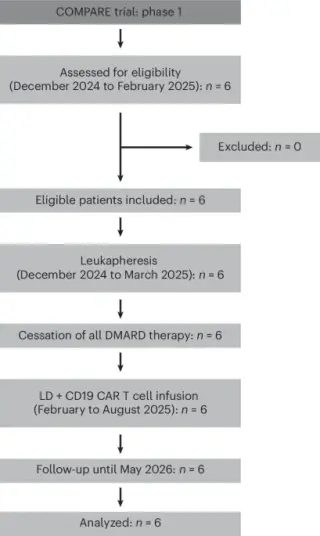
A patient with an autoimmune disease died after receiving an experimental CAR-T gene therapy from a Chinese biotech startup, the third fatality in China’s controversial and opaque trials, according to Endpoints News.
An as-told-to piece about Perelel cofounder Alex Taylor: after rapid leadership roles in publishing, mounting stress coincided with Hashimoto’s disease and pregnancy, prompting her to quit, shift to a new role at Free People Movement, and eventually cofound Perelel—bootstrapped through COVID to deliver pregnancy-focused supplements and later expand to perimenopause and IVF support. She now balances motherhood and leadership with routines like daily meditation, early bedtimes, reading fiction, and strict phone discipline to reduce stress.
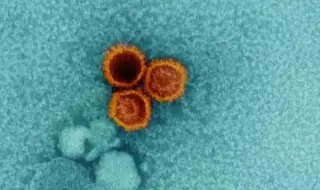
Nature study of 1,154 hospitalized COVID-19 patients shows severe illness can reactivate dormant viruses (11 viruses detected within 40 days), notably Anelloviridae linked to long COVID, while EBV and CMV reactivation in nasal/blood samples correlate with higher mortality and complications; findings suggest viral reactivation monitoring could help prognosticate and treat acute and long COVID, though causality isn’t proven and more research is planned.
Researchers analyzed over 1.1 million tissue-resident lung immune cells from 128 donors using single-cell RNA-seq, revealing that genetic risk factors shape lung immune cell function and can drive autoimmune and inflammatory disease; thousands of risk-associated genes are active in tissue cells but not in blood, and about 1,700 genes show sex-specific expression, suggesting sex-based factors in disease susceptibility.
A 12-year-old girl in Plymouth, England, endured six rounds of chemotherapy after doctors misdiagnosed her with Juvenile Dermatomyositis; the treatments were deemed unnecessary when a genetic test at Great Ormond Street Hospital showed she actually has Emory-Dreifuss muscular dystrophy (EDMD), a rare non-cancer condition. The correct diagnosis followed negative JDM tests, and her mother says financial pressures and test choices contributed to the error. The family has spent years in and out of hospital, with limited holidays or accessible housing, and EDMD currently has no cure.
Bryan Johnson, the longevity entrepreneur behind Blueprint, reveals he has autoimmune gastritis, an incurable condition causing stomach damage and anemia, discovered in May, and says he will pursue experimental treatments while continuing his health-optimization efforts.
Bryan Johnson, the billionaire biohacker famed for extreme anti-aging experiments, has disclosed he now has autoimmune gastritis, an incurable autoimmune disease that damages the stomach lining. He says he plans to decode the immune cells involved and pursue targeted therapies, while continuing his intensive health regimen and monitoring.
Bryan Johnson, founder of The Blueprint and Immortals longevity program, reveals he has autoimmune gastritis after more than a decade and roughly $2 million a year in health‑tracking and a 30‑person medical team. The condition destroys stomach parietal cells responsible for acid and intrinsic factor, impairing iron and B12 absorption and risking anemia and nerve damage, with no approved cure yet. Johnson is pursuing experimental immune therapies while noting that wearables and routine bloodwork can miss slow diseases, highlighting the limits of self‑tracking in predicting health outcomes.
Biohacker Bryan Johnson says he has autoimmune gastritis, diagnosed in May and disclosed in June; there is no approved cure, with treatment focusing on symptom relief and managing complications as researchers explore new therapies. Johnson and his team plan to pursue experimental approaches to cure, while he continues his high-cost biohacking regimen that includes numerous supplements and a home hyperbaric chamber.
Biohacker Bryan Johnson says he has autoimmune gastritis, an incurable condition linked to thyroid disease and iron deficiency. He plans ongoing monitoring (ferritin, iron, B12, gastrin), repeat biopsies, and experimental treatments while continuing his longevity-focused regimen, noting that standard care offers only management.
Two 28-year-old patients with severe neuromyelitis optica achieved relapse-free, treatment-free remission for 15–16 years after allogeneic hematopoietic cell transplantation (donor stem-cell transplant) that rebooted their immune systems; one now leads a normal life and has children, the other reports good quality of life with reduced disability. While the approach shows promise, it carries substantial risk and was performed in carefully selected, treatment-refractory cases; larger studies are needed to confirm safety and determine broader applicability.
A viral trend telling women to 'be a b-word' to avoid autoimmune disease has sparked a debate: while many link autoimmune diagnoses to stress and emotional suppression, experts say there’s no evidence that assertiveness prevents or reverses autoimmune conditions; the conversation highlights gendered emotional labor and the value of healthier boundaries to reduce chronic stress.
Joe Manganiello says he battled a deadly mystery illness for nearly a decade, endured brutal side effects from high-powered biological drugs, underwent surgeries that left him weak and scarred, and will detail the journey in his forthcoming memoir Bloodlines.
Joe Manganiello reflects on a seven-year battle with autoimmune illnesses that attacked his skin, thyroid, eyes, lungs and digestive system, causing chronic pain and a life-saving organ amputation; discussed in connection with his upcoming memoir Bloodlines, he says the period was the darkest of his life and hopes his story offers hope to others facing illness.
A CAR-T cell therapy that reprograms the immune system has put lupus into remission in early UK trials, with five of the first six patients in remission for more than 18 months and one showing improvement but a flare at 11 months. The approach destroys rogue B cells by using modified T cells and could extend to other autoimmune diseases, though long-term durability and broader efficacy remain to be seen.