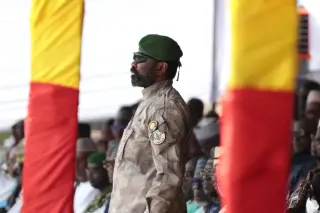
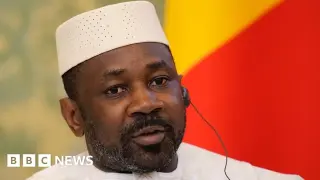
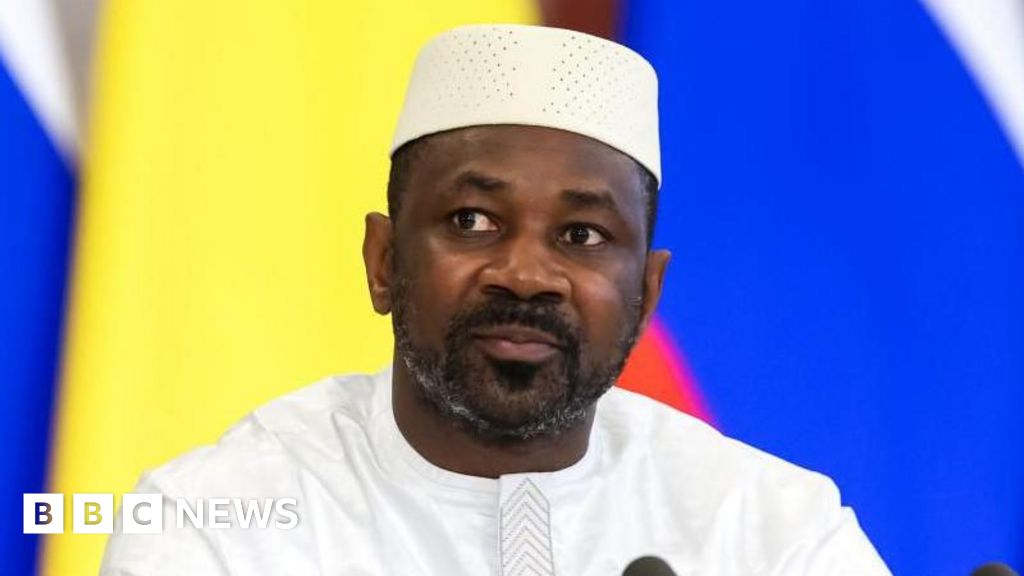
Mali's junta chief Gen. Assimi Goita has taken on the defense minister's duties, signaling a consolidation of power as he remains the head of the ruling military government and attends the funeral of former defense minister Sadio Camara in Bamako.
Gen. Assimi Goïta has been appointed Mali’s defence minister after the previous holder, Sadio Camara, was killed in a suicide truck bombing, a move aimed at consolidating power amid a mounting jihadist-separatist offensive and a broad security crisis in the Sahel.
An explainer of Mali’s security crisis: the state, led by Assimi Goita with Prime Minister Abdoulaye Maiga, faces a patchwork of armed groups (JNIM, ISSP, FLA) and Russian-backed forces. Following the killing of Defence Minister Sadio Camara, leaders such as Iyad Ag Ghaly and Amadou Khoufa (JNIM), Alghabass Ag Intalla and Bilal Ag Cherif (FLA), and Abu al-Bara al-Sahrawi (ISSP) compete for control, while Russia’s Africa Corps under generals Andrey Averyanov and Vladimir Selivyorstov supports the Malian army. The conflict centers on northern towns like Kidal, Gao, Timbuktu and Menaka, with Mali steering toward closer ties with Russia and away from France/ECOWAS.
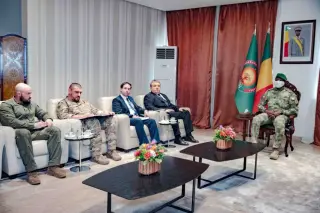
Mali’s ruling military junta led by Assimi Goita met with Russia’s ambassador in Bamako after a weekend of coordinated attacks by Islamic militants and separatists, signaling closer ties with Moscow as Bamako seeks support for its security challenges.
Mali’s military leader Assimi Goita resurfaced for the first time since weekend rebel attacks that killed Defence Minister Sadio Camara, meeting Russia’s ambassador as Moscow touts its Africa Corps mercenaries’ role in allegedly preventing a coup and maintaining stability, while fighting with Tuareg rebels and al-Qaeda-linked groups continues around Bamako and in Kidal.
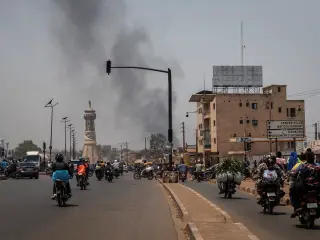
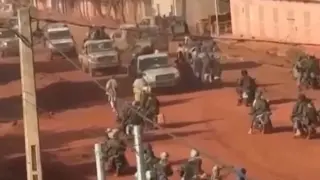
Gunmen launched a coordinated assault across Mali, hitting Bamako and towns including the Kati base, with heavy weaponry and explosions reported as the army fights what it calls terrorist groups amid a decade of unrest and a security apparatus backed by foreign influence.
Mali's military leader Assimi Goïta has been granted a five-year presidential term by the transitional parliament, allowing him to stay in power until at least 2030 without elections, amid concerns over repression and the ongoing conflict with jihadist groups.
The military government in Mali has adopted a new constitution that grants sweeping powers to President Assimi Goïta and the armed forces, including the ability to dictate government policy and dissolve parliament. The constitution also establishes a senate and demotes French from an official to a working language. Critics fear that these changes make it easier for the military to renege on their promise of returning power to civilian leaders after the 2024 presidential election. The opposition movement has denounced the reforms, citing irregularities and violations of the law in the recent referendum.