
Tag

Automotive Security

All articles tagged with #automotive security

COVESA Patches Low-Severity Buffer Read Flaw in Open1722 AVTP Module
cybersecurity14 hours ago

COVESA Patches Low-Severity Buffer Read Flaw in Open1722 AVTP Module

COVESA has released version 0.9.8 of the Open1722 software stack to fix an out-of-bounds read vulnerability identified as CVE-2026-136616. The flaw exists in the Avtp_Vss_CalcVssPathLength function within the VSS.c file, where the code reads an INTEROP path-length prefix without validating the declared ACF message length. Attackers can exploit this by sending 12-byte INTEROP-mode VSS frames or using prefix values 0xFFFE and 0xFFFF to wrap uint16 lengths, potentially causing buffer overwrites. The vulnerability is rated Low severity with a CVSS 4.0 score of 2.3 and a CVSS 3.1 score of 3.1, requiring adjacent network access and high attack complexity. It impacts availability but does not compromise confidentiality or integrity. The issue is classified as CWE-125, and the fix is available in the latest release.
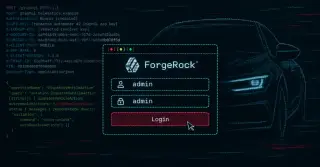

Forgotten Default Passwords in Identity Platform Exposed Two Automakers’ Apps to Remote Vehicle Control
technology16 days ago

Forgotten Default Passwords in Identity Platform Exposed Two Automakers’ Apps to Remote Vehicle Control

Security researchers Shubham Shah and Sam Curry discovered that two major automakers left default administrative passwords active on their identity management servers, allowing full account takeover and remote vehicle control. The flaw, stemming from misconfigured ForgeRock (now Ping Identity) infrastructure, was patched within two hours of reporting in February 2026. While the vulnerability affected login systems rather than the cars themselves, it enabled attackers to unlock doors and start engines for connected vehicles in the US, Canada, and Australia.

MoYu Group Exploits DoFun Update Mechanism to Infect Car Head Units
cybersecurity3 months ago

MoYu Group Exploits DoFun Update Mechanism to Infect Car Head Units

Kaspersky researchers identified a new malware campaign targeting Android-based car head units manufactured by DoFun. The attack exploits the legitimate TWCore update application to install a multi-stage Trojan, JarService, which converts vehicles into proxy botnet nodes for ad fraud and residential proxy services. Attributed to the MoYu Group, this is the first documented malware infection chain specifically designed for automotive infotainment systems. DoFun has since patched the vulnerability, though the scale of the infection remains unknown.

The Latest Techniques Used by Car Thieves to Steal Vehicles in Minutes.
cybersecurity3 years ago

The Latest Techniques Used by Car Thieves to Steal Vehicles in Minutes.

Car thieves are using a new tactic to steal vehicles that relies on the vehicle's controller area network (CAN) and a fake JBL portable speaker to gain access. By sending a forged key validation message, the thief can start the car and drive off without issue. Cybersecurity and car hacking expert Ian Tabor identified the vulnerability in Toyota RAV4 vehicles and successfully replicated the attack. Tabor and another automotive security expert have alerted Toyota to the vulnerability but have not yet received a response.

Car Thieves Using Headlight Wiring to Steal Vehicles
cybersecurity3 years ago

Car Thieves Using Headlight Wiring to Steal Vehicles

Tech-savvy thieves are stealing cars by using devices that plug into the wiring harness behind the headlight of a victim's car, tricking the car into thinking a trusted key is present, and disabling the immobilizer, unlocking the doors, and allowing the thieves to drive away. The devices are expensive but made up of just $10 in components, with the real magic in the programming. The attack can be thwarted by encrypting the CAN Bus network, and Canis Automotive Labs is working on a similar project to retrofit U.S. military vehicles with a similar encryption scheme.

Protecting Your Car from Network Bus Thieves and Hackers
automotive-security3 years ago

Protecting Your Car from Network Bus Thieves and Hackers

Thieves are using a method of car theft that involves direct access to the vehicle's system bus via a smart headlamp's wiring. By accessing the Controller Area Network (CAN) bus, thieves can introduce bogus messages as if it were from the car's smart key receiver, causing the security system to unlock the vehicle and disable the engine immobilizer, allowing it to be stolen. The thieves can break open a headlamp and use its connection to the bus to send messages, and from that point, they can manipulate other devices to steal the vehicle. As the automotive industry develops ever more sophisticated tech systems for their vehicles, scumbags find more inventive ways to abuse these systems for their own ends.