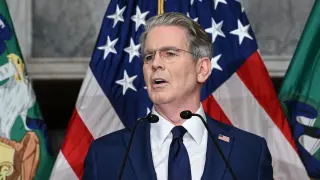
Senegalese President Bassirou Diomaye Faye named a former banking executive as the country's new prime minister, signaling a cabinet reshuffle as his administration seeks to recalibrate governance.
Standard Chartered plans to cut almost 8,000 jobs—more than 15% of its back-office staff by 2030—as it places AI at the center of a new growth strategy, describing the move as replacing lower-value human work with capital and training to redeploy staff, while targeting higher returns, more income per employee, and a larger dividend, alongside leadership changes and investor-day highlights.
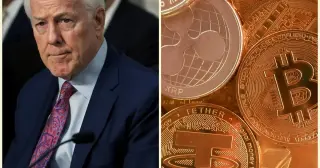
A coalition of major banking trade groups criticizes a compromise in the Clarity Act that would ban stablecoin yield but allow certain rewards tied to balances or governance, arguing those exemptions could let crypto firms evade the prohibition. They urge tightening the language before a Senate Banking Committee vote, as lawmakers rush to advance digital-asset legislation amid looming elections and ongoing industry lobbying.
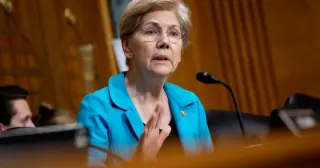
Senate negotiators are set to advance a bipartisan crypto-regulation bill that would ban stablecoin rewards resembling interest, reflecting crypto lobbying power gaining traction in Washington as regulators push to mainstream finance and pass the CLARITY Act.
Capital One is distributing about $425 million to current and former customers who held a Capital One 360 Savings account at any time from Sept. 18, 2019, to June 16, 2025. Payments will be issued automatically (no action required) and vary based on how long you held the account and the balance. To check eligibility, sign in to Capital One’s app or website, select the account, then view details or statements; accounts opened after June 16, 2025 are ineligible. The settlement stemmed from claims that the two accounts — 360 Savings and 360 Performance Savings — had similar names but different rates, and customers weren’t clearly told which they held.
The Trump administration moved cannabis from Schedule I to Schedule III under the DEA, easing federal research barriers and allowing FDA-approved products and state-licensed items to be treated as Schedule III, while opening banking access and tax deductions for cannabis businesses. An expedited June hearing will also consider formal reclassification back to Schedule I at the federal level, signaling a broader, cautious shift in federal cannabis policy without legalizing it federally.
US banks posted strong Q1 results with higher trading revenues and booming M&A, boosting compensation while simultaneously cutting headcount (Goldman down ~400 since end-2025, Citi down ~2,000 in Q1) and pursuing AI-driven efficiency; despite profits, hiring remains brutal for jobseekers due to layered, automated recruitment processes and cautious deal activity amid geopolitical risk.
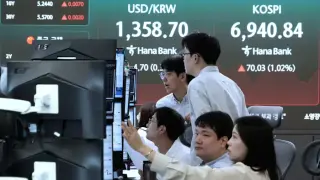
Rising oil prices and geopolitical uncertainty are clouding banks’ profit outlook for 2026, with market volatility and energy costs weighing on lending demand, margins, and earnings across the sector.
JPMorgan Chase beat Q1 2026 expectations with EPS of $5.94 and revenue of $50.54B, up 13% and 10% respectively, as stronger fixed-income and investment-banking results lifted net income to $16.49B; CEO Jamie Dimon said the economy remains resilient but warned of mounting geopolitical, energy, and AI-related risks that could shape markets ahead.
Futures point to a softer start as crude prices jump on talk of a Hormuz blockade, while Goldman Sachs beats estimates but fixed‑income trading underwhelms; JPMorgan, Citi, Wells Fargo and others are due this week as earnings season kicks off. AI cybersecurity debates around Anthropic’s Mythos draw regulator and bank concern, a Trump‑Pope clash adds political noise, and Ineos Automotive reports record SUV orders as the market weighs a mixed set of signals.
Senior U.S. officials and the heads of America’s most systemically important banks held an emergency meeting at the Treasury with the Treasury Secretary and the Fed Chair to discuss Anthropic’s Mythos AI, which can autonomously discover and chain thousands of zero-day vulnerabilities. Mythos has reportedly found flaws across major operating systems and browsers, including OpenBSD and FFmpeg, raising fears of AI-powered cyberattacks that could destabilize the financial system. Anthropic is piloting Project Glasswing to let defend-ers patch gaps, with JPMorgan missing the meeting; the move highlights regulators’ focus on hardening banking cyber defenses to protect Americans’ money.
Federal Reserve Chair Jerome Powell and Treasury Secretary Scott Bessent hosted a dinner for major U.S. bank CEOs to discuss cyber risks linked to Anthropic's Mythos AI model, which was rolled out in a limited capacity due to security concerns. JPMorgan’s Jamie Dimon could not attend; the meeting followed a Financial Services Forum gathering in Washington. Mythos is part of Anthropic’s Glasswing initiative, with partners including Apple, Google, Microsoft and Nvidia. Anthropic says it has been in ongoing discussions with U.S. government agencies about the model’s cyber capabilities, amid prior incidents and regulatory disputes with the DoD.
Security researchers warn of Perseus, a new Android banking malware evolved from Cerberus and Phoenix, distributed via phishing dropper apps and using Accessibility-based remote sessions to takeover devices. It performs overlay attacks, keystroke logging, and notably monitors note apps (Google Keep, Samsung Notes, Evernote, OneNote, etc.) to exfiltrate data, while allowing operators to issue remote commands through a C2 panel (examples include scan_notes, start_vnc, click_coord) and even stream the victim’s screen. Perseus also conducts anti-analysis checks and focuses on targets in Turkey, Italy and several European markets, highlighting a trend toward more adaptable, data-focused Android threats.
US Federal Reserve proposes easing Basel III-style capital rules, cutting risk-weighted requirements for megabanks by about 4.8%, regional banks by 5.2%, and smaller banks under $100B by 7.7%, a shift supporters say will boost growth while critics warn it weakens safeguards and increases bailout risk after SVB’s collapse.
Futures declined as oil topped $100 amid Middle East tensions, with U.S. banks and airline stocks among Monday's biggest movers; Xenon Pharmaceuticals jumped about 46%.