Tag

Blastema

All articles tagged with #blastema

Serum Sparks Mammal Limb Regrowth, Hinting at Regenerative Medicine
science11 days ago

Serum Sparks Mammal Limb Regrowth, Hinting at Regenerative Medicine

Texas A&M researchers report a two-step, serum-driven process that turns local cells into a blastema and promotes limb-like regeneration in lab mice by first reducing scarring and then providing developmental signals, using resident cells rather than external stem cells; the approach could lessen scarring and broaden understanding of mammalian healing with potential human applications.
Two-Protein Trick Sparks Partial Toe Regrowth in Mice
science17 days ago

Two-Protein Trick Sparks Partial Toe Regrowth in Mice

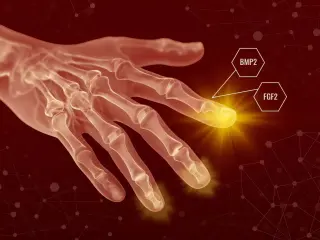
Texas A&M researchers coaxed mice toe regrowth by applying two signaling proteins—FGF2 to prime fibroblasts and BMP2 to drive blastema formation—enabling regeneration of bone, tendons, ligaments, and joints across multiple attempts. While imperfect and not yet tested in humans, the work suggests mammals may have latent regenerative potential and could inform future therapies; BMP2 is already used in reconstructive surgery and FGF2 is moving toward clinical use.

Two-Step Growth Factor Therapy Sparks Regeneration in Mice
science17 days ago

Two-Step Growth Factor Therapy Sparks Regeneration in Mice

Texas A&M researchers showed that a two-step treatment—first applying FGF2 after wound closure, then BMP2—redirects local fibroblasts to form a blastema-like structure and triggers regrowth of bone, tendons, ligaments, and joints in mice after amputation. The regenerated tissues were not perfectly formed, but the main structures were restored, suggesting latent regenerative capacity in mammals and potential for reducing scarring. Because BMP2 is FDA-approved for some uses and FGF2 is in clinical trials, the approach could move toward clinical testing sooner rather than later.

"Jellyfish Regeneration Mirrors Mechanisms in Other Species"
science2 years ago

"Jellyfish Regeneration Mirrors Mechanisms in Other Species"

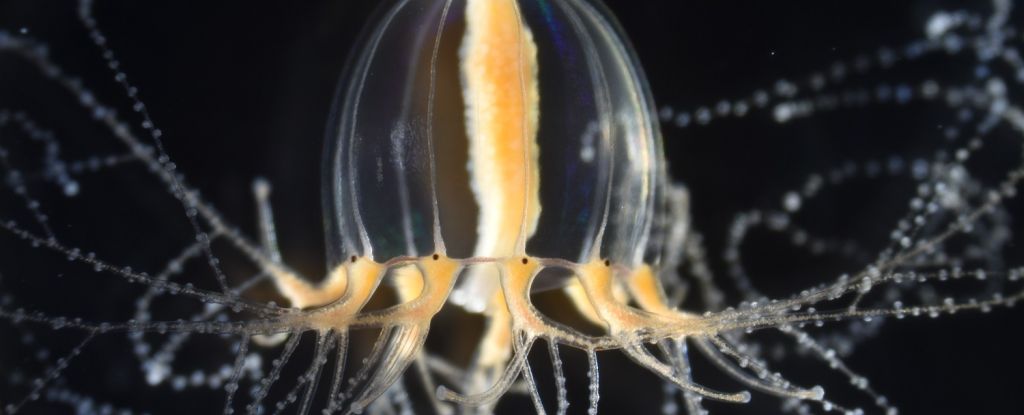
Scientists have made a significant discovery in understanding how jellyfish regenerate lost limbs. A new study reveals that jellyfish form blastema, a cell type similar to stem cells, around injury sites to regrow tentacles, a process that can occur in less than 24 hours. This finding sheds light on the regeneration mechanism, which is different from other animals as these cells are not found at the base of the tentacle. However, the origin of the proliferative cells that form the blastema in jellyfish remains unknown, keeping some aspects of jellyfish regeneration a mystery.

"Unlocking the Regenerative Secrets of Jellyfish Tentacles"
science-and-health2 years ago

"Unlocking the Regenerative Secrets of Jellyfish Tentacles"

Japanese researchers have discovered that a species of jellyfish, Cladonema, can regenerate a lost tentacle in just a few days by forming a blastema from stem-like proliferative cells that are different from the resident stem cells. These repair-specific cells contribute to the outer layer of the new tentacle and work alongside resident stem cells for rapid regeneration. The study, published in PLOS Biology, enhances the understanding of regenerative mechanisms in animals, which could potentially inform improvements in human regenerative medicine. However, the origins of these repair-specific cells are still unknown, highlighting the need for advanced genetic tools to trace and manipulate specific cell lineages in jellyfish.

"Unlocking the Mystery: The Rapid Tentacle Regeneration of Jellyfish"
science-and-health2 years ago

"Unlocking the Mystery: The Rapid Tentacle Regeneration of Jellyfish"

Researchers from the University of Tokyo and Tohoku University have discovered how jellyfish regenerate their tentacles, a process that involves the formation of a blastema, similar to that in amphibians and other regenerating animals. The blastema is formed by proliferative cells that appear at the injury site and work in conjunction with localized stem cells to regrow the tentacle. This process in jellyfish, which are cnidarians with radial body symmetry, is surprisingly similar to that of bilaterian animals, which have bilateral symmetry. Understanding jellyfish regeneration could potentially inform future regenerative treatments in humans, although such applications are currently speculative.

"Unlocking the Mystery of Rapid Tentacle Regeneration in Jellyfish"
science-and-health2 years ago

"Unlocking the Mystery of Rapid Tentacle Regeneration in Jellyfish"

Researchers at the University of Tokyo have uncovered the cellular mechanisms that allow jellyfish to regenerate their tentacles. They found that jellyfish use repair-specific proliferative cells, similar to stem cells, to regrow their tentacles. These cells are different from the resident stem cells and only appear when the jellyfish is injured. This discovery not only sheds light on the regenerative abilities of jellyfish but also suggests a potential for convergent evolution with other regenerative species like salamanders. Understanding these mechanisms could have implications for improving human regenerative medicine. The study was published in PLOS Biology.