Tag

Bowhead Whale

All articles tagged with #bowhead whale

One protein may unlock cancer-free longevity—could humans follow the bowhead whale's lead
science10 days ago

One protein may unlock cancer-free longevity—could humans follow the bowhead whale's lead

Scientists tracing bowhead whales’ 200-year cancer-free lifespans identify CIRBP as a key genome-maintenance protein; boosting the whale’s CIRBP in human and fruit-fly cells improved DNA repair and, in flies, extended lifespan. CIRBP levels rise in colder conditions, which may help explain bowheads’ long lives in frigid waters. Researchers are exploring ways to raise CIRBP in humans, but it’s early-stage and unproven.

Bowhead Whale DNA-Repair Protein Points to a 200-Year Human Lifespan
science2 months ago

Bowhead Whale DNA-Repair Protein Points to a 200-Year Human Lifespan

Researchers linked elevated CIRBP activity in the bowhead whale to enhanced DNA repair and reduced inflammation, a mechanism that could underlie its exceptional longevity; boosting CIRBP in fruit flies extended lifespan and stress resistance, suggesting a possible pathway to longer human life—potentially up to about 200 years if replicated in humans.

Bowhead Whales' Longevity: Insights from DNA Repair and CIRBP Protein
science6 months ago

Bowhead Whales' Longevity: Insights from DNA Repair and CIRBP Protein

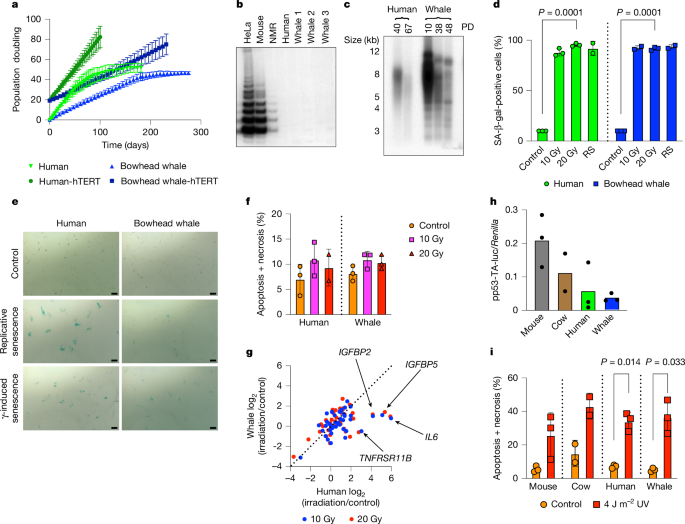
Research shows that bowhead whales have enhanced DNA repair mechanisms, particularly in double-strand break repair, and high levels of the protein CIRBP, which contribute to their exceptional lifespan and cancer resistance despite their large size and long life. These findings suggest that improved genome maintenance, rather than increased apoptosis, underpins their longevity and resistance to age-related diseases.

Bowhead Whales' Longevity Offers Clues to Slowing Aging
science6 months ago

Bowhead Whales' Longevity Offers Clues to Slowing Aging

Scientists studying bowhead whales, which can live over 200 years, have identified enhanced DNA repair mechanisms involving the protein CIRBP, which is triggered by cold exposure. These mechanisms may contribute to their exceptional longevity and low cancer rates. Experiments suggest boosting CIRBP in humans could improve DNA repair and potentially slow aging, with ongoing research exploring this possibility.