Brown University’s Climate Solutions Lab estimates the Iran war has added about $100 billion to U.S. fuel costs since February, including roughly $55 billion in higher gasoline and $45 billion in diesel, equating to about $750 per household and helping push pump prices higher and public support for the conflict lower.
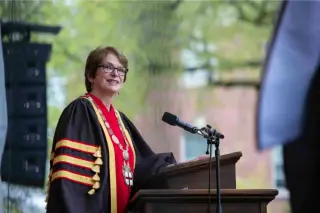
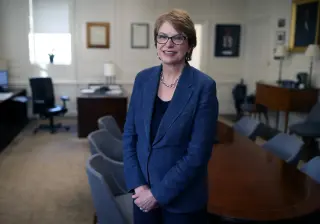
Brown University President Christina Paxson will step down at the end of the 2026–27 academic year, after steering Brown toward intellectual rigor and civil discourse, expanding programs such as ROTC and a Center for Philosophy, Politics and Economics, strengthening Jewish life on campus, and guiding the university through a 2025 settlement with the Trump administration amid campus activism—leaving Brown in stronger standing than many Ivies as she departs.
Brown University will have Christina H. Paxson step down as president in June 2027, earlier than her term extension to 2028, as the school begins a new strategic planning process and opens a national search for her successor. Paxson’s 15-year tenure guided Brown through the COVID-19 pandemic, Gaza protests, federal scrutiny and a Trump-era funding agreement, plus a campus shooting that left two students dead and others injured. Under her leadership Brown expanded its endowment, boosted financial aid, invested heavily in Providence (including the Jewelry District and Brown University Health), and strengthened ties to Rhode Island, even as some faculty debated decisions. The corporation will oversee a national search to identify Brown’s next leader.
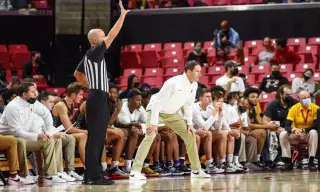
Michigan announced the hiring of Brown head coach Mike Martin as an assistant on Mike Boynton Jr.’s staff for the 2026-27 season. The Ivy League veteran is known for player development and recruiting after 14 years at Brown, where he was Ivy League Coach of the Year in 2019 and nearly led Brown to the NCAA Tournament in 2024. His addition comes as Boynton fills multiple assistant spots after staff changes this offseason, with Martin and his family set to join the Michigan program.
Mike Boynton’s first coaching hire at Michigan brings Brown head coach Mike Martin on board as an assistant, a move that caps a rapid offseason in Ann Arbor. Martin, Brown’s all-time wins leader with 171 wins and the 2019 Ivy League Coach of the Year, will join Michigan’s staff as Boynton continues to assemble a full roster of assistants after Dusty May’s departure and the program’s interim-to-permanent transition.
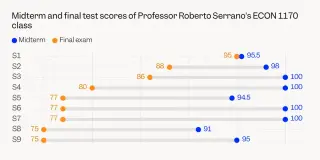
Brown University economist Roberto Serrano warned that AI-driven cheating has made cheating costs nearly zero; a take-home midterm produced unusually high scores, and when the final was moved to in-person, many top-scoring students saw their grades drop, prompting an academic integrity investigation and policy changes such as ending take-home components in future courses.
Brown University economics professor Roberto Serrano suspects a majority of students in his take-home midterm used AI to cheat, prompting him to make the final exam in-person; the midterm averaged about 96% while the final averaged 48.6%, leading to dozens dropping the course or failing. Brown’s handling of the case, including a Standing Committee on the Academic Code and a campus GenAI in teaching and learning initiative, has drawn criticism and highlighted broader questions about AI, detection, and policy in higher education.
A Brown University economics professor, Roberto Serrano, banned take-home exams after a mass cheating incident in his class: about 40 of 86 students earned 100 on a take-home midterm (average around 96), prompting a review. The professor then shifted to an in-person final; of 59 who took the final, 19 failed, with many submitting blank papers. Serrano, who is blind, argues the episode underscores the need for genuine learning and hard work, and he will void the midterm if the final’s grade distribution differs from the midterm’s.
Brown econ professor Roberto Serrano moved ECON 1170 to take-home midterms and an in-person final to test for AI-assisted cheating. The class swelled to 86; the midterm averaged 96 with 40 perfect scores, but the final’s in-person results among 27 takers averaged 48 (18 dropped, 9 did not attend). Notably, 22 of the 27 final-takers had scored 100 on the midterm. Serrano suspects widespread AI cheating and warns that if cheating becomes normalized, it could erode learning and society. Brown’s GenAI in Teaching and Learning report documents both usage and concerns.
NBC News reports that since late February, Americans have spent about $33 billion more on gasoline as national average prices rose roughly 34% from Feb. 28, driven by the Iran-related conflict. The piece highlights NBC’s daily gas-cost calculator for estimating personal pump costs, notes the biggest price jumps in states like Wyoming, Utah and Wisconsin, mentions some states pausing gas taxes, and notes shifting consumer behavior toward less driving and higher utility spending.
Gordon S. Wood, the Pulitzer Prize–winning historian of the American Revolution and Brown University professor emeritus, died at age 92 after a motor-vehicle/pedestrian accident. A prolific scholar and public figure, Wood authored influential works such as The Radicalism of the American Revolution and was honored with the National Humanities Medal in 2011 for illuminating the founding of the United States, leaving a significant impact on both academia and public understanding of America's origins.
Pulitzer Prize–winning historian Gordon S. Wood, a Brown University professor whose reinterpretation of the American Revolution emphasized radical Enlightenment ideas and the making of a modern republic, died on June 7 at 92 after being struck by a car in East Providence. His landmark works, including The Creation of the American Republic, 1776-1787 (1969) and The Radicalism of the American Revolution (1992), helped reshape national identity and the understanding of equality, liberty, and governance. Wood taught at Brown from 1969 to 2008 and earned numerous honors, such as the 1993 Pulitzer Prize, Bancroft and Dunning Prizes, and the National Humanities Medal (2011). He is survived by his wife Louise, daughters Amy and Elizabeth, son Christopher, five grandsons, and a great-granddaughter; Amy Wood is also a historian. His 2021 book was Power and Liberty: Constitutionalism in the American Revolution.
Pulitzer Prize–winning historian Gordon S. Wood, a Brown University professor emeritus who helped redefine the study of the American Revolution, died at 92 after being struck by a car in a Rhode Island supermarket parking lot. The driver cooperated with police, and Wood’s death was confirmed by his daughter; he was a prominent critic of the 1619 Project and authored several landmark works on America’s origins.
Gordon S. Wood, Brown University professor emeritus and a foundational voice on the American Revolution, died at 92 after being struck by a car in a supermarket parking lot in East Providence, Rhode Island. His influential works, including The Creation of the American Republic and The Radicalism of the American Revolution, shaped scholarly debates about the nation’s founding.
Pulitzer Prize-winning historian Gordon Wood, 92, was struck by a motorist in a Shaw's Supermarket parking lot in East Providence, RI, and died from his injuries. The driver remained on scene and cooperates with police; the crash is under investigation with no charges filed. Wood was Brown University's professor emeritus and a leading scholar of the American Revolution.