Berkshire Hathaway resumes buybacks, but valuation limits impact
Berkshire Hathaway has resumed share repurchases, but the stock isn’t particularly cheap, suggesting the buybacks may have a muted effect for now.
All articles tagged with #buybacks

Berkshire Hathaway has resumed share repurchases, but the stock isn’t particularly cheap, suggesting the buybacks may have a muted effect for now.

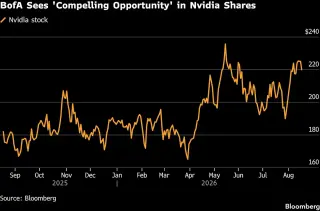
Nvidia’s stock remains stuck in a narrow $180–$190 range despite AI-chip dominance and a plan to return about 50% of free cash flow—over $85 billion—through dividends and buybacks in 2026. With a forward P/E slightly above 21x, the stock looks more like a value play than a growth story as investors weigh massive cash returns against growth prospects and AI-infrastructure dynamics.

NVIDIA says Chinese customers have placed purchase orders and it is restarting production; CEO Jensen Huang also signaled 2026 buybacks/dividends and roughly $1 trillion of visibility through 2027.
The Motley Fool argues the Trump-era bull market, while strong, is likely to end sooner rather than later, citing more than 150 years of precedent and a current CAPE ratio around 40—the second-highest on record—as signs of overvaluation. While buybacks boosted by the Tax Cuts and Jobs Act helped earnings, history suggests substantial declines can follow high valuations, though the exact timing remains uncertain and CAPE is not a precise timing tool.

Berkshire Hathaway’s Q4 operating earnings fell 30% to about $10.2 billion, but a $1.56 billion noncash goodwill impairment tied to Pilot and three other units — disclosed in the 2025 10-K — likely makes the headline drop look worse; adjusting for impairment and other one-offs brings the decline closer to 20%. There were no stock buybacks in Q4 2025 or January 2026, and Berkshire holds a near-record $373 billion in cash that could approach $400 billion by year-end 2026 after a small Occidental acquisition. The slide was driven mainly by a 54% drop in insurance underwriting profits to $1.6 billion, with Geico’s unit details not broken out. Buffett, now chairman, has stepped back from daily management as Abel leads and continues a dividend-averse stance, while the stock trades near 20x projected 2026 operating earnings amid a cautious growth outlook.

Trade Desk reported 2025 revenue of $2.9B (+18% YoY), GAAP net income of $443M, and adjusted EBITDA of $1.2B (41% margin) on $13.4B gross spend with customer retention above 95%. It expanded buyback capacity to $500M after about $1.4B of repurchases in 2025 and gave Q1 2026 guidance of at least $678M in revenue and ~$195M in adjusted EBITDA. The company highlighted ongoing identity, retail data, and connected-TV initiatives in ad tech; analysts rate TTD as a Hold with a $23 target.

BP said it will suspend stock buybacks to strengthen its balance sheet and cut net debt by up to $18 billion by 2027, redeploying cash into capex as it pivots ahead of Meg O’Neill’s start as CEO; the move coincides with exploration momentum (e.g., Brazil’s Bumerangue) and comes with a sharp stock move and mixed quarterly results.

BP suspends share buybacks to reinvest in oil and gas opportunities, including a major Brazil discovery, after a $3.4 billion Q4 loss and renewables writedowns; interim CEO Carol Howle says the turnaround accelerates ahead of Meg O'Neill's April start, with a 4% dividend increase.

Big Tech is pouring more than $660 billion into AI this year, mainly for chips and data centers, but the funding gap between AI costs and cash flow is widening. JPMorgan analysts expect significant high-grade bond issuance to cover the bill; Amazon, Meta, and Alphabet face varying degrees of cash-flow pressure, with BNP Paribas warning free cash flow for Alphabet, Amazon, Meta, and Oracle could turn negative. The trend suggests more debt or equity raises and potentially slower stock buybacks, even as AI remains a long-term growth bet. Only Microsoft is viewed as steadier by some analysts.
The article argues that while Trump's policies and buoyant buybacks have powered a Trump-era stock rally, it faces meaningful risks. Persistent FOMC dissent, a looming end of Powell’s term in May 2026, and the possibility of Warsh-led balance-sheet reduction could push long-term yields higher and tighten financial conditions. Coupled with historically high market valuations (Shiller P/E), these factors threaten to turn the Fed from a stabilizing force into a headwind, potentially ending the rally abruptly.

Deckers Outdoor (DECK) surged about 13% after reporting stronger-than-expected earnings—EPS of $3.33 on revenue of $1.96 billion—and issuing upbeat fiscal 2026 guidance of $5.40–$5.425 billion in revenue and $6.80–$6.85 in EPS, while trimming tariff impact to $25 million for 2026. The company also highlighted a buyback program that exceeded $813.5 million in the last nine months and is expected to top $1 billion for the year. Analysts’ consensus remains Moderate Buy with an average target around $122, implying modest upside amid tariff concerns.

ExxonMobil reported 2025 earnings of $28.8 billion (non-GAAP $30.1B excluding identified items), generated $52.0B cash flow from operations and $26.1B free cash flow, and distributed $37.2B to shareholders in 2025 (dividends $17.2B, buybacks $20B); 4Q25 earnings were $6.5B, full-year Upstream production reached a 40+ year high driven by advantaged assets, and 2026 capex is guided at $27–$29B with ongoing 2030 emissions targets.
Micron Technology is riding a surge in AI‑driven demand for memory chips, boosting revenue, cash flow and buybacks. With a forward P/E around 11.5 and a projected $100 billion high‑bandwidth memory TAM by 2028, the stock trades at a material discount to growth peers, implying potential upside as AI data‑center spend remains robust. Yet memory is cyclical, so a long‑term horizon is prudent as buybacks reduce shares and earnings grow, even if near‑term growth moderates.

Major U.S. banks announced increased dividends and buyback programs following positive stress test results from the Federal Reserve, indicating strong capital positions and a less stressful scenario than previous years, amidst ongoing debates over the stress testing process and regulatory reforms.

US bank stocks reached a three-year high as investors anticipate increased buybacks and dividends following successful Federal Reserve stress tests, with the sector benefiting from easing regulations, strong earnings prospects, and a broader market rotation into safer assets.