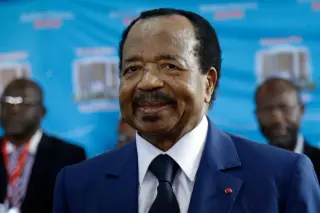
Cameroon’s 93-year-old Biya returns home amid health questions
Cameroon’s 93-year-old President Paul Biya returned from a months-long absence abroad, sparking questions about his health as he resumes his duties.

All articles tagged with #cameroon
Cameroon’s 93-year-old President Paul Biya returned from a months-long absence abroad, sparking questions about his health as he resumes his duties.
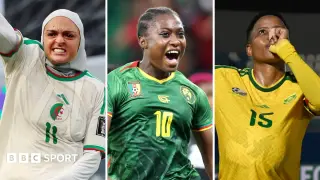
Cameroon claimed the 2026 Women's Africa Cup of Nations in Morocco with a 3-0 win over Malawi, cementing the value of CAF’s 16-team expansion as four semi-finalists—Cameroon, Morocco, Algeria and Malawi—book World Cup berths for 2027. Nigeria’s title defense faltered, while South Africa and Ghana must go through an inter-confederation playoff for qualification. The tournament showcased progress in African women’s football, highlighted the impact of Cameroon’s female coach Valentine Nguele, and raised ongoing questions about attendance, hosting logistics, and scheduling ahead of LA 2028.
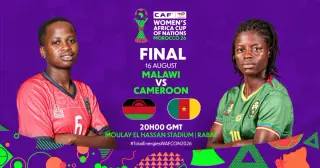
Cameroon and Malawi meet in Rabat for the WAFCON 2026 final, as Malawi chase a historic title on their tournament debut after a high-scoring run, while Cameroon seek their first trophy in a final they’ve reached before; kickoff is at 3:00 PM ET at Moulay El Hassan Stadium and the match is broadcast live on beIN SPORTS and beIN SPORTS Connect.
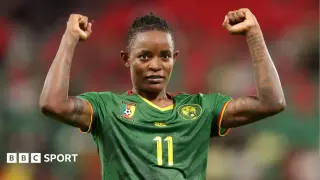
Cameroon won their first Women's Africa Cup of Nations title by defeating Malawi 3-0 in Rabat, with Marie Ngah Manga scoring twice and Naomi Eto providing the assist for the other goal, as Cameroon’s defense stifled Malawi and secured a prize of $2m along with qualification for the 2027 Women's World Cup.
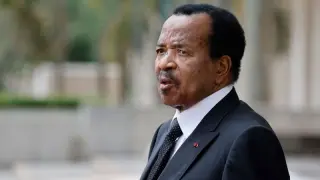
Cameroon's 93-year-old President Paul Biya has been abroad since June 7 on a 'brief private stay in Europe,' his longest uninterrupted absence in years. Government officials say he is alive and not hospitalized, but his whereabouts and health have sparked questions about who runs the country in his absence. Biya has led Cameroon since 1982, and his extended stay abroad highlights concerns about aging leadership and governance in Africa amid ongoing domestic challenges.
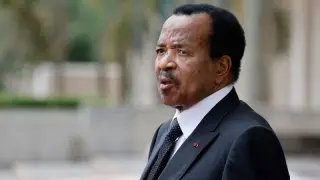
Cameroon's 93-year-old President Paul Biya left on June 7 for a 'brief private stay in Europe' and has not returned for about two months. Officials say he is not hospitalized, but his extended absence has revived questions about a possible vacancy in the presidency and who is governing Cameroon in his stead, highlighting concerns over aging leadership and the country’s governance amid ongoing economic and security challenges.
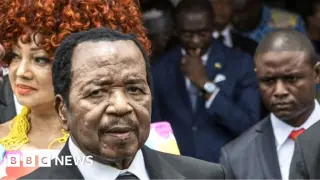
Cameroon’s 93-year-old president Paul Biya, who has been in Geneva for about 60 days, reshuffled the army—promoting five colonels to brigadier general and reappointing Raymond Jean Charles Beko'o Abondo as commander of the presidential guard. The decrees, issued from Switzerland, come as critics warn of a governance vacuum amid Biya’s prolonged absence, though the government says he remains active from abroad and has authorized loans and other measures.
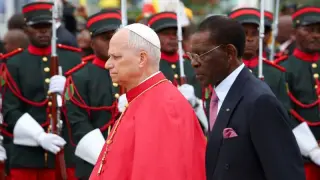
Pope Leo XIV’s 11-day Africa tour has sparked widespread joy among African Catholics but also concern that his meetings with long‑standing leaders in Cameroon and Equatorial Guinea could legitimize entrenched regimes, even as the pope emphasizes peace, reconciliation, and dialogue across Algeria, Cameroon, Angola and beyond.
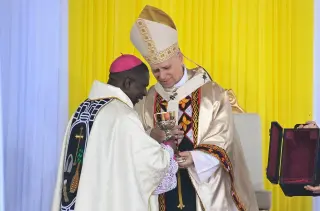
Archbishop Andrew Nkea Fuanya says Pope Leo XIV’s Cameroonian journey was a blessing that is already bearing fruit: the pope’s messages have inspired renewed dialogue between the government and separatists, and there is growing optimism about peace. The archbishop urges turning the papal exhortations into concrete action—creating peace-focused committees, engaging in dialogue, and investing in youth—while noting early, practical signs of progress (open Bamenda airport, restored roads). He emphasizes that the true test is implementing the pope’s call for the common good and sustained peace, not just celebrating the visit.
Pope Leo XIV uses an 11‑day, four‑nation Africa tour to reconnect with his missionary roots, delivering forceful social‑justice messages on corruption, violence, and resource exploitation while urging youth empowerment and AI caution, signaling Africa as the future heart of the Catholic Church.
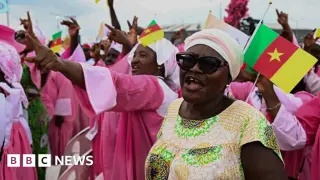
More than 120,000 people packed an open-air Mass with Pope Leo XIV in Douala, Cameroon, as part of his 11-day Africa tour; the pontiff urged peace amid conflict and warned that AI could fuel polarization and erode truth, while also visiting St Paul Hospital and the Catholic University of Central Africa to discuss technology’s impact.
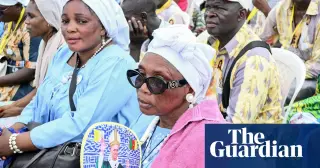
Thousands gathered at Douala's Japoma stadium for an open-air Mass led by Pope Leo XIV during his 11-day Africa tour; about 120,000 worshippers attended in heat above 30C, many shielding themselves with umbrellas as the pope arrived and led prayers amid Vatican and Cameroonian flags.
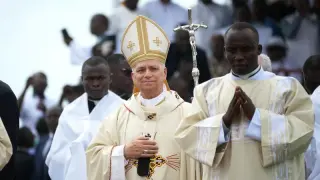
Pope Leo XIV drew an estimated 120,000 worshippers to a Mass in Douala’s Japoma Stadium—the largest in Africa during his visit—highlighting Catholicism’s rapid growth on the continent (Africans account for roughly 20% of Catholics worldwide; Cameroon is about 30% Catholic). In his homily, he urged the crowd to confront poverty and corruption as he continues a 10‑day tour that includes peace efforts in Bamenda and a stop in Angola.
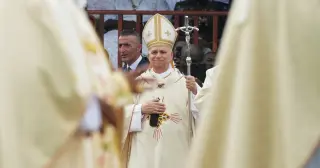
Pope Leo XIV drew about 120,000 believers to a Mass in Douala, Cameroon, where he denounced the country’s wealth disparities and corruption, urged youth to invest in education and entrepreneurship, and framed peace as tied to economic justice amid a backdrop of informal work and political tension.
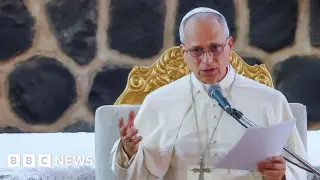
During a Cameroon visit, Pope Leo condemned leaders who spend billions on war while neglecting healing and education, saying the world is ravaged by a handful of tyrants who manipulate God for their gain. The comments followed a public clash with Donald Trump over Iran policy, underscoring the pope's critique of militarism and global conflict.