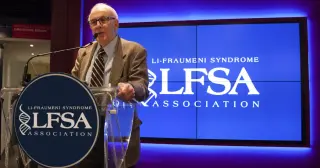
Dr. Joseph F. Fraumeni Jr., a founder of molecular epidemiology, died at 93 after helping identify Li–Fraumeni syndrome—an inherited cancer predisposition—and leading major work on environmental and lifestyle cancer risks at the National Cancer Institute.
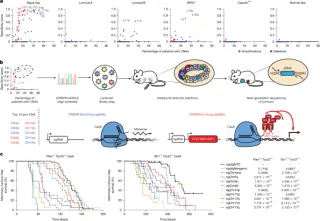
Researchers developed the CRISPR-KOALA platform to perform high-throughput bidirectional gene screens on recurrent arm-level copy-number alterations in immunocompetent mouse models of basal-like breast cancer. Screening 3,752 genes, they identified 90 cancer driver genes across signaling pathways such as MAPK, HIPPO and WNT, showing that arm-level CNAs can selectively recruit diverse drivers and that manipulating these genes can bypass the requirement for aneuploidy in TP53-mutant BLBC. Notably, PLGRKT on chromosome 9p emerged as a potent oncogene linked to stress-resistant mitochondria and enhanced ROS detox, illustrating how specific drivers may shape tumor heterogeneity driven by aneuploidy.
An international study of nearly 500 cat tumors finds shared cancer-causing genes with human cancers, including FBXW7 mutations in feline mammary tumors, suggesting human therapies could be adapted for cats and advancing a One Medicine approach to cancer research.