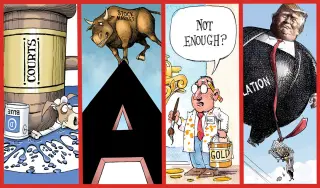
POLITICO compiles the week’s top cartoons from political cartoonists nationwide, offering sharp, humorous takes on lawmakers, memes and headlines, in a curated snapshot edited by Matt Wuerker.
Daily Kos publishes a roundup of political cartoons criticizing Donald Trump’s immigration policy and federal agencies (ICE, DHS), featuring multiple artists and captions such as “ICE agent group photo” and “DHS Pinocchio” from late January 2026, inviting readers to share additional favorites.
Scott Adams, the creator of the Dilbert comic strip that once appeared in thousands of newspapers, died on January 13, 2026, at age 68. His work defined a slice of office culture, but publishers dropped Dilbert after he made racist remarks on a YouTube livestream and he later cultivated a provocative digital persona in the Trump era.
The article covers President Trump's contentious speech at the UN, media groups' plans to limit Kimmel's comedy, and Kamala Harris's recent statements, highlighting political tensions and media dynamics.
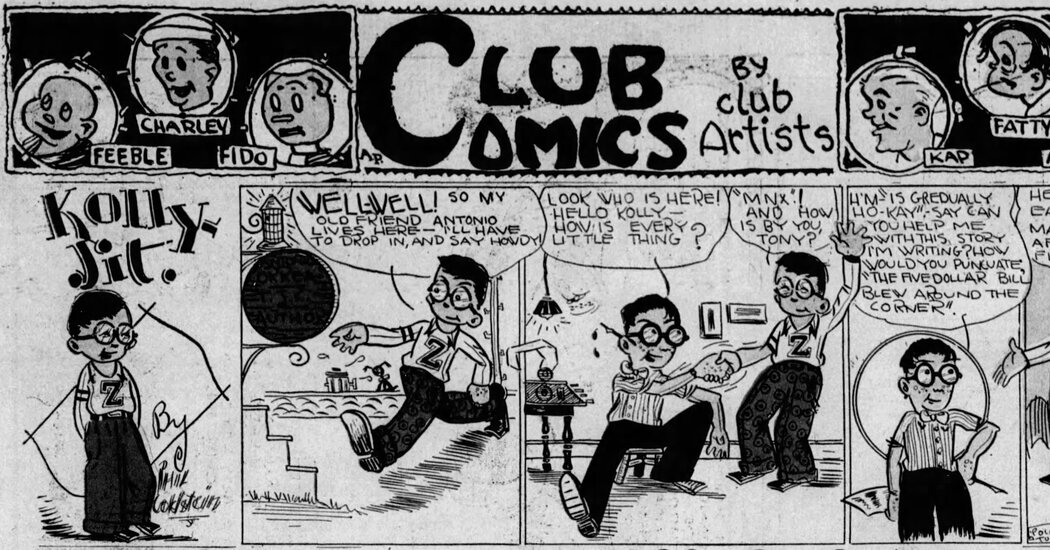
Philip Guston's early teenage drawings for The Los Angeles Times's Junior Club, now in the public domain, reveal his budding talent and provide insight into his artistic development. These apprentice cartoons, created between 1925 and 1929, showcase characters like Kolly-Jit and Skinny Slats, reflecting Guston's early influences and the vibrant youth culture of the time.
The article discusses how complex scientific concepts are being simplified for general audiences, such as the reporting of the "brightest and hungriest black hole ever detected" and the use of an app to locate it. It also touches on Elon Musk's brain chips, the impact of concrete houses in natural disasters, and the thematic selection of cartoons by The New Yorker. The author reflects on past work experiences and shares personal anecdotes related to spiced apple rings.
Cartoonist Roz Chast has written a book about dreams, titled "I Must Be Dreaming," which showcases her delightful and skewed takes on life's absurdities. Chast's dreams, categorized into eight types, including Nightmares and Body Horror, are often ridden with angst, reflecting her self-declared anxious nature. Despite the anxiety, many of her dreams have hilarious punchlines, and she incorporates cartoon ideas into them. Chast also explores various theories about dreams, including those of Freud and Jung, and highlights the connection between dreams and creativity. "I Must Be Dreaming" is another charmingly relatable book from Chast, known for her ability to tackle heavy subjects with humor.