Tag

Cefepime

All articles tagged with #cefepime

Cefepime Linked to Small Rise in 30-Day Mortality in Large Meta-Analysis
health1 month ago

Cefepime Linked to Small Rise in 30-Day Mortality in Large Meta-Analysis

A new meta-analysis of 110 randomized trials involving over 22,000 patients finds that the antibiotic cefepime is associated with a slightly higher risk of death within 30 days compared to other beta-lactam antibiotics. While the study does not recommend discontinuing the drug, it highlights potential risks related to dosing and neurotoxicity, particularly in adults with febrile neutropenia.


New Analysis Links Common Hospital Antibiotic Cefepime to Higher Mortality Risk
health1 month ago

New Analysis Links Common Hospital Antibiotic Cefepime to Higher Mortality Risk

A large meta-analysis published in JAMA Network Open suggests that cefepime, a widely used hospital antibiotic, may be associated with a higher risk of death compared to other beta-lactam antibiotics. The study, which reviewed 110 randomized clinical trials involving over 22,000 patients, found a 94.4% probability of increased all-cause mortality within 30 days of treatment. While the association was strongest in adults with febrile neutropenia, researchers emphasize that this does not prove causation. Experts suggest that dosing errors and neurotoxicity, rather than the drug itself, may drive the risk, urging better clinical guidance rather than discontinuation.

Cefepime Linked to Higher Mortality in Global Antibiotic Review
health1 month ago

Cefepime Linked to Higher Mortality in Global Antibiotic Review

A new global study published in JAMA Network Open finds that the antibiotic cefepime is associated with a higher risk of all-cause mortality compared to other beta-lactam antibiotics. The analysis reviewed 110 randomized trials involving over 22,000 patients, finding a 94.4% probability that cefepime leads to higher death rates. While the association is strongest in adults with febrile neutropenia, experts caution that the drug remains essential and that dosing errors, rather than the drug itself, may drive the risk.

Cefepime Linked to 94% Higher Death Risk in Major Antibiotic Review
health1 month ago

Cefepime Linked to 94% Higher Death Risk in Major Antibiotic Review

A new meta-analysis of 110 trials involving 22,000 patients finds cefepime is associated with a 94.4% higher probability of 30-day all-cause mortality compared to other beta-lactam antibiotics, with the risk rising to 98.6% in peer-reviewed trials. Experts debate whether this reflects a drug safety issue or a dosing problem, noting that cefepime remains a first-line treatment for febrile neutropenia.

Comparing Cefepime and Piperacillin-Tazobactam for Acute Infections in Hospitalized Adults
medical-research3 years ago

Comparing Cefepime and Piperacillin-Tazobactam for Acute Infections in Hospitalized Adults

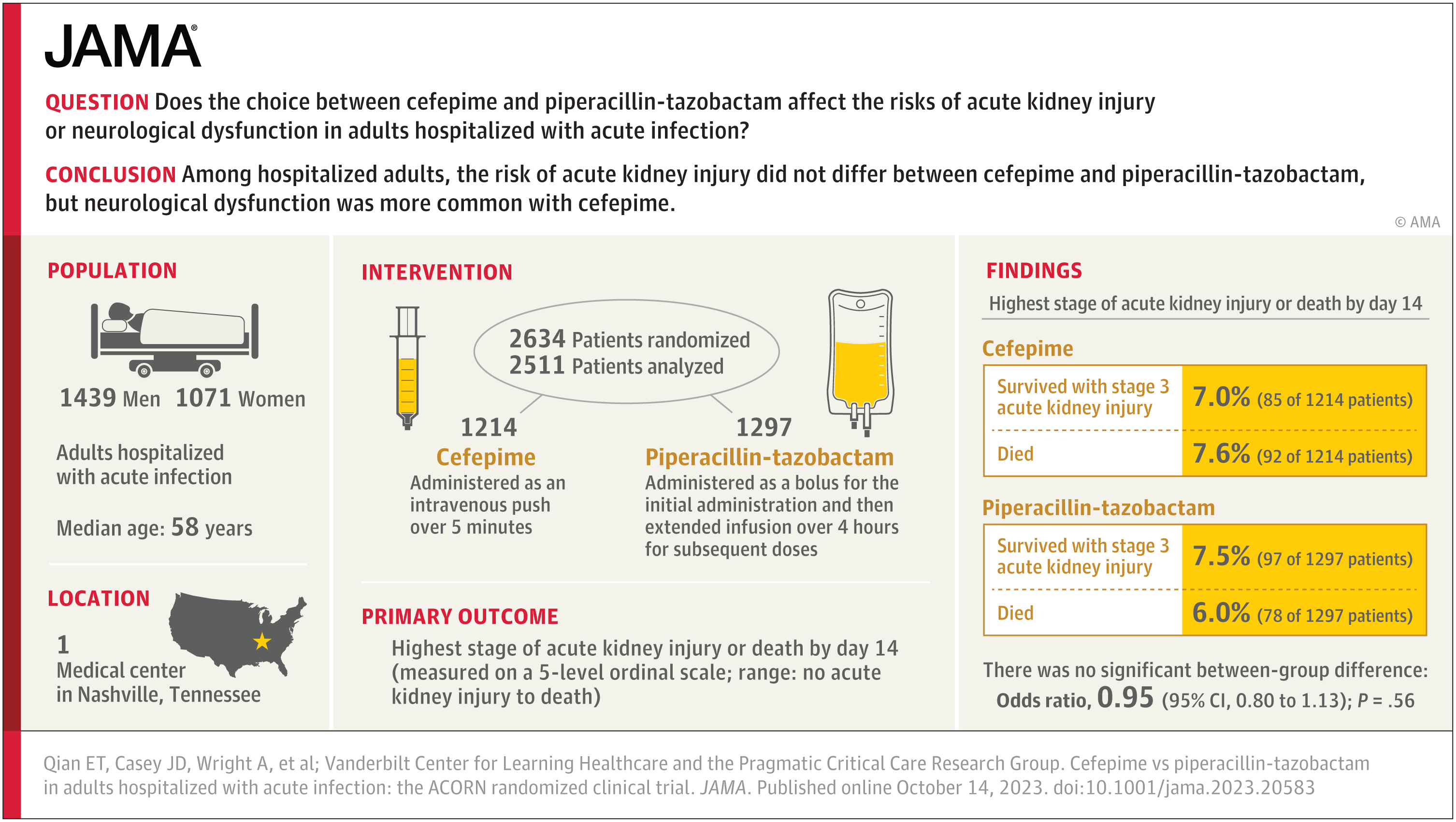
A randomized clinical trial compared the safety of cefepime and piperacillin-tazobactam, two commonly used antibiotics for treating acute infection in hospitalized adults. The study found that the risk of acute kidney injury did not differ significantly between the two drugs, but patients treated with cefepime experienced more neurological dysfunction. These findings provide valuable insights into the comparative safety profiles of these antibiotics in the treatment of acute infection.

"Empirical Antibiotics for Sepsis Linked to Acute Kidney Injury"
medicine3 years ago

"Empirical Antibiotics for Sepsis Linked to Acute Kidney Injury"

A randomized clinical trial compared the use of piperacillin-tazobactam and cefepime for empirical treatment of sepsis and found no significant difference in the risk of acute kidney injury (AKI) between the two antibiotics. The trial also showed that patients treated with cefepime had fewer days alive and free of delirium and coma compared to those treated with piperacillin-tazobactam. The study provides evidence that piperacillin-tazobactam does not increase the risk of AKI compared to cefepime, but cefepime may be associated with a higher risk of neurological dysfunction.