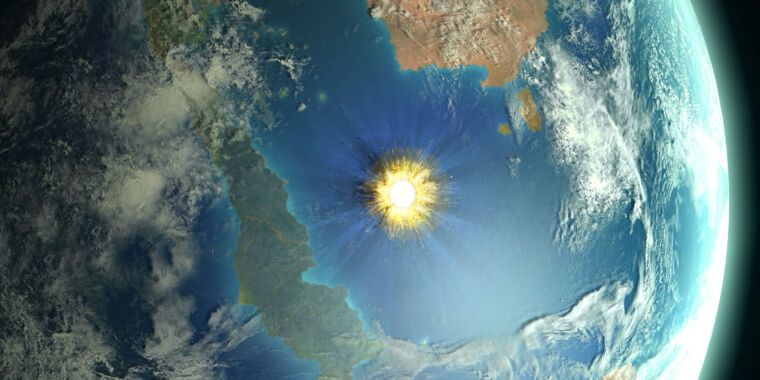
New research indicates the Chicxulub impact crater, formed 66 million years ago, generated a hydrothermal system that persisted for 8 million years, potentially providing a long-term habitat for microbial life.
Recent research indicates the Cretaceous-Paleogene extinction was driven by an immediate, lethal heat pulse from vaporized rock, rather than solely by long-term sunlight blocking. The impact angle and target geology were critical in determining the global atmospheric effects.
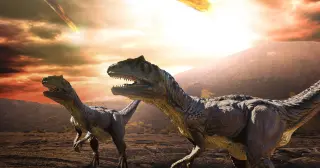
A new study published in the Journal of Geophysical Research: Biogeosciences proposes that the Chicxulub asteroid impact 66 million years ago caused immediate, global firestorms rather than a slow starvation winter. Researchers argue that a thick layer of fine dust, formed from vaporized rock, trapped heat and intensified thermal pulses from falling spherules. This combination likely killed most exposed animals within hours, while the lingering dust eventually blocked sunlight, leading to a prolonged winter. The findings challenge the traditional view that the extinction was primarily caused by a years-long 'impact winter' and suggest that rapid thermal death was the primary driver for terrestrial life.
Recent research clarifies that the asteroid which ended the Cretaceous period originated beyond Jupiter and likely caused mass extinction through immediate, global infernos rather than a slow winter.
At Tanis in North Dakota, a 1.3-meter “Event Deposit” containing spherules lodged in fish gills suggests a rapid inland surge within hours of the Chicxulub impact, offering a near-immediate snapshot of the extinction-era environment; while the core evidence about the deposit and fish is solid, broader dinosaur claims are controversial and await full peer-reviewed confirmation.
A new study on the end-Cretaceous extinction event suggests that fine dust from the Chicxulub impact played a significant role in the demise of non-avian dinosaurs. The study found that when this dust is plugged into climate models, global temperatures drop by as much as 25°C, and photosynthesis shuts down for almost two years. The researchers also discovered that the average particle size of the dust was smaller than previously assumed, affecting its interaction with sunlight and how long it stays in the atmosphere. These findings highlight the complex dynamics of the post-impact climate and the challenges in understanding the events that followed the extinction event.
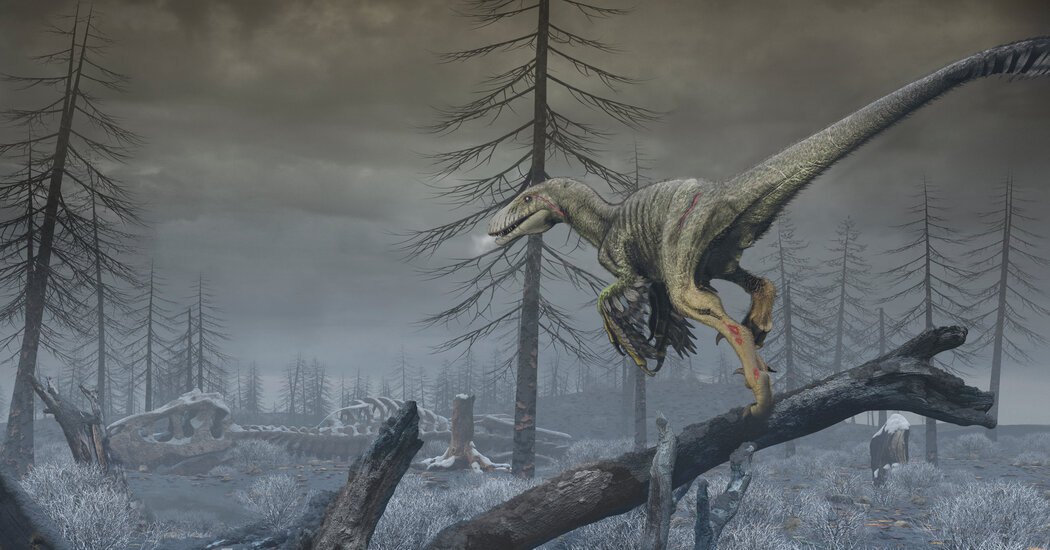
A new study published in Nature Geoscience suggests that fine silicate dust, lingering in the atmosphere for up to 15 years after the Chicxulub impact, played a significant role in the global cooling that led to the extinction of nonavian dinosaurs. The dust particles contributed to a long and dark winter, interrupting photosynthesis and causing global average surface temperatures to plummet. The research highlights the importance of understanding the impact of dust in the aftermath of asteroid collisions and provides insights into the challenges faced by dinosaurs during this time period. Further research is needed to explore the global implications and differences in climatic activity between the Northern and Southern Hemispheres.