
Tag

Computational Design

All articles tagged with #computational design

Designed peptide nanopores enable programmable antimicrobial action against drug‑resistant bacteria
science25 days ago

Designed peptide nanopores enable programmable antimicrobial action against drug‑resistant bacteria

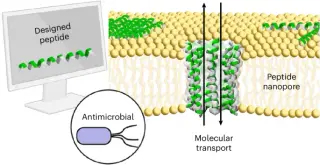
A computationally driven framework designs ~30‑residue α‑helical peptides that self‑assemble into stable barrel‑stave transmembrane nanopores, with design rules based on aromatic stacking, salt bridges and charged termini validated by MD simulations and experiments. Lead peptides KDFA2i + 9‑NH2 and KDFC16 + 9‑NH2 show submicromolar activity against drug‑resistant ESKAPEE pathogens, strong selectivity with low human toxicity, and inner‑membrane depolarization via pore formation confirmed by calcein leakage, electrophysiology and AFM. KDFA2i + 9‑NH2 demonstrates in vivo anti‑infective efficacy in mouse skin abscess and thigh infection models and good serum stability. AlphaFold predictions could not reliably reproduce barrel‑stave pores, highlighting the need for membrane‑explicit simulations. Overall, the study establishes a general, programmable nanopore design platform with potential biomedical and biotechnological applications.
Streamlining the creation of intricate materials through innovative techniques
science-and-technology3 years ago

Streamlining the creation of intricate materials through innovative techniques

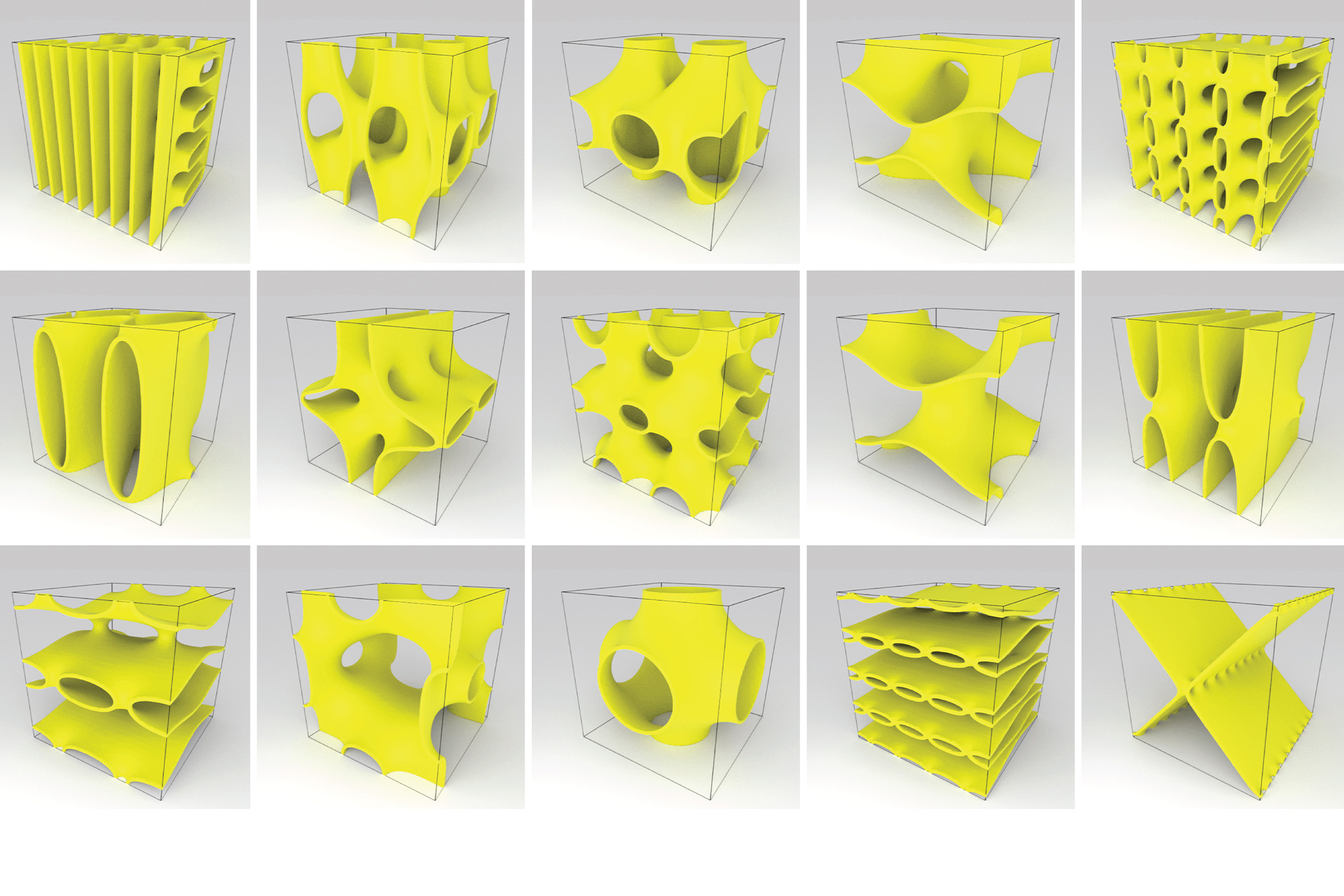
Researchers from MIT and the Institute of Science and Technology Austria have developed a computational technique that simplifies the design process for cellular metamaterials, which are artificial structures composed of repeating units. The technique allows engineers to quickly model and experiment with complex metamaterials using a user-friendly interface, enabling exploration of the entire space of potential metamaterial shapes. The researchers used a graph-based representation to build metamaterial skeletons using building blocks, such as beams or surfaces, and employed solvers to specify properties like thickness. The system outputs the entire procedure, allowing designers to preview and evaluate the structure at each step. The researchers also created automated exploration algorithms and conducted a successful user study.