Tag

Antimicrobial Peptides

All articles tagged with #antimicrobial peptides

Tiny mutations in ancient mammal peptides dramatically boost antibacterial power
health12 days ago

Tiny mutations in ancient mammal peptides dramatically boost antibacterial power

Researchers reconstructed ancestral lactoferricin peptides from mammalian lactoferrin, finding that early versions could damage bacterial membranes and that a few amino-acid changes—such as at position 8—dramatically increased potency against bacteria like Pseudomonas aeruginosa. The work provides evolutionary insight and could guide future antimicrobial design, though these molecules are not ready-made drugs and bacteria can still develop resistance.
Designed peptide nanopores enable programmable antimicrobial action against drug‑resistant bacteria
science1 month ago

Designed peptide nanopores enable programmable antimicrobial action against drug‑resistant bacteria

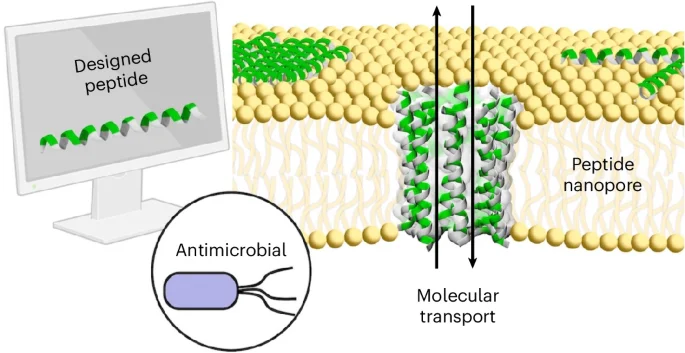
A computationally driven framework designs ~30‑residue α‑helical peptides that self‑assemble into stable barrel‑stave transmembrane nanopores, with design rules based on aromatic stacking, salt bridges and charged termini validated by MD simulations and experiments. Lead peptides KDFA2i + 9‑NH2 and KDFC16 + 9‑NH2 show submicromolar activity against drug‑resistant ESKAPEE pathogens, strong selectivity with low human toxicity, and inner‑membrane depolarization via pore formation confirmed by calcein leakage, electrophysiology and AFM. KDFA2i + 9‑NH2 demonstrates in vivo anti‑infective efficacy in mouse skin abscess and thigh infection models and good serum stability. AlphaFold predictions could not reliably reproduce barrel‑stave pores, highlighting the need for membrane‑explicit simulations. Overall, the study establishes a general, programmable nanopore design platform with potential biomedical and biotechnological applications.

Early-Armored Toads: Tadpole-Derived Peptides Help Pyrenees Amphibians Beat Deadly Fungus
science1 month ago

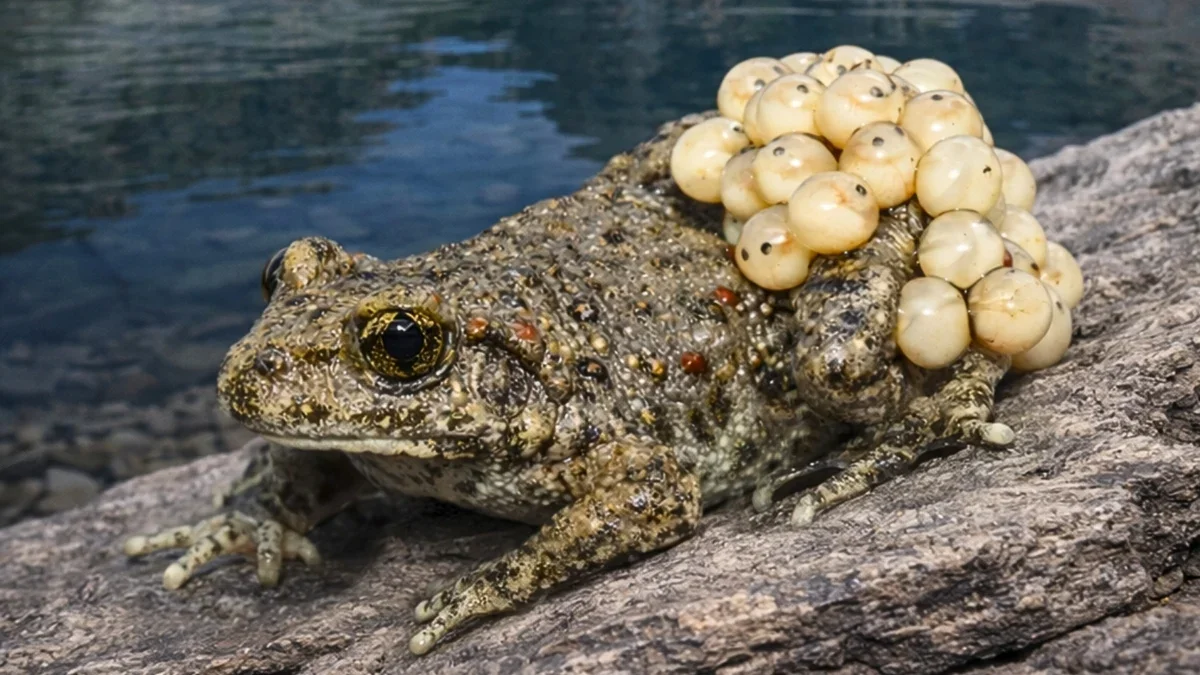
Early-Armored Toads: Tadpole-Derived Peptides Help Pyrenees Amphibians Beat Deadly Fungus

Researchers studying Pyrenean midwife toads found that some populations survive the deadly chytrid fungus by maturing skin antimicrobial peptides earlier in development, likely aided by a diversity of peptides produced during the tadpole stage; this early immune defense prevents the fungus from taking hold, offering new insight for amphibian conservation and potential antimicrobial leads for human medicine, while warming alpine habitats threaten these refuges.

AI uncovers antimicrobial fragments hidden in prions
science2 months ago

AI uncovers antimicrobial fragments hidden in prions

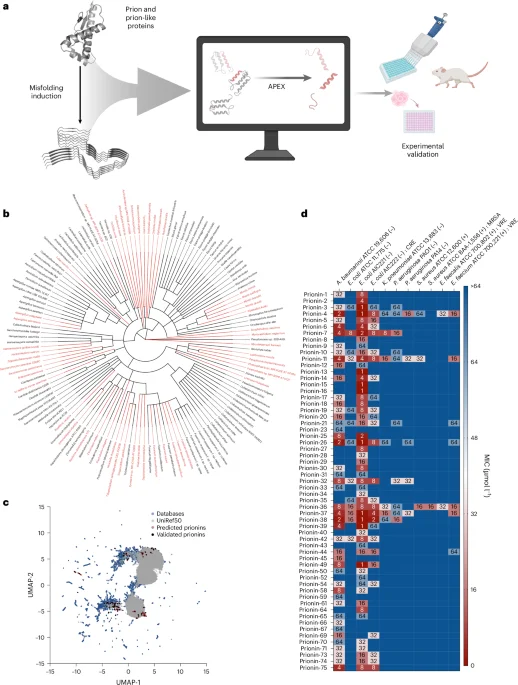
Researchers used APEX 1.1 to mine 19.3 million fragments from 2,897 prion-related proteins, identifying 1,179 prionins predicted to be antimicrobial (median MIC ≤ 64 μM). Out of 75 synthesized, 59 inhibited at least one pathogen and 42 achieved MIC ≤16 μM, mainly against Gram-negative bacteria, often via membrane disruption as shown by NPN and DiSC3-5 assays. In vivo, two lead prionins reduced bacterial burden in a mouse Acinetobacter baumannii skin infection model with favorable selectivity. The study suggests prion-related proteins are a rich source of cryptic AMP leads, though physiological roles remain unproven.

AI accelerates the hunt for new antibiotics against resistance
technology3 months ago

AI accelerates the hunt for new antibiotics against resistance

AI is speeding antibiotic discovery by predicting targets and mechanisms, narrowing experimental pipelines, and enabling design of new antimicrobials—from small-molecule inhibitors like halicin to antimicrobial peptides developed via de-extinction (APEXGO). The approach relies on diverse, high-quality training data and practical synthesis constraints, as researchers race to outpace antibiotic resistance.

science8 months ago

Israeli Scientist Named Among Nature's Top Ten Science Shapers

Israeli scientist Prof. Yifat Merbl was named one of the top 10 shapers of science in 2025 by Nature for her groundbreaking research on cellular proteasomes and discovery of antimicrobial peptides, which could lead to advances in cancer immunotherapy, antimicrobial drugs, and disease diagnostics, despite facing setbacks like lab destruction during war.

Reviving Ancient Molecules: A Promising Weapon Against Superbugs
science-and-technology2 years ago

Reviving Ancient Molecules: A Promising Weapon Against Superbugs

Scientists are using artificial intelligence-based computational methods to mine genetic information from extinct human relatives and long-gone ice age creatures in the search for new antibiotics. By identifying small protein molecules with bacteria-fighting powers, researchers hope to inspire the development of new drugs to combat infections in humans. This innovative approach expands the way scientists think about drug discovery and offers a potential solution to the global antibiotic resistance crisis. While some experts caution that the development and clinical testing of peptide antibiotics can be challenging, others believe that exploring extinct organisms and their genetic information could provide valuable insights and lead to the discovery of new antimicrobial molecules.