Tag

Cve 2026 68820

All articles tagged with #cve 2026 68820

Microsoft's August Patch Tuesday Fixes 400 Flaws, Including Active Zero-Day Exploited by North Korea
security3 months ago

Microsoft's August Patch Tuesday Fixes 400 Flaws, Including Active Zero-Day Exploited by North Korea

Microsoft released its August 2026 Patch Tuesday update, addressing 421 vulnerabilities across its ecosystem, including 400 in Windows. The update fixes a critical zero-day (CVE-2026-68820) actively exploited by the North Korean Lazarus Group in the 'Operation Dream Job' campaign. Microsoft urges users to install updates within three days due to AI-accelerated threat detection, while experts debate the balance between rapid patching and testing stability.

Lazarus Weaponizes Windows Zero-Day in Global Defense Espionage Campaign
cybersecurity3 months ago

Lazarus Weaponizes Windows Zero-Day in Global Defense Espionage Campaign

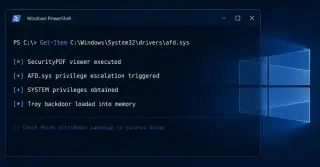
North Korea's Lazarus Group exploited a newly patched Windows zero-day vulnerability to gain SYSTEM-level access and deploy backdoors against defense and aerospace firms in Europe, Brazil, and India. The attack, part of the long-running 'Operation Dream Job,' uses fake job offers and trojanized PDF viewers to bypass security controls. CISA ordered federal agencies to patch the flaw by August 25, 2026, as it was the only confirmed actively exploited vulnerability in Microsoft's August Patch Tuesday release.

Lazarus Group Weaponizes Windows Zero-Day in Global Defense Sector Campaign
cybersecurity3 months ago

Lazarus Group Weaponizes Windows Zero-Day in Global Defense Sector Campaign

North Korea’s Lazarus Group exploited a Windows zero-day vulnerability (CVE-2026-68820) to target defense, aerospace, and aviation firms in Europe, India, and South America. The attack, part of the 'Operation Dream Job' campaign, used fake job offers to deliver malware, including a new backdoor named Troy and an updated FudModule rootkit. Microsoft patched the flaw in August 2026, while attackers also compromised Roundcube servers using a new web shell called RelayShell.

North Korea Exploits Windows Zero-Day in New 'Dream Job' Campaign Amid 421-Patch Surge
security3 months ago

North Korea Exploits Windows Zero-Day in New 'Dream Job' Campaign Amid 421-Patch Surge

Microsoft patched 421 vulnerabilities in its August 2026 release, including a zero-day in the Windows Ancillary Function Driver (afd.sys) actively exploited by North Korea’s Lazarus Group. The flaw, CVE-2026-68820, allows local privilege escalation to SYSTEM level and was used in the 'Operation Dream Job' campaign targeting defense sectors in Europe and India. While the patch volume is high due to AI-assisted discovery, experts warn that only one bug is confirmed exploited, urging prioritized rather than rushed deployment.

Microsoft's August Patch Tuesday Fixes 421 Flaws, Including a Zero-Day Exploited by North Korea's Lazarus Group
technology3 months ago

Microsoft's August Patch Tuesday Fixes 421 Flaws, Including a Zero-Day Exploited by North Korea's Lazarus Group

Microsoft released its August 2026 security updates, fixing 421 vulnerabilities, including a zero-day in the Windows kernel driver afd.sys that is under active exploitation by North Korea's Lazarus Group. The release also addresses four critical, unauthenticated remote code execution flaws in Windows services and completes a two-part fix for a SharePoint chain. While AI has accelerated vulnerability discovery, experts emphasize that patching remains a human-centric process requiring careful testing and prioritization based on exploit status and service reachability.

cybersecurity3 months ago

Microsoft Patches 398 Flaws, Including Zero-Day Exploited by North Korea's Lazarus Group

Microsoft released its August 2026 Patch Tuesday updates, addressing 398 vulnerabilities across Windows and other software. The release includes a critical zero-day, CVE-2026-68820, which is under active exploitation by North Korea's Lazarus Group. While AI has accelerated the discovery of these flaws, experts warn that automated patching remains unreliable, requiring human oversight to ensure fixes do not introduce new weaknesses.