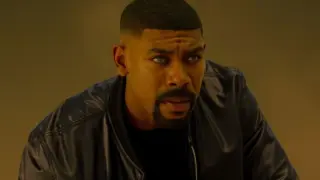
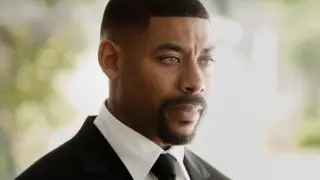
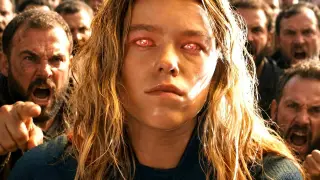
The 'Lanterns' finale omitted John Stewart's Green Lantern costume to preserve the emotional weight of his farewell to Hal Jordan, a decision showrunner Chris Mundy confirmed was intentional rather than a production oversight.
The season one finale of HBO Max’s Lanterns, titled 'Dirt and Stars,' concludes the series’ central mystery by revealing that Sheriff Kerry Kane killed Hal Jordan in a panic to protect her son, Noah, who is a Manhunter. John Stewart rejects a violent climax, instead choosing to spare both Kerry and Noah, accepting the power ring on his own terms. Stewart modifies the traditional Green Lantern oath to embrace fear, signaling his departure from the Guardians’ hierarchy and establishing him as an independent operator in the DCU.
The season finale of HBO's 'Lanterns' concluded with a quiet, character-driven arc that established John Stewart as Earth's Green Lantern, but raised significant questions about how his new status fits into the wider DC Universe. By charging his ring with a fear-infused lantern, Stewart created an unsanctioned weapon that diverges from traditional Corps protocols. While the series prioritized grounded storytelling over action, this decision creates narrative friction with James Gunn's upcoming 'Man of Tomorrow' film. Although a second season is in early development with a new writing team, it has not been officially renewed, leaving Stewart's future dependent on how his character is utilized in the 2027 movie.
The season one finale of HBO's Lanterns, titled 'Dirt and Stars,' resolves the central mystery by revealing that Sheriff Kerry Kane (Kelly Macdonald) killed Hal Jordan (Kyle Chandler) in a panic after he discovered her son Noah (Shea Pritchard) is a Manhunter. Noah, Zoe’s grandson, is also a Manhunter who sought a yellow lantern from Sinestro to fight the Guardians but ultimately chose to relinquish power. John Stewart (Aaron Pierre) refuses to kill Noah or arrest Kerry, instead accepting the Green Lantern ring as an independent operator. He rewrites the oath to embrace fear, marking a departure from traditional Corps hierarchy. The series averages 19 million viewers per episode, but no renewal has been confirmed amid Skydance’s acquisition of Warner Bros. Television.
Lanterns is averaging nearly 19 million global viewers per episode, with the seventh episode reaching 7 million U.S. viewers. While HBO Max celebrates these figures, Nielsen data shows the series only entered the Top 10 after three weeks. A Season 2 writers room has been assembled, though the series is not yet officially renewed.
In the penultimate episode of HBO's 'Lanterns,' John Stewart and a holographic version of Hal Jordan form a functional superhero team. The episode reveals Hal's generational mental health struggles and sets up a future partnership in the DC Universe.
DC Studios’ plan to move the DCU in real time creates about a two-year gap between Superman and the Man of Tomorrow sequel, during which Nathan Fillion hints at continuing as Guy Gardner/Green Lantern and teases Lantern-centered threads amid Brainiac-era storylines; fans speculate about spin-offs or films set in the gap, with a December trailer rumored and a large cast tied to the DCU arc.
Hal Jordan’s tense confrontation with imprisoned mentor Sinestro drives Lanterns Episode 4, as Sinestro dispenses Hannibal Lecter–style guidance and hints that John Stewart must die for Hal to keep his ring, setting up a deadly choice and a cliffhanger that heightens the season’s power struggle, buoyed by sharp direction and strong performances despite visible structural flaws.
As Lanterns continues, DCU fans gain new respect for Guy Gardner after seeing the Green Lantern Corps’ strict rules and John Stewart’s demanding training, contrasting Gardner’s fearless stance with Superman’s Kryptonian pedigree and highlighting why Gardner’s heroism feels earned.
A review of Lanterns Episode 3, OutKast, applauds its grounded, character-driven approach that prioritizes world-building over fanservice. It centers on John Stewart’s origin, examines real-world themes like white privilege and parenting, and contrasts Hal Jordan’s well-meaning cluelessness with a more nuanced DCU. The piece argues this de-MCUification—focusing on believable, non-superpowered family dynamics—could signal a healthier direction for the DC Universe.
Gal Gadot says she exited Wonder Woman after seeing how Henry Cavill’s DC exit and the broader handling of fellow creatives were not elegant; she was open to continuing, but chose to step away so the character could be treated with respect, noting she was a vessel rather than the sole owner and that Gunn/Safran’s team would develop it, though the plan evolved with a new Wonder Woman casting.
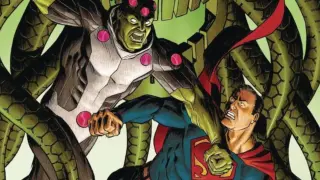
Xolo Maridueña reprises Blue Beetle as Jaime Reyes in the DCU’s Superman sequel Man of Tomorrow, directed by James Gunn. The film also brings David Corenswet back as Superman, with Lex Luthor and the super‑intelligent Brainiac opposing them. Gunn has confirmed that Reyes is the first DCU character and that Man of Tomorrow is the first full DCU movie in the reboot, with a July 9, 2027 release date.
Rory Mellon argues that Supergirl’s $170M production budget and roughly $107M worldwide gross mark a significant box-office failure, signaling trouble for Warner Bros.’ DCU reboot under James Gunn and Peter Safran. The piece contends Gunn’s plan to rush out high-profile characters risks destabilizing audience goodwill by neglecting a solid foundation and suggests focusing first on the 'Golden Trio'—Superman, Wonder Woman, Batman—before expanding. With DCU’s plans loaded with projects like Lanterns, Man of Tomorrow, and others, and the retention of DCEU elements, the author warns of Phase 5 fatigue and questions the long-term viability of the new universe, though Lanterns or Man of Tomorrow could offer a future win.
An opinion piece argues that blaming misogyny for Supergirl's underperformance is a simplistic, misleading narrative; with 59% of the audience male and 41% female, the film's failure is better explained by weak marketing and overall apathy, not an active male conspiracy, and suggests studios focus on better writing and direction instead of blaming 'invisible enemies'.
DC Studios co-CEO Peter Safran says Supergirl’s opening — about $68 million globally and $38 million domestic — didn’t meet box-office expectations, but the DCU’s long-term strategy remains intact with an upcoming slate that includes Clayface, Man of Tomorrow, and the Lanterns series on HBO, signaling a broader plan beyond a single film.