Texas jury sentences former FedEx driver to death in Athena Strand murder
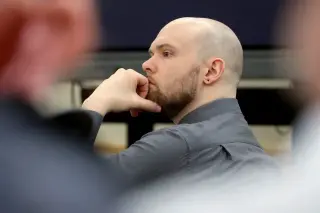
A Texas jury sentenced former FedEx driver Tanner Horner to death for the 2022 strangulation murder of 7-year-old Athena Strand.
All articles tagged with #deathpenalty

A Texas jury sentenced former FedEx driver Tanner Horner to death for the 2022 strangulation murder of 7-year-old Athena Strand.

A Texas jury sentenced former FedEx driver Tanner Lynn Horner to death for kidnapping and killing 7-year-old Athena Strand in 2022 after he pleaded guilty at the start of the trial; prosecutors highlighted an hour-long audio of the attack and his lies as key evidence, while defense argued mitigating factors including a troubled childhood, autism, and lead exposure. Horner’s sentence will be automatically reviewed by the Court of Criminal Appeals, with Texas maintaining one of the nation’s highest execution rates.

The US Department of Justice directs federal prisons to expand the range of execution methods to include firing squads, gas asphyxiation, and electrocution, while keeping lethal injection as the default method. The memo argues broader options ensure readiness if a specific drug becomes unavailable and reinforce the death penalty's deterrent effect. The move follows former President Trump’s push to resume federal executions after a moratorium, and it has drawn criticism from Democrats and opponents who call it cruel and discriminatory; context notes some states already use or are adopting alternative methods like nitrogen gas.

The Justice Department released a report proposing to add firing squads, electrocution, and gas asphyxiation to federal execution methods, citing difficulties obtaining lethal-injection drugs and signaling readiness to resume capital punishment under Trump; the plan would update protocols to align with state practices to ensure lawful executions proceed even if preferred drugs are unavailable.

Israel's Knesset moved a controversial bill to a final vote that would allow death sentences for Palestinians convicted of terrorism, with executions within 90 days, a simple majority in courts, and reduced avenues for appeals or clemency for those under occupation; the measure would also empower West Bank military courts and has drawn international criticism and warnings of potential legal jeopardy for Israeli officials.

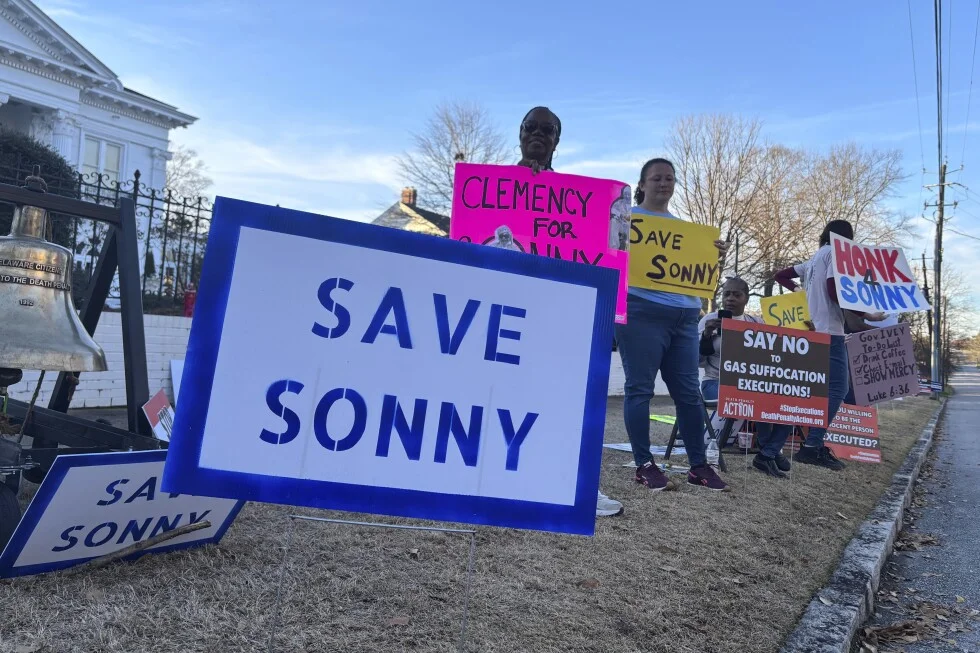
Alabama Gov. Kay Ivey commuted the death sentence of death-row inmate Charles “Sonny” Burton, sparing him from an upcoming March 12, 2026 execution as supporters gathered outside the Governor’s Mansion to urge clemency.

Charles Victor Thompson, a Texas death-row inmate who briefly escaped custody after his resentencing, was executed by lethal injection in Huntsville, becoming the first person put to death in the United States this year for the 1998 killings of his ex-girlfriend and her new boyfriend; he apologized and urged forgiveness, while prosecutors and victims’ families said justice was served after a decades-long case.

The suspect in the fatal shooting of a National Guard member in Washington, D.C., has been transferred to federal court where the death penalty can be considered. Rahmanullah Lakanwal, an Afghan national, faces federal charges including first-degree murder while armed, with the case moving from D.C. Superior Court to ensure a thorough legal process for potential capital punishment. The attack resulted in the death of Army specialist Sarah Beckstrom and critically injured Staff Sgt. Andrew Wolfe.

Christopher Leroy Collings is set to be executed in Missouri for the 2007 rape and murder of 9-year-old Rowan Ford. Despite last-minute appeals, the U.S. Supreme Court and Missouri Governor Michael Parson denied clemency, with the governor stating that justice must be served for the "horrendous and callous crime." Collings' execution will be the 23rd in the U.S. this year. Rowan's family, while supportive of the death penalty, expressed that lethal injection is too lenient for Collings' crime.

The Texas Supreme Court ruled that a Texas House committee could not use a subpoena to halt the execution of Robert Roberson, a death row inmate convicted of killing his daughter in 2002. The committee sought to delay the execution to investigate the use of "junk science" in his trial, but the court found this overstepped legislative authority. Roberson's execution was temporarily paused, but the court's decision allows it to proceed. The case has sparked debate over the validity of shaken baby syndrome and legislative versus judicial powers.

In San Antonio, Texas, the investigation into the murders of Savanah Soto and Matthew Guerra continues, with the Bexar County District Attorney and the Police Chief providing updates. The victims, involved in narcotics sales, were found dead on December 26. Christopher Ray Preciado, 19, is charged with capital murder and other offenses, while his father, Ramon Preciado, faces charges for allegedly helping move the bodies. A gun believed to be the murder weapon was recovered. The DA stated it is too early to determine if the death penalty will be sought, as the investigation is ongoing and a capital crimes committee will review the case. Both suspects are currently held in Bexar County Jail with high bail amounts.

The families of Savanah Soto, a pregnant teen, and her boyfriend Matthew Guerra, who were killed in a suspected drug deal, are calling for the death penalty for the suspects, Christopher and Ramon Preciado. Christopher, 19, has been charged with capital murder, while his father Ramon, 53, faces charges of abuse of a corpse, with the possibility of additional charges pending. The incident is believed to be narcotics-related, and the families are seeking justice for the couple and their unborn child, who also died in the shooting.

United Nations human rights experts have criticized Alabama's plan to execute Kenneth Smith using nitrogen hypoxia as "inhuman" and "alarming," suggesting it could result in a painful death and potentially violate the Convention against Torture. Smith was convicted in 1996 for a murder-for-hire killing and was initially sentenced to life without parole, but a judge overruled the jury's decision and sentenced him to death. Alabama's attempt to use nitrogen hypoxia, which would be the first of its kind in the U.S., has been met with legal challenges from Smith's attorney, who argues that this method is experimental and unjust.

U.N. human rights experts have warned that the first U.S. execution by nitrogen hypoxia, scheduled in Alabama for death row inmate Kenneth Eugene Smith, could result in a "painful and humiliating death." This method, which involves forcing the inmate to breathe pure nitrogen, is untested and criticized for its potential to cause severe suffering and health risks to others present. The execution method has been challenged on human rights grounds and for potentially violating religious liberties, as it may endanger spiritual advisers in the death chamber.

Bexar County District Attorney Joe Gonzales has expressed his commitment to holding the murderers of a pregnant woman, Savanah Soto, and her boyfriend, Matthew Guerra, accountable, with the death penalty being a potential punishment. The case is being treated as a capital murder investigation, and while Gonzales' office has been conservative with seeking the death penalty in the past, the egregious nature of this crime means it will be considered by the Capital Crimes Committee. San Antonio Police have released video footage of persons of interest and are seeking public assistance in the investigation.