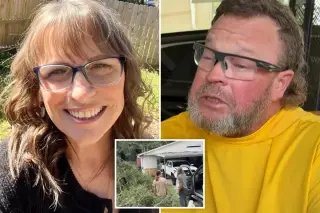
Former Tallahassee mayor and 2018 Florida Democratic gubernatorial nominee Andrew Gillum was arrested July 2, 2026, in Daphne, Alabama, on three drug-related charges after police found methamphetamine, marijuana and drug paraphernalia in his car during a traffic stop.
Former Florida gubernatorial candidate Andrew Gillum was arrested in Daphne, Alabama, on charges of possession of dangerous drugs, drug paraphernalia and possession of marijuana; he has since been released from jail and further details from the arrest report were not immediately released.
Georgia: Trump-backed gubernatorial candidate Burt Jones lost to Rick Jackson, while his endorsement helped Rep. Mike Collins win the GOP Senate nomination to face Democrat Jon Ossoff. Alabama: Trump-endorsed Barry Moore won the GOP Senate runoff, advancing to the general election. Oklahoma: Trump-backed Mike Mazzei and Gov. hopeful Gentner Drummond advanced to a GOP runoff for governor; the winner will face Democrat Cyndi Munson, with Gov. Kevin Stitt having not endorsed in the race. Overall, the night shows Trump’s endorsements remain influential but not universally decisive in shaping GOP outcomes.
Trump-backed candidates notched several key results: Georgia’s Mike Collins won the GOP Senate runoff, Alabama’s Barry Moore captured the Senate nomination, and Oklahoma’s Kevin Hern led the Senate field with Trump’s endorsement; Burt Jones lost Georgia’s governor runoff to Rick Jackson (who will face Keisha Lance Bottoms in November); California’s Aisha Wahab advanced to the Aug. 18 runoff to replace Swalwell in Congress; Oklahoma also advanced Mazzei to a governor runoff with Drummond, while State Question 832 — a wage-hike measure — was rejected.
Rep. Barry Moore won the Republican primary runoff for Alabama's U.S. Senate seat, buoyed by Donald Trump's endorsement, positioning him as the frontrunner to succeed Sen. Tommy Tuberville in the general election after the May runoff left no candidate with a majority.
Trump’s sway is being tested in high-profile GOP runoffs: in Georgia, Mike Collins faces Derek Dooley for the U.S. Senate with Trump’s endorsement; Burt Jones (Georgia lieutenant governor) is in a gubernatorial runoff against Rick Jackson, with Kemp backing Jones and Ted Cruz backing Jackson, while Cruz also backs Alan Wilson in South Carolina’s gubernatorial race. In Alabama, Trump backs Barry Moore against former Navy SEAL Jared Hudson in the Senate runoff. The day’s coverage notes Oklahoma and Washington, DC primaries, plus a California 14th District special election as other contests on the ballot.
Voters in Georgia, Alabama, Oklahoma and Washington, D.C., head to the polls Tuesday for major primaries. Georgia features a high-stakes GOP Senate runoff between Trump-backed Mike Collins and Kemp-backed Derek Dooley, part of a broader Trump–Kemp proxy clash, plus a governor’s race with Kemp’s backing. Washington, DC chooses a new mayor in a crowded ranked-choice race as Muriel Bowser steps down. Alabama’s Republican Senate runoff pits Trump-endorsed Barry Moore against Jared Hudson, while Democrats hold their own runoff for their nominee. Oklahoma’s wide-open governor race — with Trump’s support for Mike Mazzei — and a concurrent Senate primary add to the day’s marquee matches. California also has a separate special election in another race. The results will gauge Trump’s influence and shape the fall contests.
Trump’s endorsements and presence loom over five Tuesday races, from Washington, D.C.’s mayoral contest to Georgia’s Senate runoff and governor’s race, Alabama’s Senate showdown, and Oklahoma’s governor primary, testing whether his backing can tilt close contests and signaling how his grip on the GOP is evolving.
Republican leaders dismissed a residency challenge to Sen. Tommy Tuberville’s bid for Alabama governor, saying he meets the state’s residency requirements and is eligible to run.
The Supreme Court refused to lift an injunction blocking Alabama from executing Jeffery Lee by nitrogen gas, effectively delaying what would have been the nation’s ninth nitrogen-hypoxia execution. In a 6-3 decision issued without a stated rationale, three conservative justices would have allowed the execution to proceed. Alabama had planned to carry out the sentence after a jury originally voted for life; the case underscores ongoing disputes over whether nitrogen hypoxia constitutes cruel and unusual punishment under the Eighth Amendment.
The U.S. Supreme Court denied Alabama's emergency request to execute Jeffery Lee by nitrogen hypoxia after two lower courts blocked the method; the unsigned order provided no explanation, though Justices Thomas, Alito and Gorsuch dissented. Alabama has used nitrogen gas in several executions since 2024, but a federal judge recently banned the method due to evidence of distress, and Lee, 49, who was to be executed at 6 pm local time, had his scheduled execution halted.
A federal appeals court ruled Alabama’s nitrogen gas executions unconstitutional as cruel and unusual punishment, halting Jeffery Lee’s planned execution and sending the case back for review. The state is likely to appeal, potentially to the Supreme Court, while alternatives like lethal injection or a firing squad could be reconsidered depending on court outcomes.
A federal judge permanently blocked Alabama from executing death-row inmate Jeffrey Lee by nitrogen hypoxia, ruling the method violates the Eighth Amendment and subjects inmates to severe distress and suffocation risk for minutes. The ruling overturns a prior decision, allows a potential firing-squad alternative, and sets the stage for appeals and possible Supreme Court review with broader implications for nitrogen gas executions in other states.
Inclement weather in Tuscaloosa pushed Game 2 of the NCAA Tuscaloosa Super Regional between Alabama and St. John’s from 2:00 p.m. CT to 3:00 p.m. CT; gates will open at 1:30 p.m., and the game will be on ESPN2 at Sewell-Thomas Stadium in Tuscaloosa.
The Supreme Court, in a 6-3 ruling, lifted a lower-court block to allow Alabama to use a 2023 redistricting map that eliminates one of its two majority-Black U.S. House districts, likely giving Republicans a 6-1 edge in the state’s delegation for this year’s elections; the decision follows the Court’s April narrowing of Voting Rights Act protections and comes as several Southern states uproot majority-Black districts, with primaries set for Aug. 11. Justice Sonia Sotomayor dissented, accusing the Court of chaos and weaponizing election rules.