
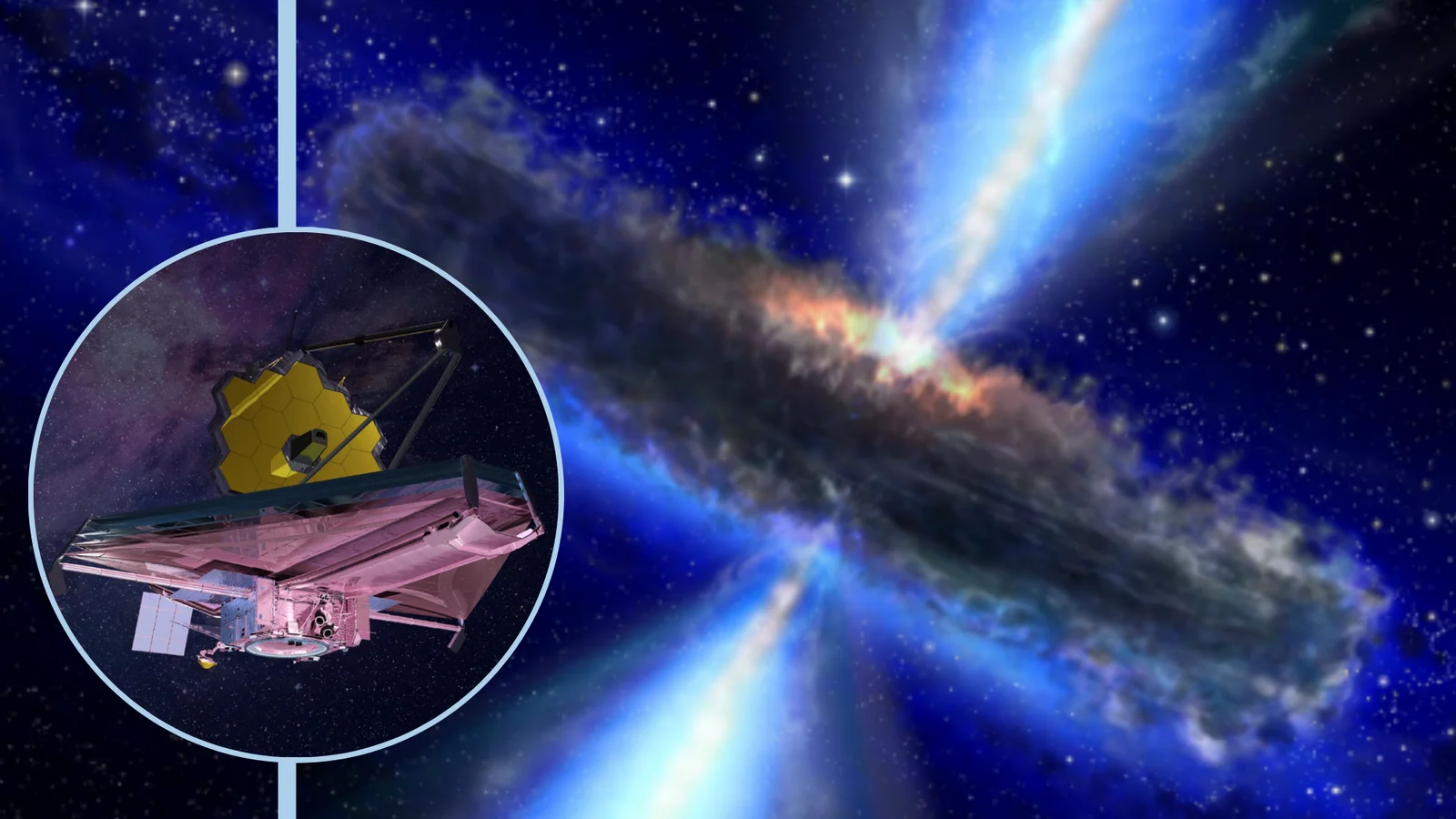
JWST traces a ticking clock for planet formation across 72 young stars
Using JWST's Mid-Infrared Instrument, astronomers followed 72 young sun-like stars to map how planet-forming material escapes their disks. The findings show gas-dust disks disperse through two shifting regimes: early, magnetically driven jets and winds dominate mass loss, and as disks thin, high-energy stellar radiation drives photoevaporation. This evolving mechanism sets a fundamental clock for when gas giants can form and helps explain where different types of planets are likely to emerge.