Tag

Dna Synthesis

All articles tagged with #dna synthesis

MOSAIC: a scalable self-assembly method for high-throughput gene synthesis
technology9 days ago

MOSAIC: a scalable self-assembly method for high-throughput gene synthesis

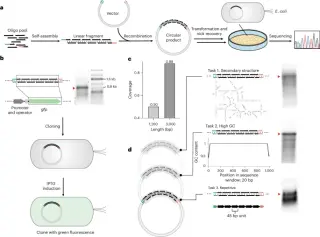
Researchers introduced MOSAIC, a self-assembly–driven method for high-throughput DNA fragment synthesis that couples orthogonal in vitro assembly of overlapping oligos with in vivo DNA repair, enabling 1,000+ gene fragments to be produced in one-pot, with near-zero misalignment. Using microchip-based oligo synthesis, MOSAIC can assemble fragments up to several kilobases, build massive variant libraries (e.g., PETase), and recover dozens of error-free genes after targeted sequencing; the work includes open-source code on GitHub and NGS data in NCBI and suggests a scalable route to close the DNA-synthesis bottleneck in synthetic biology.

Rethinking the human genome: aiming for a minimal, learnable blueprint
science2 months ago

Rethinking the human genome: aiming for a minimal, learnable blueprint

A Nature World View piece argues that advances in DNA synthesis, genome assembly, and AI now make a synthetic human genome more feasible, but a shift in goals is needed: instead of pursuing an ultrasafe, full-genome rewrite, scientists should aim to define a minimal human genome to identify essential elements and gain deeper biological understanding, with growing funding interest (including a UK effort to build a fully synthetic human chromosome) signaling a real rethinking of the project’s scope.

Bacteria Build DNA Without a Template, Using the Enzyme as Blueprint
science4 months ago

Bacteria Build DNA Without a Template, Using the Enzyme as Blueprint

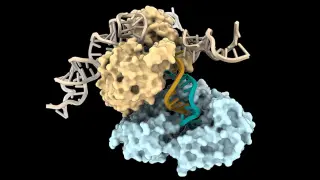
Stanford researchers studying the bacterial DRT3 defense system found that the Drt3b polymerase can synthesize DNA without a separate template, with the protein's own shape acting as the blueprint. The three-part complex—Drt3a, Drt3b, and a non-coding RNA—enables self-contained DNA construction, a previously unseen mechanism with implications for biology, evolution, and future biotech; understanding its role in antiviral defense and potential engineering remains to be explored, and the work was published in Science.

AI's Potential to Design Deadly Biological Weapons
science-and-technology7 months ago

AI's Potential to Design Deadly Biological Weapons

Scientists have used AI to design viruses from scratch and to modify toxins to bypass safety checks, raising concerns about the potential for AI-assisted bioweapons. While these advances can aid in medical treatments like phage therapy, they also pose dual-use risks, prompting efforts to strengthen screening protocols, regulatory policies, and international standards to prevent misuse. Despite technological progress, significant challenges remain before AI-designed pathogens could become a real threat, emphasizing the need for robust biosecurity measures.