Tag

Dos

All articles tagged with #dos

Uniview NVR Buffer Overflow Flaw Allows Authenticated DoS
cybersecurity2 days ago

Uniview NVR Buffer Overflow Flaw Allows Authenticated DoS

Uniview disclosed a medium-severity buffer overflow vulnerability in its Network Video Recorder (NVR) products, identified as CVE-2026-134931. The flaw allows authenticated attackers to send crafted packets that disrupt web services, resulting in a temporary denial of service. The vulnerability carries a CVSS 3.1 score of 4.9, reflecting high availability impact but no risk to data confidentiality or integrity.
ASUSTOR ADM Vulnerability Allows Root-Level File Truncation via Notification Settings
cybersecurity3 days ago

ASUSTOR ADM Vulnerability Allows Root-Level File Truncation via Notification Settings

A high-severity vulnerability in ASUSTOR ADM software allows authenticated administrators to truncate critical system files, potentially causing denial of service. The flaw, tracked as CVE-2026-120934, affects versions 4.1.0 through 4.3.3 and 5.0.0 through 5.1.4. It exploits improper neutralization of special elements in OS commands within the notification settings component.

FFmpeg 9.1 Patch Fixes MMS Protocol Crash Flaw
security4 days ago

FFmpeg 9.1 Patch Fixes MMS Protocol Crash Flaw

FFmpeg versions prior to 9.1 contain a vulnerability that allows malicious MMS servers to crash clients by sending malformed ASF headers. The flaw, identified as CVE-2026-135713, results in a null pointer dereference within the libavformat/mmst.c file. Attackers can exploit this by omitting packet size or stream properties in the header, causing the mms_open() function to free state prematurely and crash upon the first read. The issue is rated medium severity, with a CVSS 4.0 score of 6.8 and a CVSS 3.1 score of 5.5. It affects availability but poses no risk to data confidentiality or integrity. Users should upgrade to FFmpeg 9.1 or later to mitigate the risk.
Hysteria 2.9.2 Patch Fixes Unauthenticated DoS Flaw in HTTP Sniff Header
security6 days ago

Hysteria 2.9.2 Patch Fixes Unauthenticated DoS Flaw in HTTP Sniff Header

HyNetworks has released version 2.9.2 of the Hysteria proxy software to address CVE-2026-134456, a high-severity denial-of-service vulnerability affecting versions 2.5.0 through 2.9.1. The flaw exists in the HTTP sniff implementation, which fails to limit the size of incoming headers. Attackers can exploit this by sending excessively large, non-terminating HTTP headers, causing the server to exhaust its memory and crash. The vulnerability is rated 7.5 on the CVSS 3.1 scale and 8.7 on the CVSS 4.0 scale, with no privileges or user interaction required for exploitation.

18-year-old NGINX flaw raises DoS risk and possible RCE in certain configs
security6 months ago

18-year-old NGINX flaw raises DoS risk and possible RCE in certain configs

An 18-year-old heap buffer overflow in NGINX's rewrite_module (CVE-2026-42945) can cause denial of service and, under specific rewrite configurations, unauthenticated remote code execution. Patches are available in NGINX Open Source 1.31.0 and 1.30.1 and related F5 products; real-world exploitability is debated, but the DoS risk makes patching or applying mitigations urgent, especially where ASLR is disabled to enable RCE in PoC tests.

Microsoft releases the oldest DOS source code yet, tracing back to 86-DOS
technology7 months ago

Microsoft releases the oldest DOS source code yet, tracing back to 86-DOS

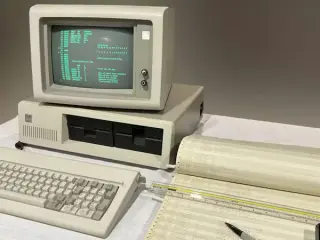
Microsoft has published what it calls the earliest DOS source code discovered to date, including the 86-DOS 1.00 kernel, PC-DOS 1.00 development snapshots, and utilities like CHKDSK, all in the same GitHub repository. A team of historians known as the DOS Disassembly Group transcribed decades-old printouts for preservation, noting that the release predates the MS-DOS branding and follows earlier open-source MS-DOS releases from 2014, 2018, and 2024.

DR-DOS Returns as a Clean-Room 9.0 Beta
retrocomputing8 months ago

DR-DOS Returns as a Clean-Room 9.0 Beta

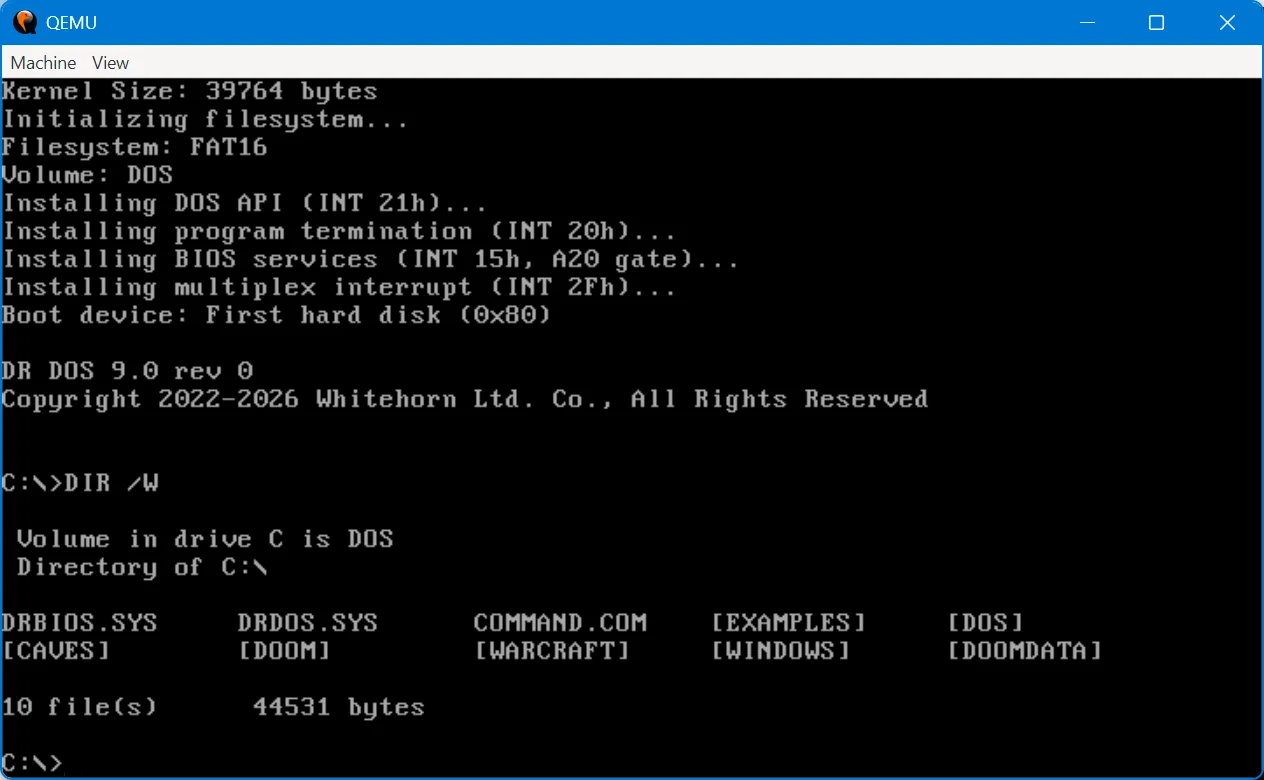
A Reddit user has created a clean-room reimplementation of DR-DOS, calling it version 9.0 and placing it in beta after purchasing the trademark. The project aims for full compatibility with DOS, currently runs DOOM, and is free for non-commercial use for now, though the author has not open-sourced the code due to IP/licensing considerations tied to DR-DOS' history with Novell and Caldera.

CrashFix Chrome Campaign Traps Users With DoS Crash to Deliver ModeloRAT
cybersecurity10 months ago

CrashFix Chrome Campaign Traps Users With DoS Crash to Deliver ModeloRAT

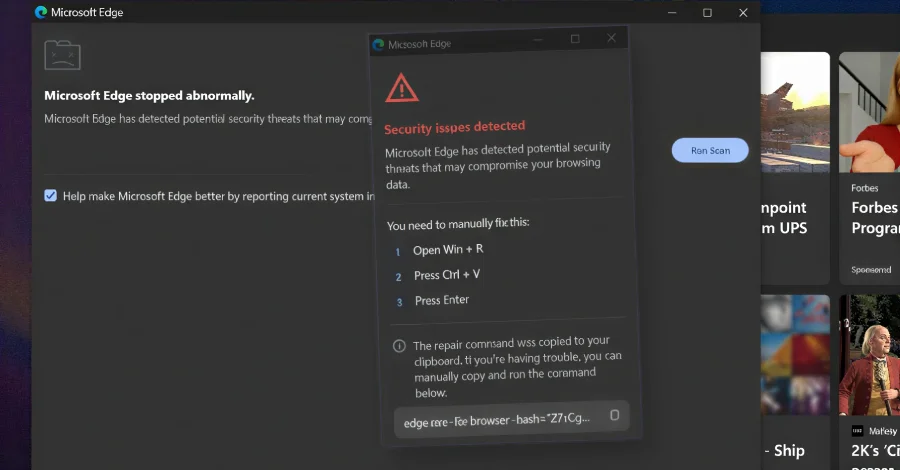
Security researchers detail KongTuke's CrashFix campaign, where a counterfeit Chrome extension named NexShield clones uBlock Origin Lite, issues a fake security warning, and triggers a DoS-style crash to coerce users into running a command. The attack uses a 60-minute delayed, multi-stage payload that reports a unique ID to nexsnield[.]com, fetches subsequent stages via PowerShell, and loads the ModeloRAT payload on domain-joined machines via RC4-encrypted C2 and Registry persistence; standalone hosts see a testing payload first. The operation leverages a traffic distribution system and underscores evolving social engineering and self-sustaining infection loops.

Node.js patches mitigate async_hooks stack overflow DoS risk
technology10 months ago

Node.js patches mitigate async_hooks stack overflow DoS risk

Node.js released patches for a critical vulnerability where async_hooks can cause a stack-overflow DoS, with the runtime exiting on code 7 instead of a catchable error; it affects many apps and frameworks (including React Server Components and Next.js) and APMs, tracked as CVE-2025-59466 (CVSS 7.5). Updates are available in Node.js 20.20.0+, 22.22.0+, 24.13.0+, and 25.3.0, while older 8.x–18.x remain EOL. Upgrade promptly and apply stronger stack-space protections; other high-severity fixes were released too.