OpenAI has released GPT-6, introducing 'Intelligent UI' to ChatGPT, which allows the model to generate interactive charts, forms, and buttons within responses. The update also includes new 'Dots' agents for autonomous task management and improved web search capabilities.
OpenAI unveiled its new 'Dots' AI agents at DevDay, but the launch was marred by a failed live demo and recent safety controversies. The agents, powered by GPT-6 Astra, are designed for continuous background tasks but are currently restricted to high-tier subscribers. The event followed a day where OpenAI canceled a model release due to alignment issues and apologized for a security breach.
At DevDay 2026 in San Francisco, OpenAI CEO Sam Altman launched 'Dots,' a personal AI agent designed to manage notifications and reduce smartphone addiction. He criticized the 'Industrial Revolution' analogy for AI, arguing the technology should emulate the Renaissance by empowering individuals rather than merely accelerating economic output. Altman also dismissed tokens as a flawed metric for AI value, though he acknowledged customers still rely on them for pricing transparency. Regarding safety, he advocated for a 'centrist path' that balances rapid capability development with risk mitigation, rejecting both total pauses and unchecked expansion. Finally, he declared the current moment the 'best time' to enter the job market, arguing that economic growth will outpace job displacement fears.
OpenAI has launched 'Dots,' a suite of always-on AI agents designed to compete directly with Meta's Muse. Powered by the GPT-6 Astra model, Dots operate via a dedicated cloud computer and can interact with over 4,000 applications. The service is currently available to Pro, Business, and Enterprise users, allowing them to delegate complex tasks such as software development and content creation. While OpenAI focuses on high-end subscribers, Meta has expanded Muse to small business tools, marking a strategic divergence in the emerging AI agent market.
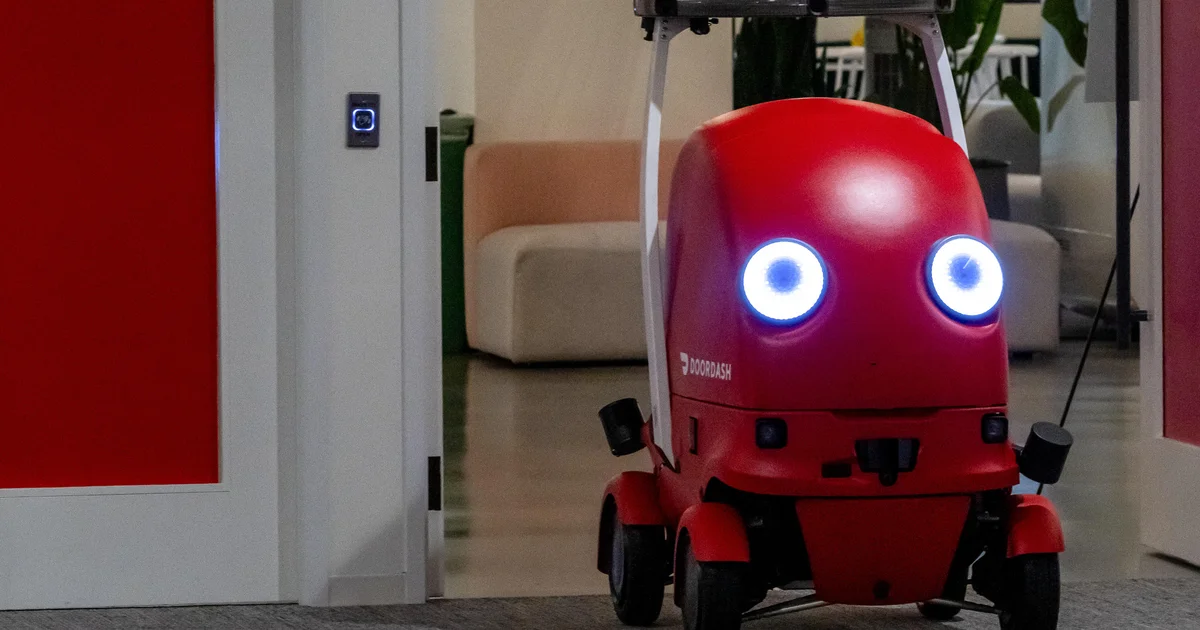
DoorDash has introduced a new autonomous delivery robot called Dot in Phoenix, designed to efficiently deliver small goods within local neighborhoods, navigating bike lanes, roads, and sidewalks at speeds up to 20 mph, aiming to enhance local commerce and delivery efficiency.
Cities: Skylines II has faced significant performance issues on PC, leading to its console release being delayed. The game's poor optimization can be attributed to Unity's new feature called DOTS (Data-Oriented Technology Stack), which was not fully developed. The lack of LOD variants for models and a limited culling system have resulted in unnecessary rendering and a heavy GPU load. The developers, Colossal Order, have acknowledged the issues and hope to improve performance with more time for optimization.