
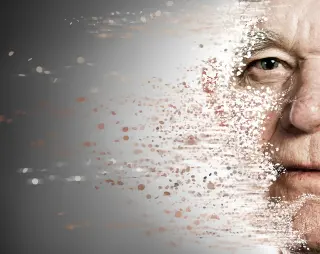
Two-Stage Aging Theory Links Early-Life Damage to Late-Life Disease
Researchers propose a two-stage aging framework in which damage accumulated early in life (infections, injuries, mutations) persists beneath the surface and, as aging progresses, age-related genetic activity and senescence unleash it, raising the risk of diseases like cancer and arthritis. Dormant insults (such as latent viruses or past injuries) may reactivate as immune function wanes, offering a unified view from evolutionary biology on why aging is the strongest risk factor for chronic illness and guiding future prevention efforts.