Tag

Gerontology

All articles tagged with #gerontology

Study Finds Higher BMI Linked to Longer Survival After Dementia Diagnosis
health2 days ago

Study Finds Higher BMI Linked to Longer Survival After Dementia Diagnosis

A 24-year study of 4,523 U.S. adults found that being overweight or obese at the time of a dementia diagnosis is associated with a significantly lower risk of death compared to normal weight. While midlife obesity remains a risk factor for developing dementia, higher body mass index (BMI) at diagnosis may provide protective metabolic reserves against disease-related wasting. Researchers caution that this is an observational association, not a recommendation to gain weight, and emphasize the critical role of nutritional support in dementia care.

Salivary Cortisol Patterns Predict Cognitive Decline in Older Adults
health-and-science24 days ago

Salivary Cortisol Patterns Predict Cognitive Decline in Older Adults

A new study from Rush University Medical Center links irregular and elevated salivary cortisol levels to faster cognitive decline in older adults. The research, which followed nearly 3,900 participants over 11 years, found that while Black and White participants exhibited different baseline cortisol patterns, both groups experienced similar cognitive outcomes based on the variability and overall levels of the stress hormone. The findings suggest that cortisol could serve as a biomarker for identifying individuals at higher risk for cognitive deterioration, though it did not predict the development of Alzheimer's disease.

Shingrix Vaccine Linked to Lower Dementia Risk in Nursing Home Residents
health3 months ago

Shingrix Vaccine Linked to Lower Dementia Risk in Nursing Home Residents

A Brown University-led analysis of more than 500,000 Medicare beneficiaries found that older adults who received the Shingrix shingles vaccine after entering skilled nursing facilities had about 24% fewer dementia diagnoses over four years compared with those unvaccinated, though the study cannot prove causation and residual differences between groups may influence results.

Two-Stage Aging Theory Links Early-Life Damage to Late-Life Disease
science3 months ago

Two-Stage Aging Theory Links Early-Life Damage to Late-Life Disease

Researchers propose a two-stage aging framework in which damage accumulated early in life (infections, injuries, mutations) persists beneath the surface and, as aging progresses, age-related genetic activity and senescence unleash it, raising the risk of diseases like cancer and arthritis. Dormant insults (such as latent viruses or past injuries) may reactivate as immune function wanes, offering a unified view from evolutionary biology on why aging is the strongest risk factor for chronic illness and guiding future prevention efforts.

Scientists Reveal Immunoglobulins' Dual Role in Aging
science1 year ago

Scientists Reveal Immunoglobulins' Dual Role in Aging

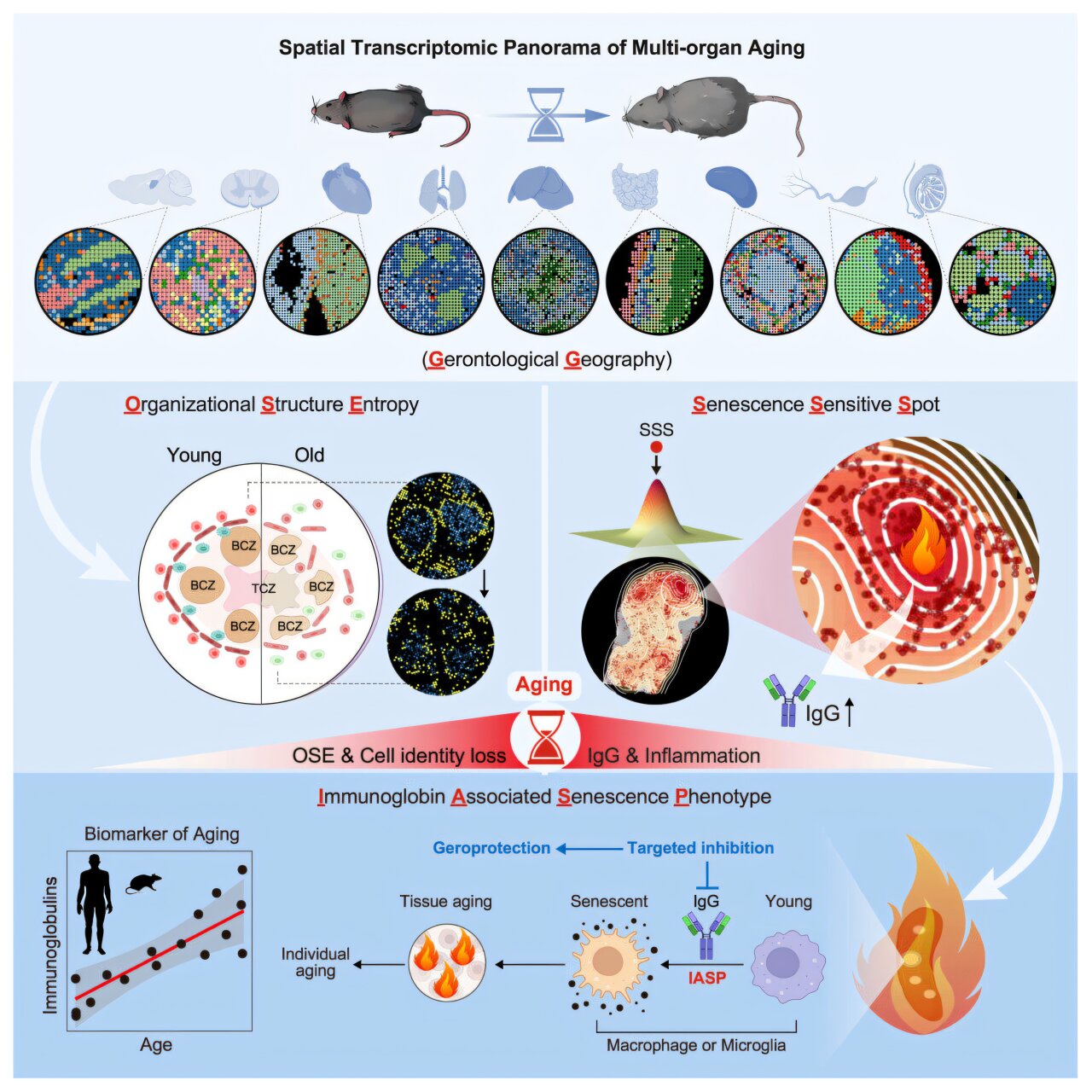
Scientists from the Chinese Academy of Sciences and BGI Research have discovered that immunoglobulins play a dual role in the aging process, potentially reshaping our understanding of aging. By creating high-precision spatial transcriptomic maps of nine organs in mice, the study identified immunoglobulin G (IgG) as a key driver of aging, which accumulates in tissues and induces aging effects. The research suggests IgG levels could serve as biomarkers for aging and introduces an intervention using antisense oligonucleotides to reduce IgG and delay aging.

"Unveiling the Secrets of Aging: Scientists Present Groundbreaking Theory on Selective Destruction"
science3 years ago

"Unveiling the Secrets of Aging: Scientists Present Groundbreaking Theory on Selective Destruction"

Scientists propose a new theory of aging called selective destruction theory (SDT), which suggests that aging is not solely tied to damage accumulation. The theory proposes that neighboring cells in multicellular organisms are in constant competition, and aging can occur through positive selection independent of energetic costs. The researchers used agent-based modeling to demonstrate how slow cells inducing epigenetic changes in faster cells can slow down metabolism and reduce unnecessary cell death, preventing overactivity disorders. This theory offers a new perspective in gerontology research and challenges the dominant disposable soma theory.