Trump attacked Fox News host Shannon Bream on Truth Social, calling her 'Milktoast' in a post about her questions on White House issues; the misspelling–likely intended 'milquetoast'–highlights a pattern of personal attacks on female journalists by the former president.
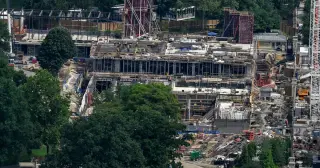
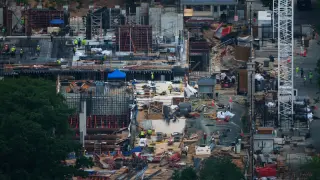
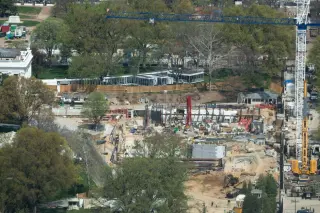
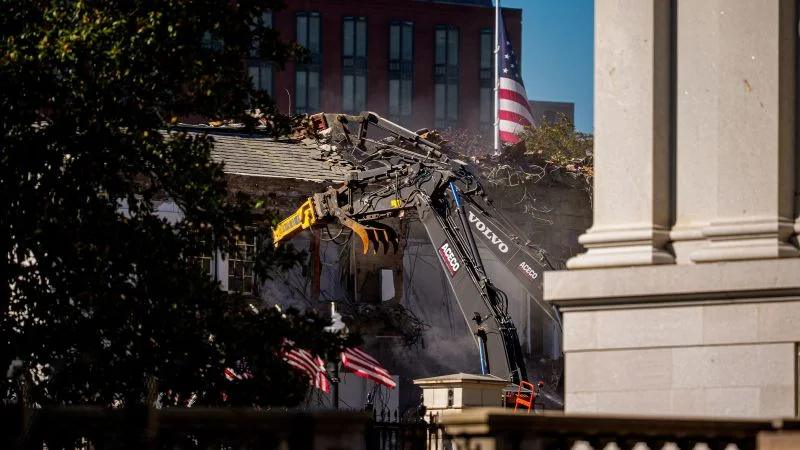
Aerial photos reveal sweeping White House renovations under Trump’s makeover, with cranes and scaffolding replacing part of the East Wing, the Rose Garden paved into a patio, North Portico scaffolding, and plans for a South Lawn helipad and added fencing.
Senators allege the White House redirected $352 million from a Trump tax-cut reconciliation bill earmarked for Secret Service and White House security toward financing the East Wing modernization and a Trump ballroom. The White House maintains private donations will cover the ballroom and that security needs justify the funds, while critics say it resembles covert taxpayer funding for a pet project and warn of long-term budget implications for security personnel and related programs.
Roughly 150 Democratic lawmakers filed an amicus brief arguing the White House East Wing’s demolition and reconstruction cannot proceed without explicit Congressional authorization and funding, asserting Congress controls federal property. The Trump administration contends a routine-maintenance statute and private funding justify the $400 million project, while Congress has only a small repair appropriation. A lawsuit from the National Trust for Historic Preservation is ongoing; a federal judge previously blocked progress, but a panel of appellate judges has temporarily allowed construction as the case proceeds.
President Trump pressed Senate leaders to secure about $1 billion in Secret Service funding—including $200 million for the East Wing renovation and ballroom—as part of a broader immigration enforcement bill, but the Senate parliamentarian ruled the measure couldn’t be voted on under budget reconciliation, leaving Republicans to craft alternative language to win support and bypass the filibuster.
Axios reports the White House will present line-by-line details of a $1 billion East Wing renovation, arguing the funding covers a broad set of security upgrades—not just a new ballroom—including hardened security at the White House, a new visitor screening facility, Secret Service training, and counter‑drone technology, with the package to be part of a budget reconciliation measure alongside ICE and Border Patrol funding.
Soil excavated from the White House East Wing demolition and dumped at East Potomac Golf Links tested positive for lead, chromium and other toxic metals, plus PCBs and pesticides, according to an interim Virginia engineering report. About 30,000 cubic yards of debris have been moved to the site amid lawsuits by the DC Preservation League alleging unlawful dumping and concerns over federal landmark protections; Interior Department officials say testing met legal standards and safety assessments are ongoing, with courts weighing related challenges and potential course alterations.
With the East Wing demolished, the White House state dinner for King Charles III will skip the traditional East Wing arrival and North Portico greeting; 120 guests will be admitted at multiple entry points, welcomed at the South Portico, enjoy cocktails and a private tour, then proceed to the East Room for a receiving line and dinner. Trump’s plan to build a 90,000-square-foot ballroom aims to host larger events, but security details and guest flow remain undisclosed as construction continues. The night preserves some rituals—toasts and entertainment—while removing the iconic East Wing entry that once symbolized the nonpolitical, public-facing side of White House operations.
An appeals court ruled that construction on the White House ballroom can continue for now, allowing ongoing work on the East Wing expansion to proceed while legal matters unfold.
An appeals court granted a stay allowing continued below-ground construction of a $400 million White House ballroom at the East Wing site while it weighs the legality of the project and a prior halt on above-ground work; the ruling does not decide merits, the work is privately funded by major donors, and a June 5 hearing is scheduled.
Architects warn that the East Wing ballroom is an oversized, flawed design, featuring fake north-facing windows, obstructed interior views, and stairs that lead to a wall, which could disrupt the White House’s symmetry. With a final NCPC vote slated for April 2 and intense public backlash against the project (private funding cited, demolition of the East Wing already underway), critics say the lavish addition is a “gaudy” misstep for a national symbol.
A federal judge challenged the Trump administration’s argument that the White House ballroom renovation and the East Wing demolition can proceed under presidential authority without congressional approval. Judge Richard Leon questioned the government’s claim, noting the project isn’t simply an “alteration” and criticizing the National Park Service’s asserted role. The case, brought by the National Trust for Historic Preservation, seeks to halt further work until Congress weighs in, with a ruling expected by the end of March and potential for appeals; Trump has suggested work could begin as soon as April if allowed.
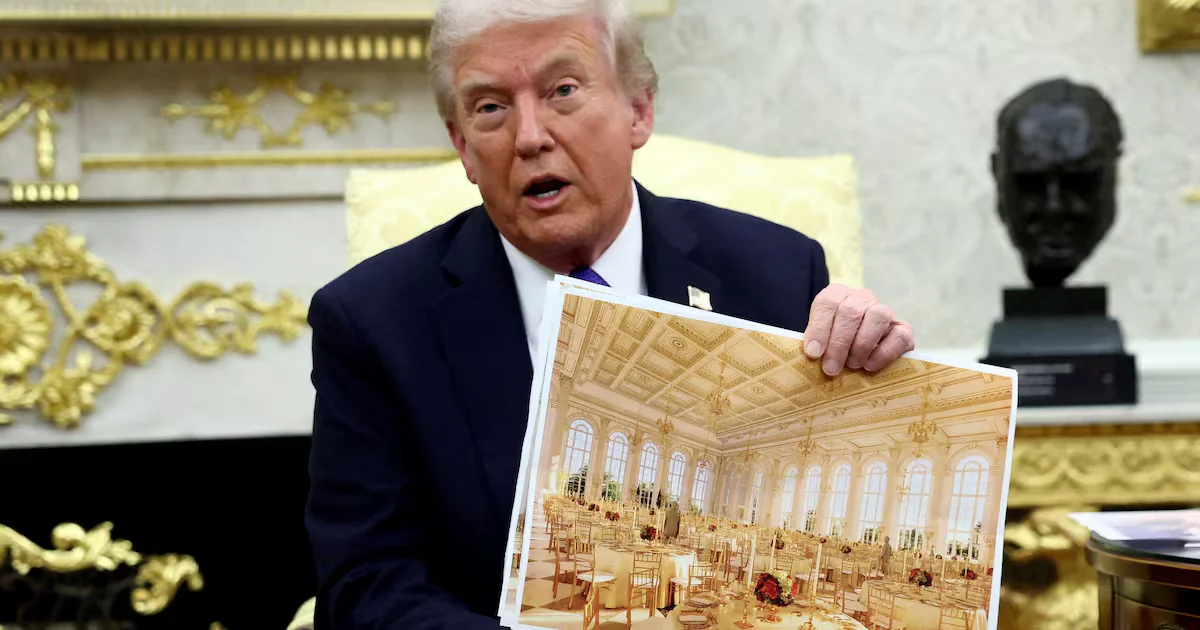
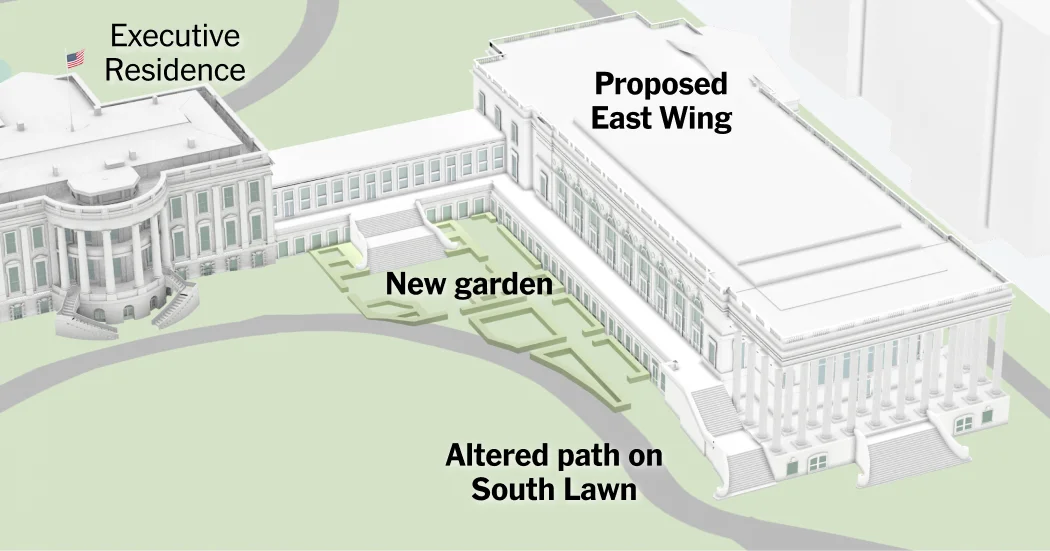
The New York Times’ 3-D model shows President Trump’s proposed East Wing ballroom would be larger than the Executive Residence and West Wing combined, with an off-center east portico, a larger south garden, and a ballroom capacity of at least 1,000. The plan, valued around $400 million, would upend the White House’s architectural hierarchy and symmetry. It has prompted criticism from scholars and public comments, and a vote on the design was delayed as the project’s architect shifted from James McCrery to Shalom Baranes Associates.
A federal judge declined to stop construction of the White House East Wing ballroom, ruling the current lawsuit focuses on the wrong questions about presidential authority and inviting the plaintiffs to amend to challenge the private-funding scheme; work will continue while the case is revised, highlighting debates over donor influence and congressional authorization.
A federal planning panel largely composed of Trump appointees approved the White House East Wing ballroom proposal, with renderings and ongoing construction shown and a March 5 hearing noted as part of the approval process.