
Tag

Embodied Ai

All articles tagged with #embodied ai

China’s AI Strategy: Deployment Over Frontier Models
technology1 month ago

China’s AI Strategy: Deployment Over Frontier Models

Gordon Saft of Rest of World reports that a recent trip to China revealed an AI landscape strikingly similar to the US, despite political differences. While the US focuses on frontier model capabilities, China is aggressively deploying AI into physical sectors like robotics, manufacturing, and electric vehicles. This shift suggests that embedding AI in the economy may be more critical than owning the best model, turning US export controls into a strategic advantage for Beijing.

Nanoleaf Finds Bigger Horizon as OneRobotics Bets on AI-Driven Smart Homes
tech4 months ago

Nanoleaf Finds Bigger Horizon as OneRobotics Bets on AI-Driven Smart Homes

Nanoleaf is being acquired by OneRobotics, the parent company of SwitchBot, in a deal reportedly around $40 million over two years. Nanoleaf will remain independent and be run by Gimmy Chu and Christian Yan, with plans for product integrations between the two companies. The deal brings cash and access to manufacturing and supply chains to scale Nanoleaf’s embodied AI and robotics ambitions, while OneRobotics/SwitchBot expands its footprint in AI-powered smart homes and brick-and-mortar retail across North America and Europe.

Voyager: The First Lifelong Learning Agent for In-Context Minecraft Play.
artificial-intelligence3 years ago

Voyager: The First Lifelong Learning Agent for In-Context Minecraft Play.

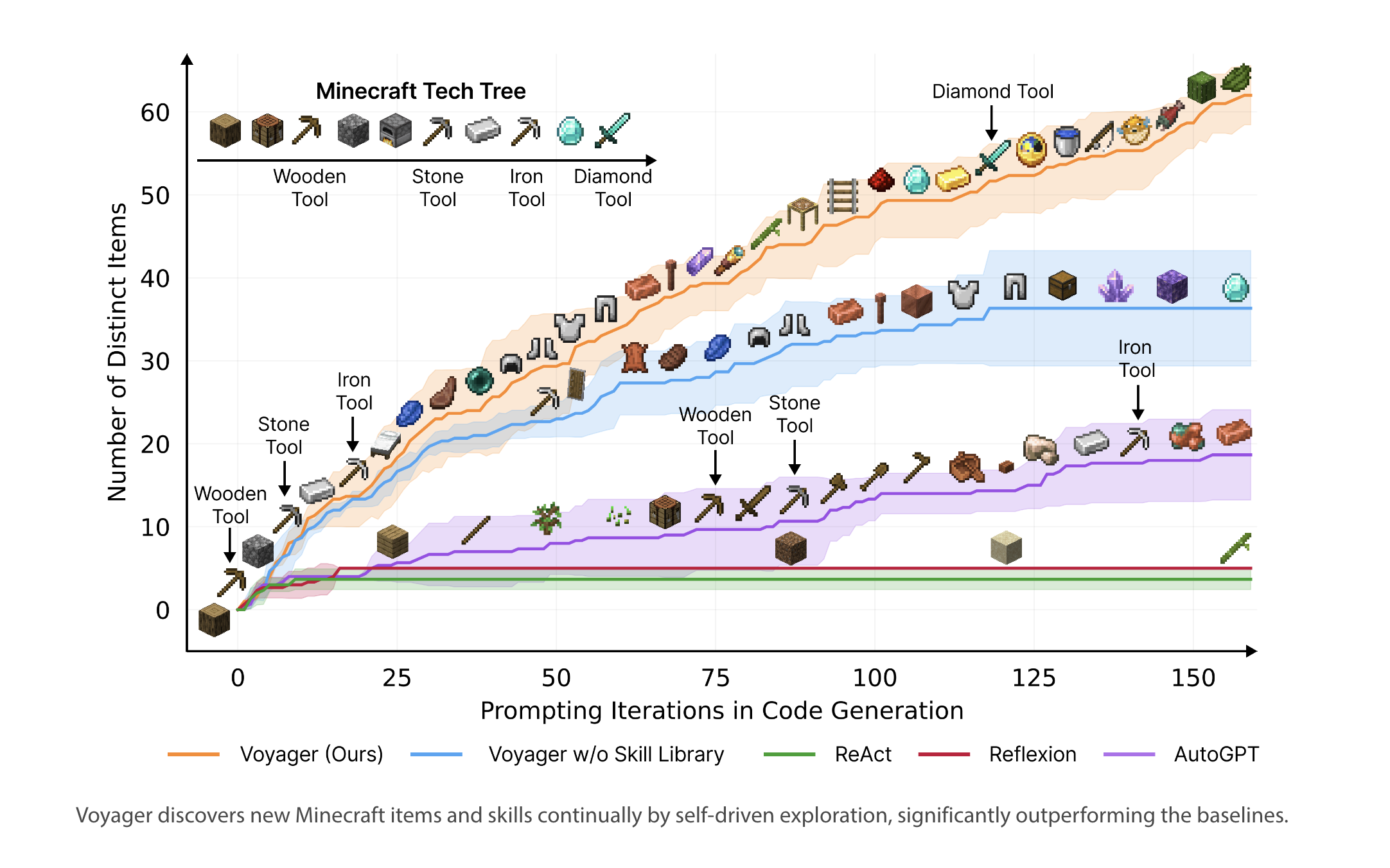
Voyager is the first lifelong learning agent in Minecraft powered by GPT-4, with an automatic curriculum, an ever-expanding skill library, and a prompting mechanism for program enhancement. Voyager's talents grow fast thanks to the compositional synthesis of complex skills, which prevents catastrophic forgetting. Voyager demonstrates extraordinary performance in Minecraft and a robust contextual lifetime learning potential. However, limitations include the cost of GPT-4 API, inaccuracies, and hallucinations. Researchers are optimistic that future updates to GPT API models and cutting-edge methods for fine-tuning open-source LLMs will eliminate these drawbacks.