A Chinese supercomputer has overtaken U.S. machines to become the world’s fastest, signaling a major milestone in high‑performance computing and intensifying global competition in advanced technology.
At ISC 2026, LineShine debuts at No. 1 on the TOP500 with 2.198 exaflops in HPL (CPU‑only LingKun cores), signaling a new global exascale era as Asia joins North America and Europe at the forefront. El Capitan remains No. 2 and Frontier No. 3, while Aurora and JUPITER Booster sit at Nos. 4–5 and HPC7 enters the Top 10 at No. 6. The list shows diversified architectures across continents, with Green500 leaders unchanged. LineShine also leads HPCG, while El Capitan remains No. 1 on HPL‑MxP.
The 65th TOP500 list highlights the continued dominance of the El Capitan supercomputer at Lawrence Livermore National Laboratory as the top system, with the US leading in Exascale systems alongside Frontier and Aurora. The list also features new advancements like the JUPITER Booster in Germany and updates on energy efficiency and benchmark performance, reflecting ongoing progress in high-performance computing.
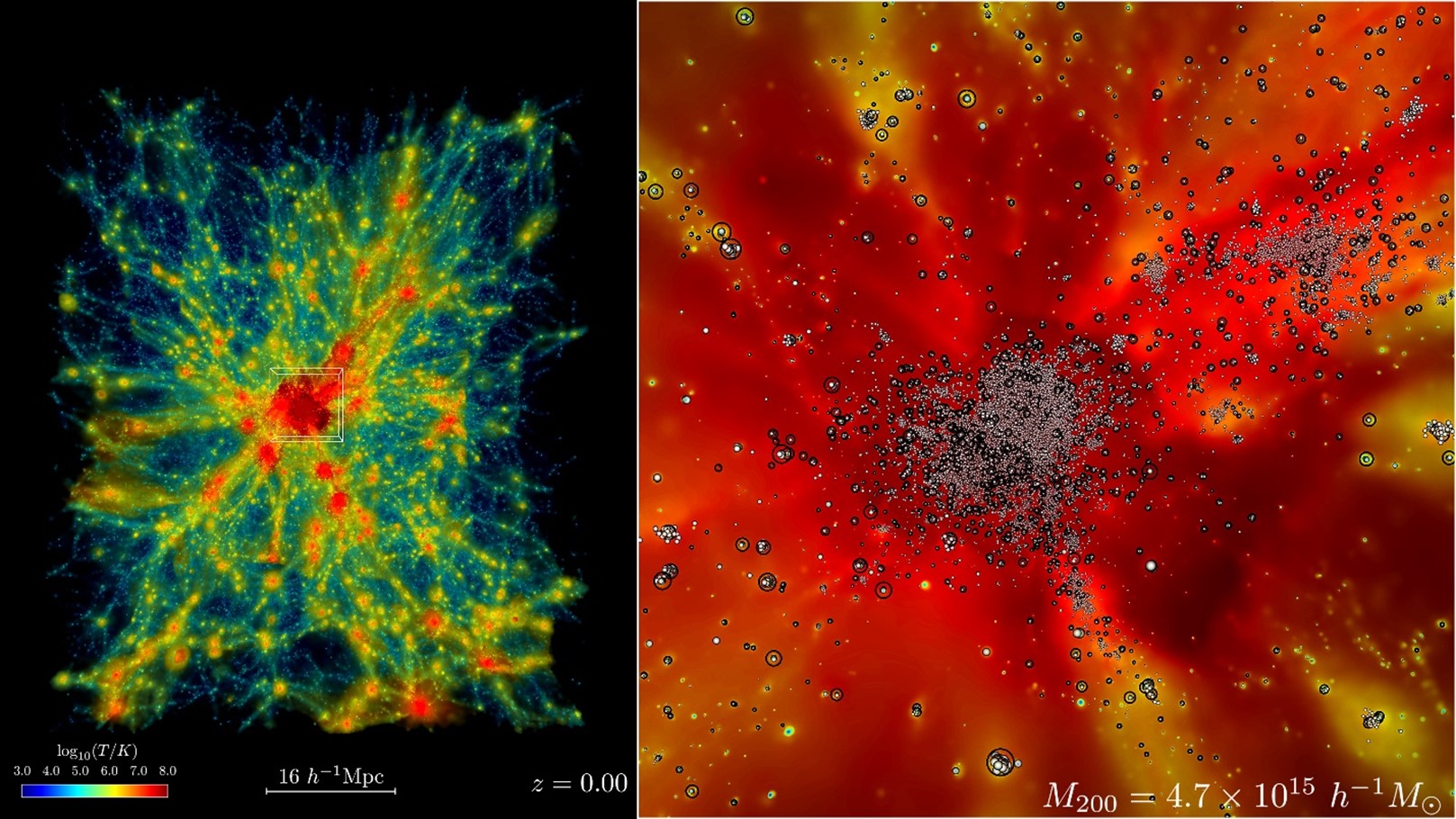
Scientists at Argonne National Laboratory have used the Frontier supercomputer to create the largest astrophysical simulation of the Universe, covering a volume 10 billion light years across. This exascale supercomputer allows for unprecedented detail in simulating dark matter, dark energy, and other cosmic phenomena, providing new insights into galaxy formation and the Universe's large-scale structure. Frontier's capabilities extend beyond astrophysics, with applications in molecular dynamics, energy systems, and climate change modeling.