Tag

Hpc

All articles tagged with #hpc

Intel Unveils D270 GPU Benchmarks, Claiming 5.9x Lead in HPC Over NVIDIA
technology7 days ago

Intel Unveils D270 GPU Benchmarks, Claiming 5.9x Lead in HPC Over NVIDIA

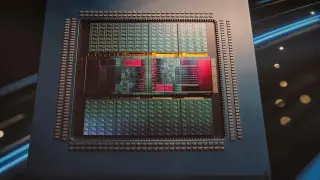
Intel has released initial performance data for its D270 'Crescent Island' data center GPU, highlighting significant advantages in high-performance computing (HPC) workloads. The chip, based on the Xe3P architecture, features 32 cores, 256 matrix engines, and up to 480GB of LPDDR5X memory within a 350W power envelope. In financial modeling tests, the D270 achieved up to 5.9 times the throughput of the NVIDIA RTX PRO 6000 Blackwell, which operates at 600W. Intel also reported a 1.12x throughput advantage in AI inference tasks and 29% lower latency in agentic models. These results, presented at Supercomputing 2026, emphasize the GPU’s native FP64 support and open software stack, positioning it as a competitive alternative for mixed HPC and AI workflows.

technology13 days ago

AMD Unveils Zen 6 EPYC Venice: 9686F Hits 5.3GHz, 9996 Tops 256 Cores

AMD has launched its sixth-generation EPYC 9006 'Venice' server processors, introducing the Zen 6 microarchitecture on TSMC’s 2nm N2P node. The lineup features the EPYC 9996 with 256 cores per socket and the high-frequency EPYC 9686F, which boosts to 5.3GHz. AMD claims a 27% average IPC uplift over Zen 5, with specific gains of 20% in enterprise and 31% in AI workloads. The new platform supports PCIe Gen 6.0 and MRDIMM memory at 12,800 MT/s, offering up to 1.6 TB/s bandwidth per socket. While the 9686F was initially announced at 5.0GHz, AMD increased the clock speed to 5.3GHz due to better silicon yields. Microsoft Azure is the first cloud provider to offer preview instances based on Venice. Independent benchmarks show the dual-socket 9996 configuration delivering up to 93% performance gains in SPEC CPU 2026 integer throughput compared to the previous generation. The EPYC 9686F outperforms NVIDIA’s Vera CPU in scientific and HPC workloads, positioning AMD as a strong contender for server CPU market leadership.

AMD Unveils Zen 6 Venice EPYC: 256‑Core HPC Power on 2nm
technology4 months ago

AMD Unveils Zen 6 Venice EPYC: 256‑Core HPC Power on 2nm

AMD teased its 6th‑gen EPYC Venice CPUs based on Zen 6, led by a 256‑core flagship built for HPC and AI workloads. The chip combines eight CCDs with two large IO dies, and uses TSMC’s 2nm process to enable PCIe 6.0, UCIe, and DDR5 support, delivering AMD’s claimed ~70% gains in performance and efficiency and a 30%+ increase in thread density. Positioned for Helios AI racks to handle agentic AI workloads, Venice faces competition from Nvidia’s Vera systems as CPUs become more central to data‑center AI workflows.

CUDA Without Vendor Lock: SCALE lets Nvidia CUDA run on AMD GPUs
technology4 months ago

CUDA Without Vendor Lock: SCALE lets Nvidia CUDA run on AMD GPUs

Spectral Compute’s SCALE compiler acts as a drop-in replacement for Nvidia’s NVCC, recompiling CUDA code for non-Nvidia GPUs (starting with AMD) so existing CUDA apps run on other hardware without rewrites. The London startup claims CUDA remains the de facto HPC standard and argues its approach preserves accuracy and can outperform HIPIFY-based porting on AMD GPUs, with some benchmarks nearing sixfold gains. Founded in 2018 and about 30 employees, Spectral is expanding toward additional accelerators and CUDA libraries (cuDNN, PyTorch integration) while continuing Nvidia support, and has tested SCALE on Frontier; the company stresses neutrality and collaboration rather than direct competition with Nvidia.

technology7 months ago

Ryzen 9 9950X3D2 Dual Edition Delivers Notable HPC and Dev Gains

Phoronix’s complementary analysis finds the Ryzen 9 9950X3D2 Dual Edition delivering meaningful gains across developer- and HPC-focused workloads on AM5: the geo-mean across 300+ benchmarks is about 10% faster than the 9950X/9950X3D, code compilation is ~7% quicker, HPC performance is around 12% faster overall with some workloads seeing larger gains (e.g., Fortran/CFD suites), and chess engines are about 23% faster (LCzero/Stockfish). At $899 it offers strong value for CI/CD, open‑source, and HPC workloads on an AM5 platform, though AVX-512-heavy tasks still favor the Ryzen 9 9000-series and competing options. An interactive benchmark viewer is provided for deeper analysis.

technology1 year ago

Top500 Supercomputers Showcase Rapid Advances and Strategic Collaborations

The 65th TOP500 list highlights the continued dominance of the El Capitan supercomputer at Lawrence Livermore National Laboratory as the top system, with the US leading in Exascale systems alongside Frontier and Aurora. The list also features new advancements like the JUPITER Booster in Germany and updates on energy efficiency and benchmark performance, reflecting ongoing progress in high-performance computing.

NVIDIA Unveils GB200 NVL4 with Quad GPUs and Dual CPUs for AI Supercomputing
technology2 years ago

NVIDIA Unveils GB200 NVL4 with Quad GPUs and Dual CPUs for AI Supercomputing

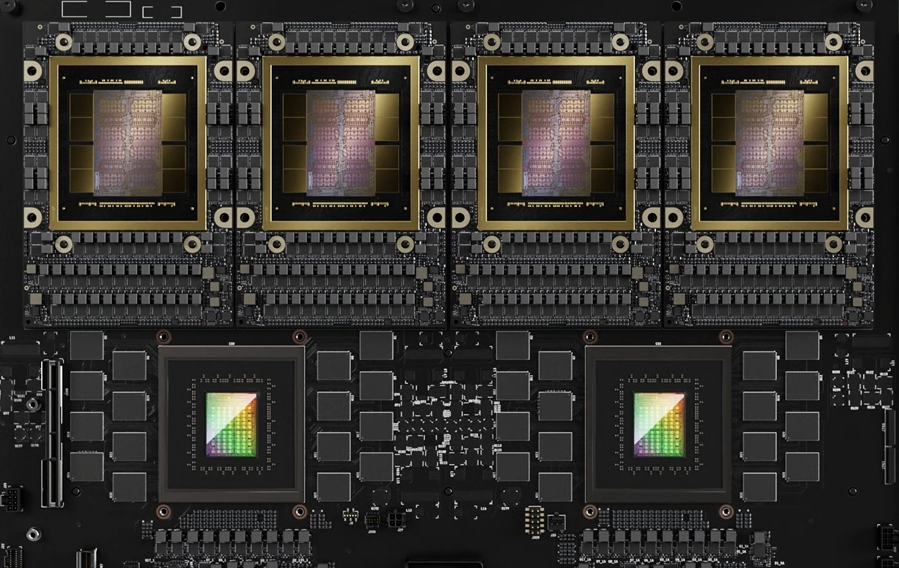
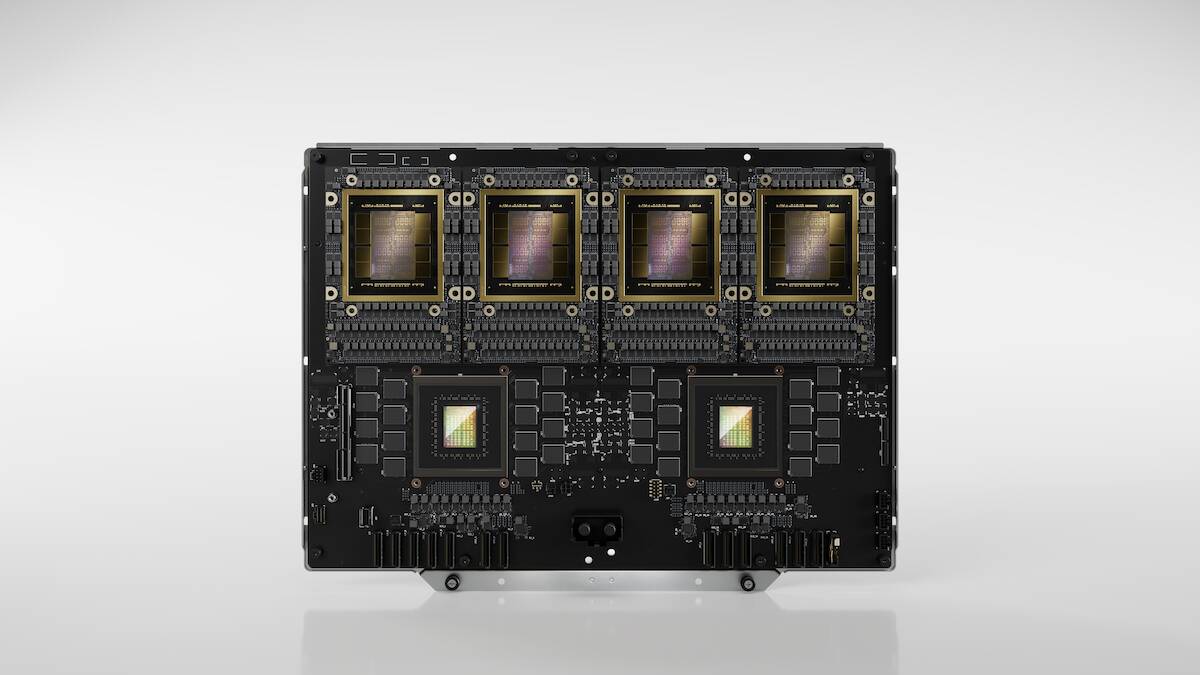
NVIDIA has announced its new Blackwell GB200 NVL4 solution, featuring four GPUs and two Grace CPUs, designed for high-performance computing (HPC) and AI workloads. Alongside, the Hopper H200 NVL is now generally available, offering enhanced performance with 1.5x more HBM memory and 1.7x better LLM inference performance. The GB200 NVL4 module doubles CPU and GPU capabilities, providing significant improvements in simulation and training performance. NVIDIA continues to push AI advancements with plans for future infrastructure developments.

NVIDIA Unveils Powerhouse GB200 NVL4 with Quad GPUs and Dual CPUs
technology2 years ago

NVIDIA Unveils Powerhouse GB200 NVL4 with Quad GPUs and Dual CPUs

Nvidia has unveiled its latest high-performance computing (HPC) and AI chip, the GB200 NVL4, which integrates four Blackwell GPUs and two Grace CPUs on a single board, consuming 5.4 kilowatts of power. This configuration, showcased at the Supercomputing event in Atlanta, allows for significant compute power without relying on Nvidia's proprietary interconnects, making it compatible with existing HPC systems from companies like HPE and Eviden. The GB200 NVL4 can deliver up to 10 petaFLOPS of FP64 compute per cabinet, although AMD-based systems still offer higher floating-point performance. Nvidia also announced the H200 NVL, a PCIe-based configuration that supports up to 13.3 petaFLOPS of FP8 performance with sparsity, emphasizing flexibility and compatibility with standard server racks.

El Capitan Becomes World's Fastest Supercomputer, Overtakes Frontier
technology2 years ago

El Capitan Becomes World's Fastest Supercomputer, Overtakes Frontier

AMD has surpassed Nvidia in the November Top500 supercomputer rankings, largely due to the new "El Capitan" system, which features AMD's hybrid CPU-GPU compute engines. El Capitan, built by Hewlett Packard Enterprise, has achieved a peak theoretical performance of 2,746.4 petaflops, making it the most powerful supercomputer on the list. AMD's GPUs now account for 72.1% of the new performance added to the rankings, marking a significant shift in the high-performance computing landscape.

TSMC's Q1'24 Revenue Share Drops, Q2 Sales Expected to Soar on AI Demand
semiconductors2 years ago

TSMC's Q1'24 Revenue Share Drops, Q2 Sales Expected to Soar on AI Demand

TSMC's Q1 2024 revenue reached $18.87 billion, up 12.9% year-over-year but down 3.8% quarter-over-quarter, with HPC processors driving the rebound while N3 (3nm) revenue share steeply declined. N3 wafer sales accounted for 9% of revenue, down from 15% in Q4 2023, while N5 (5nm) and N7 (7nm) revenue shares increased. TSMC attributes the N3 decline to seasonally lower smartphone demand, but expects HPC platform to continue increasing its revenue share, driven by AI processors.

"China's Record-Breaking Supercomputer Virtually Deconstructed"
technology2 years ago

"China's Record-Breaking Supercomputer Virtually Deconstructed"

China has quietly launched the Tianhe-3 supercomputer, believed to be the most powerful machine currently in existence, with a peak performance of 2.05 exaflops. The machine's architecture, including its processor, has sparked speculation, with insights suggesting it uses a hybrid device with CPU and accelerator compute as well as three different kinds of memory. The supercomputer is expected to support various application scenarios, including high-performance computing, AI large model training, and big data analysis.

"NVIDIA's Grace-Hopper Superchip Challenges Intel in HPC Performance"
technology2 years ago

"NVIDIA's Grace-Hopper Superchip Challenges Intel in HPC Performance"

NVIDIA's GH200 Grace Hopper Superchip, featuring a 72-core ARM CPU, has been tested and performs competitively against AMD EPYC and Intel Xeon counterparts. The chip, designed for high-performance computing and cloud applications, offers up to 144 Arm v9 CPU cores and boasts impressive specifications, including LPDDR5x with ECC Memory and a coherent interface 7X faster than PCIe Gen 5. In benchmarks, the Grace CPU demonstrated performance close to top Intel and AMD CPUs, with potential for further optimization. While power and efficiency testing is pending, the chip's lower estimated power consumption compared to leading CPUs is promising, positioning NVIDIA's entry into the Arm CPU segment as a strong start.

"Nvidia's 'Grace' Arm CPU Competes with X86 for High Performance Computing"
technology2 years ago

"Nvidia's 'Grace' Arm CPU Competes with X86 for High Performance Computing"

Nvidia's "Grace" CG100 server processor, designed for HPC simulation and modeling workloads, holds its own against X86 for HPC, with high core count, low thermal footprint, and LPDDR5 memory. The Grace-Grace superchip, with 144 Arm Neoverse "Demeter" V2 cores and 1 TB of physical memory, shows promising performance in benchmark tests conducted by major supercomputing labs. Early results from the Barcelona Supercomputing Center and the State University of New York campuses in Stony Brook and Buffalo demonstrate the Grace CPU's ability to handle HPC workloads effectively, making it a competitive option for HPC applications.