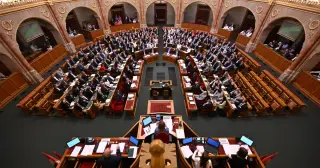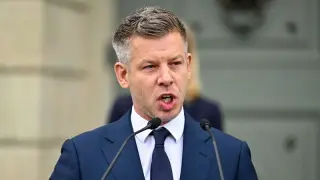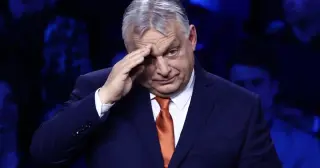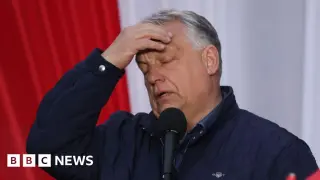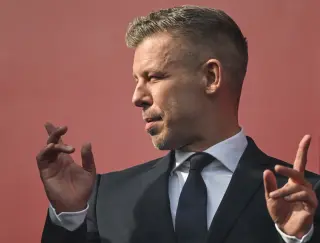
Péter Magyar, sworn in as Hungary’s prime minister, apologized to civilians, journalists and others harmed under Viktor Orbán, pledging a more free, humane future and a unifying approach as analysts weigh how his leadership will differ from the ruling party's long rule.
Hungary’s outgoing prime minister Viktor Orbán says he is relinquishing his seat in parliament after Fidesz’s defeat to Péter Magyar’s Tisza party in the April election. Orbán plans to seek reelection as Fidesz leader in June, with the party restructuring its parliamentary group under Gergely Gulyás. Péter Magyar is expected to be installed as prime minister in early May. The reshuffle could pave the way for swift reforms to unlock about €17 billion in EU funds tied up over rule-of-law concerns.
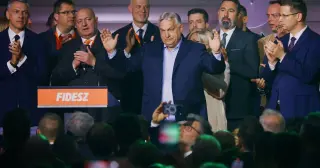
Hungary's outgoing prime minister Viktor Orbán says he will not take his seat in parliament after Fidesz’s crushing loss in the 12 April election; he remains an MP on the party list and vows to help reorganize the patriotic movement, as a rival two-thirds majority won by Péter Magyar’s Tisza party sets the stage for a major domestic and global policy reset, with Gulyás Gergely to lead the Fidesz bloc.
Viktor Orbán’s long-running grip on Hungary collapses as Péter Magyar unites the opposition to win the April 2026 election, propelled by a 2024 corruption scandal that damaged trust, a stagnating economy with high inflation, and a media landscape that finally amplified the challenger’s message, while foreign-policy tensions over Russia/Ukraine and a youth turnout that swung against Orbán helped seal his defeat.
Viktor Orban conceded defeat in Hungary’s general election as the opposition led by Peter Magyar appears set to form the government with a two-thirds majority (roughly 137 seats to Fidesz’s 55) after very high turnout. Magyar celebrated a change for Hungary, while Orban pledged to stay involved. The result ends Orban’s 16-year rule and could reshape Hungary’s EU relations and stance on Ukraine, with broader implications for European security and the global model of illiberal democracy he promoted.
Viktor Orbán seeks a fifth consecutive term in Hungary as polls show the opposition led by Péter Magyar ahead, but Hungary’s gerrymandered electoral system could still produce a close result. Magyar’s campaign focuses on domestic issues like the economy and corruption, while Orbán frames Ukraine and EU tensions as national security threats. The race has drawn unusual levels of attention from the United States and Europe, amid debates over Ukraine aid and Hungary’s EU role.
Hungary begins a crucial parliamentary election with long-time PM Viktor Orban facing a strong challenge from the center-right Tisza party; polls show Tisza ahead by several points amid public fatigue over stagnating growth and high living costs. The outcome is uncertain due to a redrawn electoral map and a high potential turnout, drawing scrutiny from the EU, the United States, and Russia as observers weigh whether Orban’s 16-year rule will end and how it would affect Hungary’s course with the EU and support for Ukraine.
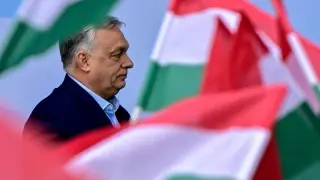
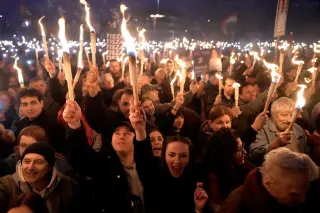
Hungary's Prime Minister Viktor Orban and opposition leader Peter Magyar held closing campaign rallies—Orban addressing supporters in Budapest and Magyar in Debrecen—as voters head to a tightly watched election.
Hungary’s long-time PM Viktor Orbán and his Fidesz party appear poised to face a setback as polls show the opposition Péter Magyar–led Tisza Party pulling ahead in the parliamentary race. A IDEA Institute poll put Fidesz at about 37% of decided voters vs. 50% for the opposition, signaling a possible end to Orbán’s two-decade rule. International observers cite democratic backsliding, including questions over judiciary independence, media freedom, and corruption concerns raised by groups like Freedom House and Transparency International. The campaign has also highlighted a close U.S. alignment, with Donald Trump publicly endorsing Orbán and American politicians like Vice President JD Vance campaigning with him, reflecting a broader transatlantic debate about conservative governance models and regional politics. A potential Orbán defeat would mark a major shift for Hungary and could reshape EU dynamics and U.S.–Hungary ties.
With Hungary's Sunday vote approaching, polls show the opposition Tisza Party leading Fidesz, though projections vary; Medián alone suggests Tisza could win 138–143 of 199 seats, potentially a two-thirds majority, while other polls show smaller leads or a Fidesz win. Demographics favor Tisza among the young and educated, and scandals affecting the government have dented support, making turnout and undecided voters crucial as Orbán remains cautiously confident.
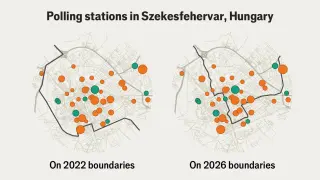
Despite 16 years of electoral tinkering by Viktor Orban and his Fidesz party—redistricting, voting-rule changes, and other tactics—the liberal opposition in Hungary could still win the April 12 election, according to our analysis of how the system works and how it might be beatable.
Polls show Viktor Orban facing his toughest test since 2010 as Peter Magyar’s Tisza party edges ahead in some surveys, with campaigns focusing on wages, prices and services; Orban accuses Magyar of bowing to the EU while opponents push a Western-leaning agenda. Despite Trump’s praise and planned U.S. visits, analysts say domestic issues will largely decide the April 12 vote, and observers note past elections favored Fidesz. A loss could reverberate across Europe’s right‑wing movements and the transatlantic conservative network.
Trump-aligned MAGA figures are rallying to support Viktor Orbán as he confronts a high-stakes April 12 Hungarian election marked by economic woes, living costs, and a string of scandals; polls show Orbán’s Fidesz trailing the opposition led by Péter Magyar, prompting intense White House attention and a push from Trump allies, even as Orbán’s ties to Trump and his illiberal governance model complicate Europe-wide nationalist movements and risk diplomatic headaches over Ukraine and energy policy.
Peter Magyar, a former Fidesz member who leads the opposition party Tisza, is seen as a possible challenger to Viktor Orban. Even as Orban trails in polls, observers note that election rules and incumbency advantages could still favor him, with Hungary's elite MCC circle reportedly backing Orban while some students view Magyar’s rise with optimism.
Orban trails in polls ahead of Hungary’s next election, but the ruling party’s entrenched power and election rules keep his grip resilient while an opposition surge led by Peter Magyar’s Tisza party gains momentum, signaling a closer race than many anticipated.