
Cohesin loop extrusion rewires replication forks to curb stress-induced fork reversal
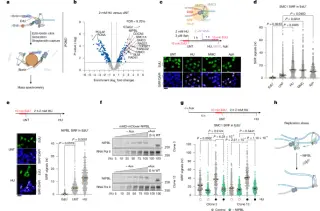
Cohesin loop extrusion accumulates at stalled replication forks to reshape nascent DNA contacts, slowing fork progression and promoting fork reversal under replication stress; this NIPBL-dependent mechanism also tightens inter- and intra-replicon contacts to preserve genome stability, and its disruption sensitizes cells to genotoxic agents, with implications for cancers carrying cohesin mutations.