Cohesin loop extrusion drives replication fork reversal to maintain genome stability under stress
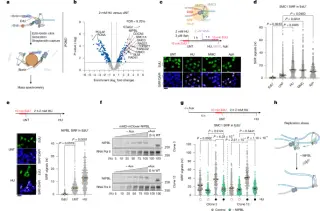
A new study in Nature reveals that the cohesin complex actively reshapes DNA replication forks under stress. By using loop extrusion, cohesin limits sister-fork coupling and promotes inter-replicon contacts, which facilitates fork slowing and reversal. This mechanism prevents the primase PRIMPOL from causing discontinuous DNA synthesis, thereby ensuring genome stability. The findings suggest that cohesin mutations in tumors could impact cancer therapy efficacy.