
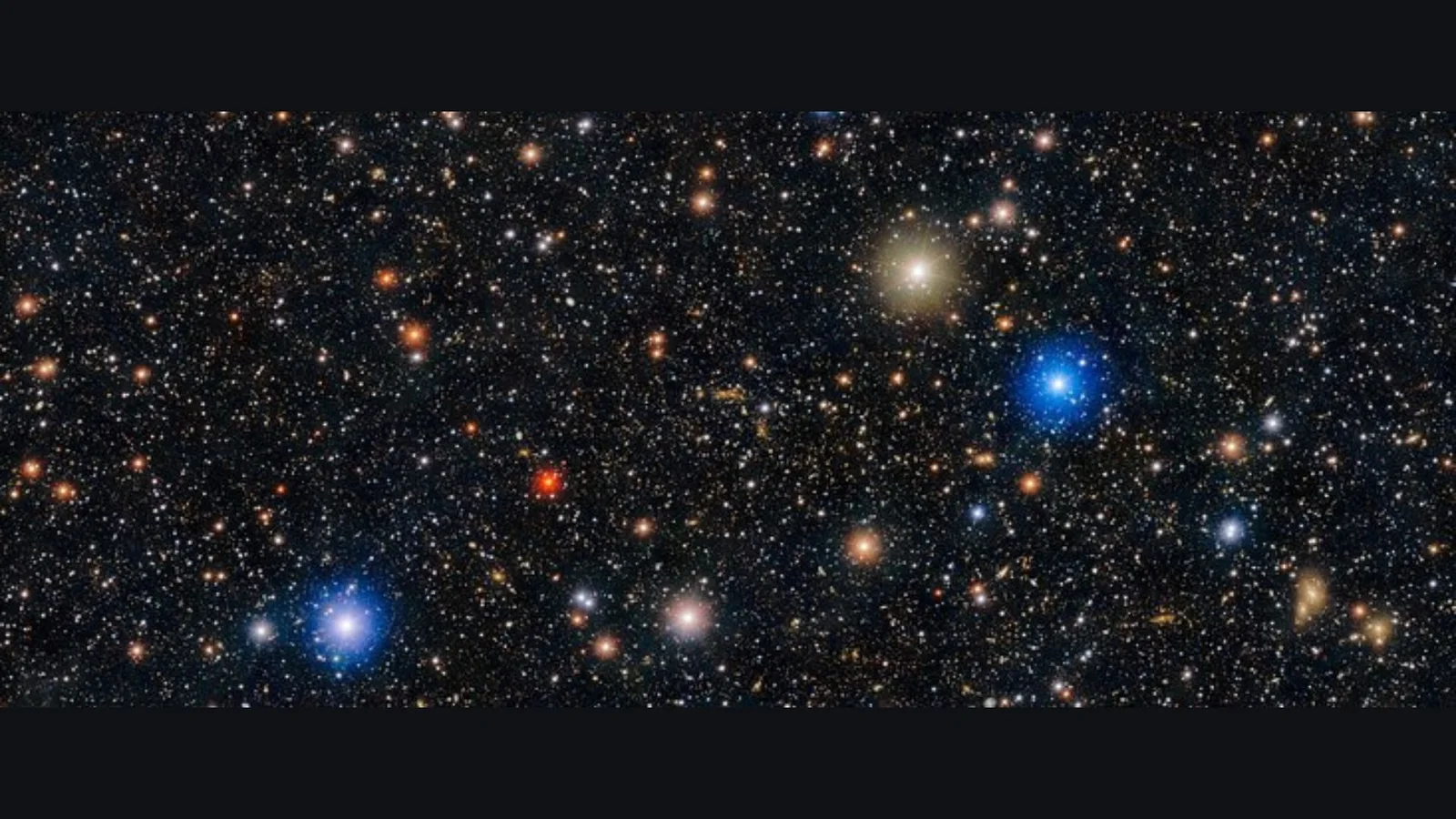
Tag

Galaxy Clustering

All articles tagged with #galaxy clustering

DES six-year results largely confirm standard cosmology, with a notable caveat on galaxy clustering
physics-and-astronomy2 months ago

DES six-year results largely confirm standard cosmology, with a notable caveat on galaxy clustering

The Dark Energy Survey’s six-year analysis of 669 million galaxies finds results consistent with the standard cosmology, with both a constant dark-energy density and a time-varying version fitting the data comparably well. However, patterns in how galaxies cluster still show slight tensions with predictions, indicating the model is not complete. The study tightens expansion history constraints and paves the way for further tests with the Vera C. Rubin Observatory, aiming to clarify dark energy’s nature and whether new physics may be needed.
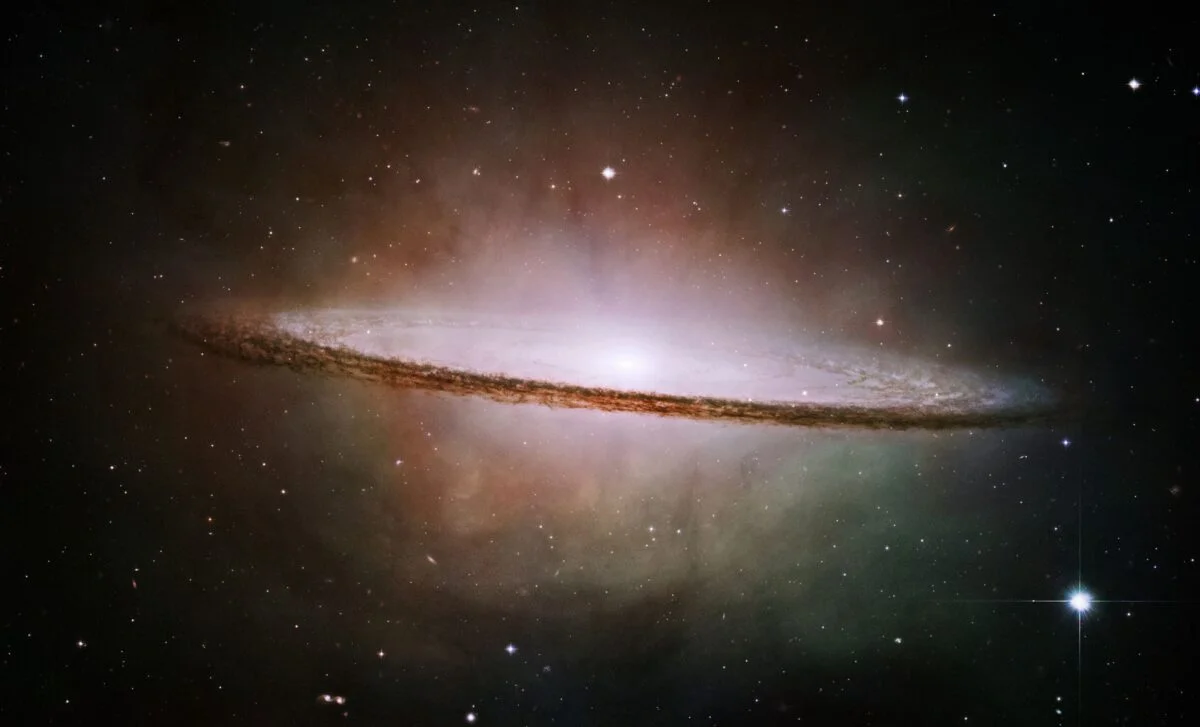
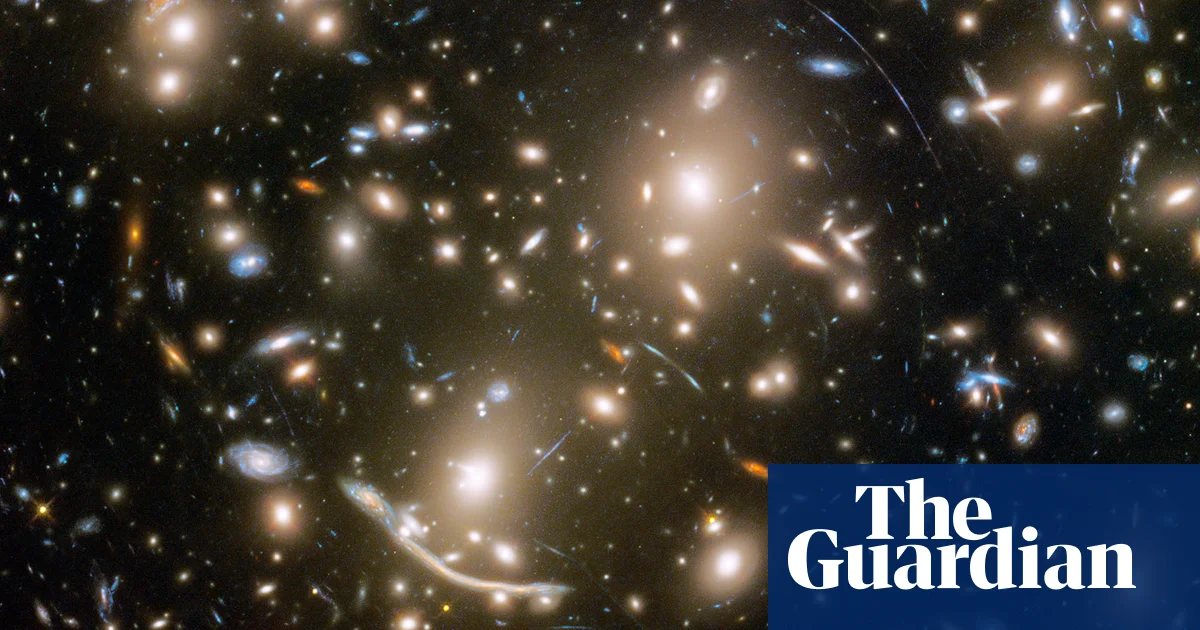
Dark Energy Revealed: DES Maps the Cosmos Across 669 Million Galaxies
space2 months ago

Dark Energy Revealed: DES Maps the Cosmos Across 669 Million Galaxies

Using six years of DES data from the Dark Energy Camera, researchers mapped 669 million galaxies (2013–2019) to trace how dark energy drives cosmic expansion and how matter clusters, applying four probes (Type Ia supernovae, weak lensing, galaxy clustering, and baryon acoustic oscillations). The results largely support ΛCDM and wCDM expansion scenarios but show a growing mismatch in current matter clustering, hinting at potential new physics or gaps in existing models; DES will merge with Rubin Observatory's LSST to map ~20 billion galaxies and sharpen tests of gravity and dark energy.

Remembering Nick Kaiser: A Life Well-Lived
science2 years ago

Remembering Nick Kaiser: A Life Well-Lived

Nick Kaiser, a renowned cosmologist, has passed away at the age of 68. His groundbreaking research between 1984 and 1992 laid the foundation for mapping the large-scale distribution of dark matter in the universe. Kaiser's work on galaxy clustering and gravitational lensing has been instrumental in modern cosmological experiments, including the recently launched Euclid satellite. His contributions have significantly advanced our understanding of the structure of the universe and have paved the way for further research in the field of cosmology.