Google Photos for Android now features a floating bottom bar with Photos, Collections, Create, and the Gemini AI Ask Photos search, a redesign that matches the iOS version introduced five months earlier; the update appears in version 7.82 via a server-side rollout and the bar no longer blocks content.
Hidden strings in the latest Google Maps build point to an upcoming feature called 'Ask Maps to order food' that would let Maps place a restaurant order via Gemini-powered natural-language conversations, potentially replacing separate ordering apps. The feature isn’t live yet, and it’s unclear whether ordering would happen in the cloud or on-device, with no public test or launch timeline.
Google's 2026 Home Speaker uses Gemini AI with a built-in NPU to offer faster, more capable responses and improved audio for a $99 price, while integrating deeply with the Google Home ecosystem and serving as a potential TV surround speaker. It comes in Hazel and Porcelain globally, with Jade (US exclusive) and Berry variants, and uses a fixed USB-C power cable. While overall performance is solid and audio quality is strong, some commands (like timers and lists) can be unexpectedly slow, and there are software quirks Google is addressing. Overall, it marks a strong return-to-form for Google's smart speaker lineup.
ZDNET tester assesses Google's Organize My Files, powered by Gemini AI, which suggests moves and new folders to tidy Drive. It can surface useful reorganizations (like resumes and a new Family/Real Estate folder), but the tool feels unfinished: suggestions can repeat, it misses deeper cleanup, and it requires Google Workspace and AI access. As a result, the reviewer still faces a messy Drive and ongoing subscription costs, though the feature shows potential for future improvements.
Google unveils Gemini-powered smart glasses that prioritize audio-based AI over a visual display to keep the device lightweight; available in Gentle Monster and Warby Parker frames, the glasses offer hands-free productivity, contextual memory, and third-party app integration via Gemini AI, and work with both Android and iOS. Priced around $600–$900, the product emphasizes comfort and battery life while aiming for broad ecosystem adoption, with future plans including AR widgets, real-time translation, and visual overlays—though privacy and pricing remain key challenges.
Apple's iOS 27 reimagines Siri with a dark UI, a dedicated chatbot-style app, and Dynamic Island integration, powered by Google's Gemini models to enable more capable AI features; the interface includes a pill-shaped Dynamic Island animation, a glowing 'searching' label, translucent result panels, and a new system-wide Search/Ask bar, with iOS 27 set to debut at WWDC 2026 on June 8.
Google revealed its first consumer AI smart glasses at I/O 2026, powered by Gemini AI on Android XR with an audio-first design and cross‑platform iPhone support, targeting a fall 2026 launch; partners include Warby Parker, Gentle Monster, and Samsung, with Gucci joining later. The glasses emphasize hands-free AI tasks (navigation, translation, messaging, photo/video editing) without an in‑lens display, and sit to compete with Meta’s Ray‑Ban while hinting at future display glasses and broader competition from Apple in 2027.
Google and Samsung preview audio-focused 'smart glasses' built on Android XR at I/O 2026, pairing with Android and iOS, featuring exterior cameras, a microphone, a speaker, and a Gemini-powered on-the-go AI, including real-time translations and notification summaries; the glasses lack a front-facing display and are designed to work within the Galaxy ecosystem and compete with Ray-Ban/Meta glasses. Separately, XReal revealed Project Aura, a lighter AR glasses prototype with a lens display and a 70-degree field of view powered by Snapdragon, with dev kits planned next year under the Catalyst Program; pricing isn’t announced and Aura’s current build includes a noticeable cable.
Google announced Gmail Live, an AI-powered voice mode that lets you ask Gmail questions aloud to pull details from your inbox, with source citations for verification; the feature (built on Gemini) also extends to Docs Live and Keep, and will roll out on mobile to AI Pro and Ultra subscribers (Keep first on Android). Gmail AI Inbox expansion to Pro and Plus tiers is also on the way.
Google I/O 2026 opens with a heavy focus on Gemini AI, showcasing fast in-house silicon demos (TPU 8t/8i), a projected $180–$190 billion AI infrastructure push, and Gemini-powered features like Docs Live, Ask YouTube, and Maps, while Android updates are noted but not the main draw. The keynote frames AI-first scaling from infrastructure to products, with Sundar Pichai steering the vision.
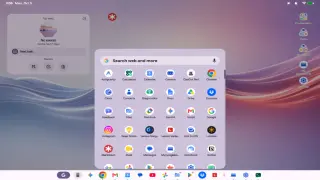
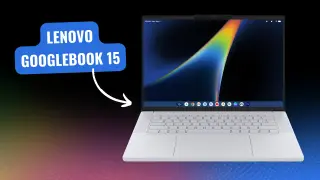
Google I/O 2026 will livestream on May 19 at 10 am PT on Google’s site and YouTube, with WIRED providing a live blog; the keynote is expected to showcase Android 17, Gemini AI updates, AI-powered features, a new Googlebooks laptop line, an updated Android Auto, and a first look at Android XR smart glasses, including a hint of a sale timeline later in 2026.
Google’s Android Auto is getting a major refresh that lets maps and widgets fill any car screen shape with edge-to-edge Google Maps and a borderless UI. The update centers on Immersive Navigation 3D view, offering real-time details and the option to pin widgets on top of Maps. It also enables 60fps HD video playback from the phone on supported head units (parked, with audio continuing while driving) and will add Dolby Atmos support soon. Gemini AI will be more tightly integrated for context-aware tasks (e.g., replying to messages, calendar checks, or ordering via Doordash) and will roll out across multiple brands later this year, with BMW, Ford, Genesis, Hyundai, Kia, Mercedes-Benz, Renault, Skoda, Tata, and Volvo among early adopters.
Intel disclosed that Google’s new Googlebook laptops will run on Core Series 300 'Wildcat Lake' CPUs—a six‑core x86 platform (two Cougar Cove P‑cores and four Darkmont efficiency cores) with an NPU 5 at 40 TOPS INT8, Xe graphics, and a Xe3‑level GPU on the 18A process—while Google pursues Arm variants with Qualcomm and MediaTek; Acer, ASUS, Dell, HP, and Lenovo are among OEMs expected to ship the devices this fall.
Google’s I/O showcase brings a full-bleed Android Auto UI that adapts to curved and irregular car screens, enables YouTube video streaming in parked mode (4K60 with spatial audio) from the phone, adds Material You Expressive styling, and introduces widget support with Gemini. New AI features include Magic Cue and Gemini acting as a go-between for apps (like Starbucks or DoorDash), plus Maps’ Immersive Navigation for richer in-car visuals, signaling closer integration between phone projections and embedded car systems. HVAC and some car controls still aren’t controllable from Android Auto yet.
Google launches Fitbit Air, a $99.99 screenless health and fitness tracker powered by Gemini AI and Google Health Coach, aiming to expand its wearables with AI-driven health insights.