A new immigration-focused report argues that the Department of Labor's rule to raise wages for H-1B workers is likely illegal, citing questions about the agency's authority and rulemaking process, with potential legal challenges and varied impacts on employers and foreign workers depending on implementation.
USCIS issued a policy memo that would require many temporary-visa holders to return to their home countries to apply for green cards through embassies or consulates, instead of adjusting status in the United States. The shift, which Ajay Bhutoria says could affect more than 1.2 million Indian-American families, risks heightened scrutiny of employment-based routes (H-1B, H-4, L-1, etc.) and broad discretionary denial of I-485 applications. After backlash, some elements were rolled back and two exemptions—"economic benefit" and "national interest"—were added, but definitions are unclear and applicants may still need to pursue abroad paths depending on circumstances.
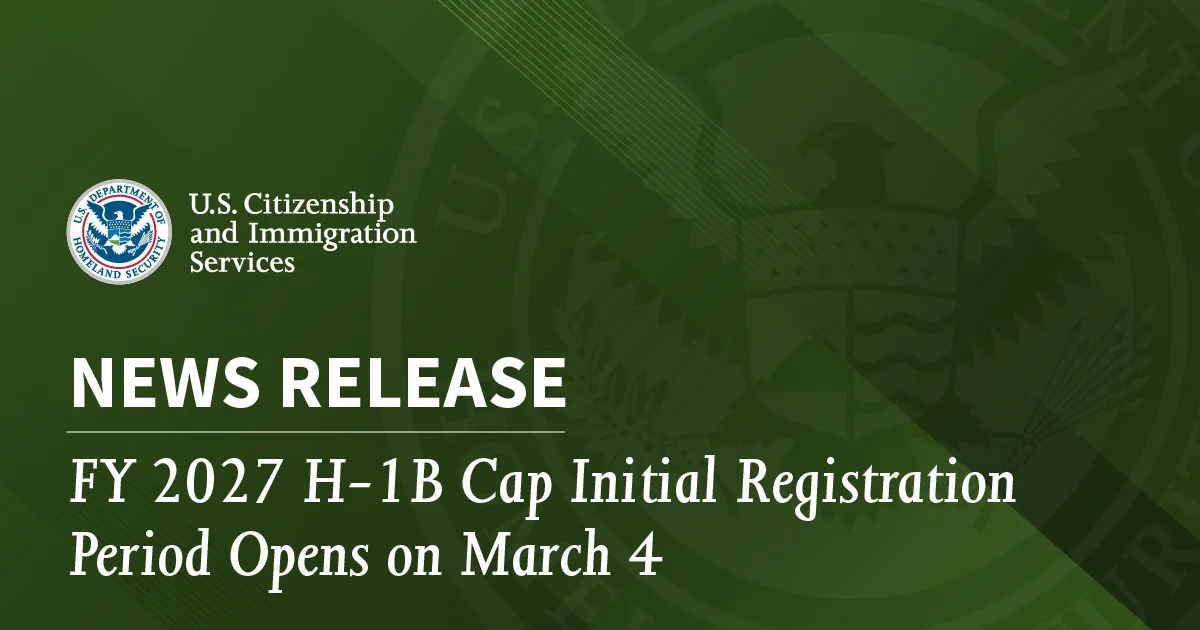
USCIS announced the FY2027 H-1B cap initial registration will run noon ET March 4 to noon ET March 19, 2026. Employers and their representatives must use a USCIS online account to register each beneficiary electronically and pay a $215 fee per registration; organizations without an online account must create one, and both representatives and employers must wait until March 4 to enter beneficiary information and submit registrations. Selections will be communicated by March 31, 2026, and a cap-subject petition may be filed only if a beneficiary’s registration was selected. The FY2027 season introduces a weighted selection under a DHS rule to prioritize higher-skilled/higher-paid workers when registrations exceed the cap; if enough unique registrations are submitted, all properly submitted registrations may be selected. Additionally, a Sept. 19, 2025 Presidential Proclamation may require an extra $100,000 fee before filing an H-1B petition as a condition of eligibility.
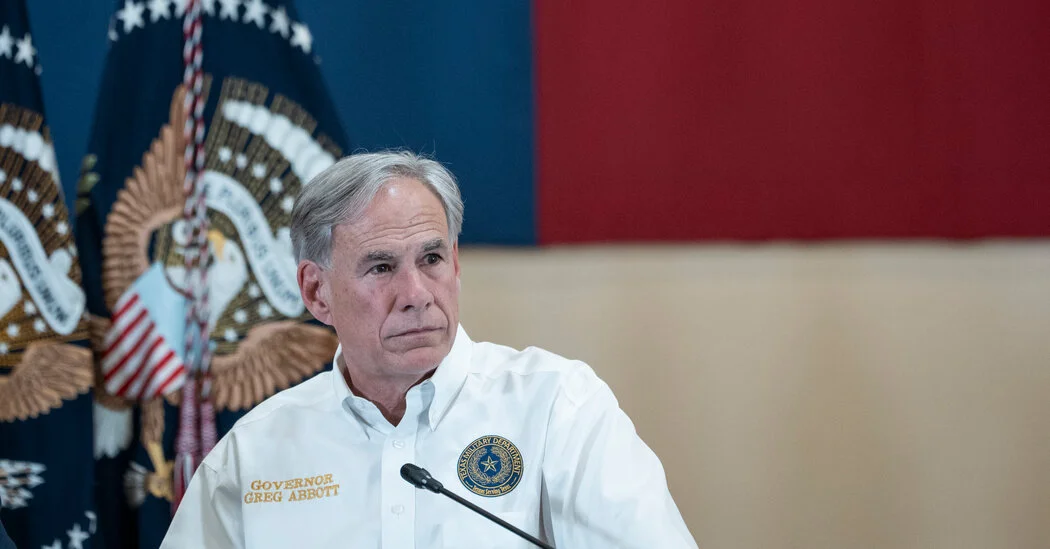
Texas Gov. Greg Abbott ordered state agencies and public universities to halt H-1B visa sponsorship and launched investigations into current visa holders, proposing a hiring freeze until after next year’s legislative session. The move aligns with a broader Trump-era “America First” push and Florida’s similar stance, drawing Republican support but drawing pushback from higher-education groups who say H-1B workers are vital to teaching and research and could hurt Texas universities.
A federal judge in Washington ruled that President Trump's $100,000 fee on new H-1B workers was within his authority under the Immigration and Nationality Act, rejecting the US Chamber of Commerce's challenge that the fee exceeded legal limits and violated procedures.
Google has warned employees on US visas about significant delays in visa re-entry processing at US embassies and consulates, which can extend up to 12 months, due to enhanced social media screening and vetting procedures, urging affected staff to avoid international travel to prevent being stranded outside the US.
Recent guidance from the Trump administration states that new H-1B visa applicants, as well as those requesting amendments, changes of status, or extensions within the US, will not be subject to the $100,000 fee introduced in a White House proclamation, though the fee still applies to petitions filed outside the US or requiring departure before adjudication. The guidance aims to clarify implementation amid legal challenges and concerns from various sectors about the impact of the fee on foreign workers and US industries.
China has introduced a new talent visa to attract foreign professionals, especially those with science and technology degrees, as the US tightens H-1B visa policies with increased fees, prompting xenophobic reactions.
China has introduced the K visa to attract STEM talent, offering a flexible, sponsor-free pathway aimed at competing with the US H-1B visa, especially amid US immigration restrictions and fee hikes, though details and international appeal remain uncertain.
The US Citizenship and Immigration Services (USCIS) has broadened the parameters for backlogged skilled workers with approved I-140 petitions to obtain temporary work authorization (referred to as EAD), under ‘compelling circumstances’. This could help laid-off H-1B employees who are on track for a green card. Indians bear the brunt of the employment-based green card backlog with as many as 7.19 lakh mired in this backlog, as of September 30, 2021.
USCIS has completed the initial electronic registration selection process for the FY 2024 H-1B cap season and has notified all prospective petitioners with selected registrations that they are eligible to file an H-1B cap-subject petition. Petitions may be filed starting April 1, 2023, if based on a valid, selected registration. Pre-paid mailers will not be used for communication or final notices, and receipt notice delays may occur due to increased filing volumes.