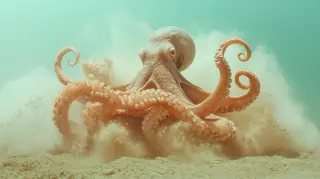
A team analyzing 79 cephalopod species finds bigger brains are more tied to ecological complexity—habitat type, depth, and foraging rewards—than to social interactions, supporting a new asocial path to brain evolution and challenging the traditional social brain hypothesis.
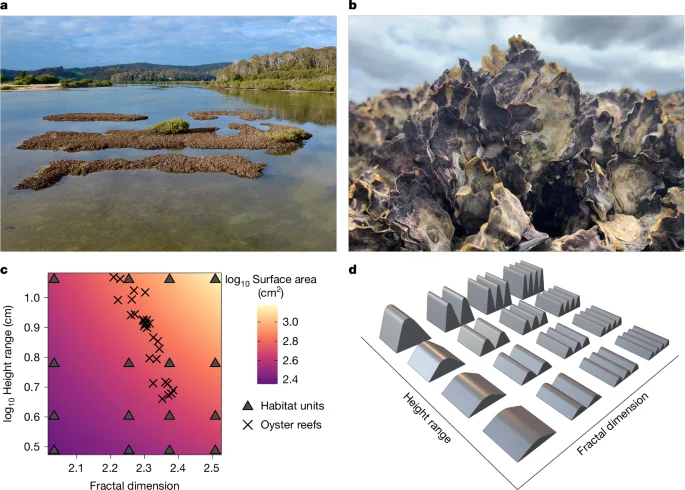
The study shows that oyster recruit survival is maximized not just by surface area but by specific 3D reef architectures. By creating 16 artificial habitats that span fractal dimension and height range and testing them with and without predator access across three estuaries, researchers found a hump-shaped recruitment response driven by predator mediation. Optimal values (fractaI dimension ~2.41, height ~7.96 cm) yielded ~35% higher oyster densities than less favorable configurations, and natural reefs clustered near these optima, offering a blueprint for restoration that integrates geometry with ecosystem engineering to enhance reef persistence.