Titans quarterback Will Levis reportedly paid an enormous sum for cyber-security help to scrub a leaked sex tape after his device was hacked by an Eastern European group; though much content was removed, online footprints persist.
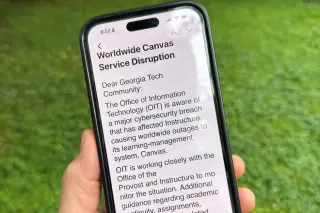
Georgia Tech announced that data stolen in a breach of the Canvas education platform has been deleted under a deal with the attackers, after IT warned students and staff about the cybersecurity incident.
A data breach revealing GTA Online and Red Dead Online revenue numbers led to a Take-Two stock spike at market open, as investors bet on GTA Online’s profitability (about $1 million per day). No GTA 6 data was released, and the stock later settled around the mid-$200s.
Hackers from the ShinyHunters group say they will publish stolen GTA 6 data online because their demands have not been met. Rockstar Games confirms a breach but downplays its significance, saying only a limited amount of non-material information was accessed and it will not affect development or players. This is GTA 6’s second breach during development, following 2022 leaks of over 90 in-game videos. GTA 6 is slated for PS5 and Xbox Series X|S on November 19, 2026, with no PC date announced.
Iranian-affiliated APTs disrupted PLCs across several US critical infrastructure sectors, exploiting internet-facing devices and legitimate vendor tools to access HMI/SCADA data, prompting a joint federal warning about escalating cyber risks amid ongoing tensions with Iran.
Iranian Handala Hack Team breached FBI Director Kash Patel's personal Gmail, leaking photos and more than 300 emails from 2010–2019; the FBI says the data is historical and not government information, while experts view the operation as part of Iran's broader cyber strategy to embarrass US officials.
Pro‑Iranian group Handala published more than 300 emails and photos from Kash Patel’s personal Gmail, mostly dating from 2010–2012 with some items from 2022, claiming retaliation after FBI/DOJ actions against Iranian hacking operations. NBC News could not verify all emails; the material includes Patel’s family correspondence and a Cuba trip, with metadata indicating the breach predates his government work. The FBI says the information is historical and contains no government information. The incident occurs amid broader Iranian cyber activity targeting U.S. figures, with the State Department offering up to $10 million for information on Iranian hackers.
Iran-linked hackers accessed FBI Director Kash Patel’s personal emails, publishing photos and documents dating from 2011–2022. Experts say it was Patel’s private accounts hit, not a direct FBI systems breach, a view supported by Reuters’ reporting. U.S. intelligence has warned of Tehran retaliation for Iran‑related strikes, and the Justice Department says the group operates for Iran’s Ministry of Intelligence and Security. Patel had been targeted in a 2024 incident, and the same group has been tied to a separate cyberattack on a major US medical device maker earlier this month, underscoring ongoing personal‑account risk for senior officials.
Pro-Iranian hackers are widening their targets from the Middle East into the United States amid the war, threatening critical infrastructure, defense contractors and healthcare networks; they claimed a major attack on Stryker and are targeting data centers, water plants, power stations and other facilities, with an emphasis on data destruction over financial gain. Experts warn that weaker links—like underfunded local utilities—could be hit first, and potential support from Russia or China could amplify campaigns. Security guidance urges up-to-date patches, credential hygiene and heightened vigilance as cyberattacks risk rising with the conflict.
DOJ-released emails show Jeffrey Epstein courted cybersecurity researchers and sought to attend DEFCON and Black Hat in Las Vegas, discussing topics from removing his online traces to network security; connections cited include Vincenzo Iozzo and Joi Ito, though it remains unclear whether he actually attended either conference, and Iozzo denies working for Epstein; Epstein’s past conviction and subsequent death remain central to the reporting of these ties.
Hackers exploit the holiday season when security teams are reduced and companies are less vigilant, leading to a spike in cyberattacks like ransomware and phishing, with many high-profile incidents occurring during this period. Security teams prepare months in advance, and AI tools are suggested to help mitigate burnout and improve defenses during this vulnerable time.
Hackers claiming to be 'Scattered Lapsus$ Hunters' have leaked extensive data from 39 major companies, including Qantas and Vietnam Airlines, exploiting a Salesforce vulnerability. The leaks contain millions of personal and business records, posing significant risks of identity theft and reputational damage. The hackers have stated they will not release further data, but the already leaked information could have serious industry-wide consequences.
Hackers released additional leaked content for Pokémon Legends: Z-A, including gameplay videos and early builds, a year after the initial Teraleak, revealing features not in the final game and hinting at future Pokémon titles, despite ongoing efforts by Nintendo to identify the hackers.
The article discusses the increasing threat of cyberattacks on US water systems, highlighting recent incidents involving Iranian, Russian, and Chinese hackers, and describes efforts like Project Franklin to improve cybersecurity defenses for critical infrastructure, with a focus on small towns like Cavendish, Vermont.
Pro-Ukrainian hacker group Silent Crow, with help from Belarusian group Cyberpartisans, claimed responsibility for a cyberattack that disrupted Aeroflot's IT systems, leading to over 40 flight cancellations and threats to release personal data. The Russian authorities confirmed a system failure due to hacking, and the incident highlights ongoing cyber conflicts related to the Ukraine war.