Stephen Colbert and Yo-Yo Ma were forced to leave a Harvard event early after a fire alarm triggered an evacuation, amid protests by striking graduate students who accused the celebrities of crossing their picket line.
Harvard’s endowment reached nearly $68 billion after a 27.1% return in fiscal 2026, driven largely by a $2.2 billion SpaceX stake. Despite this, the university faces a $78.7 million deficit in unrestricted funds and a new 8% federal tax on investment income, costing an estimated $300 million annually.
The Trump administration released its sixth batch of Unidentified Anomalous Phenomena (UAP) files in September 2026, spanning records from 1952 to 2025. Despite this, Harvard astrophysicist Avi Loeb, who chairs the newly formed UAP Science Council, reports that intelligence agencies have not yet provided the classified data necessary to verify potential extraterrestrial technology. While the files include intriguing footage of high-speed objects, Loeb notes they do not constitute definitive proof of alien life.
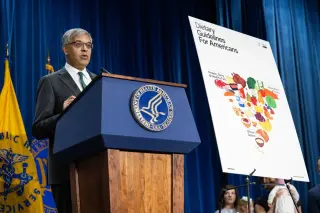
The White House has dropped a planned executive order that would have transferred control of National Institutes of Health (NIH) research grants to a board of political appointees. The move follows intense pressure from Senator Susan Collins and bipartisan opposition in Congress. While the administration has paused the specific order, officials may revisit the issue after the midterm elections.
NIH Director Jay Bhattacharya refused President Trump’s demand to cut Harvard’s federal research grants during a Friday Oval Office meeting. In response, Trump directed OMB Director Russ Vought to draft an executive order creating a political board to veto NIH grants, marking a major escalation in the administration’s effort to control biomedical research funding.
Forbes has released its 2027 rankings for the top 500 US colleges, with MIT retaining the number one spot for the second consecutive year. The list emphasizes financial return on investment, highlighting three Massachusetts institutions—MIT, Harvard, and Williams College—as offering the highest payoff. While MIT and Harvard dominate the top tier, Williams College ranks notably high despite a higher average cost, reflecting strong post-graduation earnings and low debt metrics.
Harvard Management Company disclosed a $2.2 billion stake in SpaceX, making it the largest holding in its publicly reported portfolio. The position exceeds all other disclosed securities combined, reflecting a major shift toward AI and aerospace infrastructure despite recent stock declines.
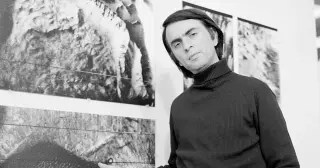
Harvard denied Carl Sagan tenure in the late 1960s, reportedly over concerns about his public writing; Cornell hired him with tenure in 1968 and later named him the David Duncan Professor of Astronomy and Space Sciences, turning him into one of the era's most productive science educators. Sagan published more than 600 papers, challenging the notion that public outreach harms rigorous research, while Harvard's decision is often cited as a missed bet that Cornell capitalized on before he spent decades advancing planetary science and education.
Harvard renames its Science Center to Zimmer Hall in honor of Alan Zimmer after a $100 million gift from the Zimmer Family Foundation, with funds supporting further campus renovations as well as expanded kosher dining and Jewish-life initiatives on campus.
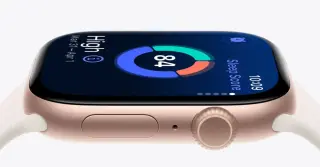
Harvard T.H. Chan School of Public Health analyzed over 94,000 nights of Apple Watch sleep data from 338 Women’s Health Study participants (ages 25–59). The study found increased wake time during sleep around perimenopause/menopause: about 60% showed higher wake-after-sleep-onset (WASO) in the 18 months before menopause with an average 7% rise; in the year before/after the last period, sleep time awake rose about 0.8% after menopause compared with before. Results varied widely between individuals, and common menopause symptoms (hot flashes, irritability, mental fatigue, sexual symptoms) were often linked with poorer sleep. Researchers also offered tips to improve sleep during perimenopause, such as cooling the sleep environment, keeping a regular schedule, regular movement, limiting fluids near bedtime, and practicing relaxation.
Harvard faculty approved a plan to cap A grades at no more than 20% of enrolled students plus four per class, in effect Fall 2027, with supporters saying it will restore meaning to grades and distinguish high performers while critics warn it curtails faculty autonomy and imposes a quota. The vote also endorsed using average percentile ranks for internal prizes and rejected allowing courses to skip letter grades entirely. The move reflects a broader campus debate on grade inflation seen at peers like Yale, Princeton and others, and administrators will review the policy after three years.
Harvard College faculty approved a roughly 20% cap on A grades, limiting A grades to 24 per class of 100, with the rule taking effect in fall 2027. The move is part of reforms to restore the integrity of grading after a 2025 report found the system inflated As and damaged academic culture. A second proposal to use average percentile rankings for internal awards passed, while a third opt-out option was rejected. The measures faced broad student disapproval (about 85% in a survey), but supporters say the cap will restore the transcript’s signaling value and the college’s academic standards.
Harvard's Faculty of Arts and Sciences voted to cap A grades in undergraduate courses, allowing no more than 20% of students in a class (plus four additional students) to receive an A, starting in Fall 2027. A− grades would not be subject to the cap. The reform, intended to curb grade inflation after data showing over 60% of undergrad grades were in the A range, also shifts honors comparisons to average percentile rank instead of GPA. An opt-out for a satisfactory/unsatisfactory option was rejected, and the policy will be reviewed after three years.
Harvard’s longtime head coach Ted Donato, a Harvard alumnus from the class of 1991, is stepping away from the men’s hockey program after a lengthy tenure guiding the Crimson.
The Justice Department filed a lawsuit against Harvard University, alleging its leadership failed to address antisemitism on campus and seeking to freeze federal grants and recover funds already paid.