Tag

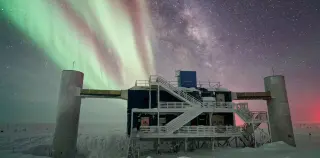
Icecube Observatory

All articles tagged with #icecube observatory

Francis Halzen Wins 2026 Physics Nobel for IceCube Neutrino Breakthroughs
science1 day ago

Francis Halzen Wins 2026 Physics Nobel for IceCube Neutrino Breakthroughs

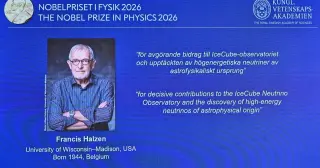
Francis Halzen, an 82-year-old Belgian-born physicist affiliated with the University of Wisconsin–Madison, has been awarded the 2026 Nobel Prize in Physics. The honor recognizes his foundational role in developing the IceCube Neutrino Observatory in Antarctica, which uses a cubic kilometer of ice to detect high-energy neutrinos from cosmic events. Halzen, who first proposed the concept in 1988, expressed surprise at the award and noted it may help secure funding for future proposals. The prize carries a monetary value of 12 million Swedish kronor.

Francis Halzen Wins 2026 Nobel Prize for IceCube Neutrino Telescope
science5 days ago

Francis Halzen Wins 2026 Nobel Prize for IceCube Neutrino Telescope

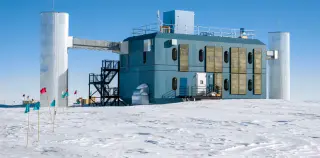
Belgian astrophysicist Francis Halzen has been awarded the 2026 Nobel Prize in Physics for his development of the IceCube Neutrino Observatory. The detector, embedded in a cubic kilometer of Antarctic ice, was the first to detect high-energy neutrinos from deep space, establishing a new field of neutrino astronomy. Halzen, a professor at the University of Wisconsin–Madison, is the first sole awardee in the physics category since 1992.

Francis Halzen Wins 2026 Physics Nobel for IceCube Neutrino Observatory
science6 days ago

Francis Halzen Wins 2026 Physics Nobel for IceCube Neutrino Observatory

Francis Halzen has been awarded the 2026 Nobel Prize in Physics for his foundational role in creating the IceCube Neutrino Observatory. The award recognizes his vision for using a cubic kilometer of Antarctic ice to detect high-energy neutrinos, a breakthrough that established the field of neutrino astronomy and allows scientists to trace cosmic events to their origins.

Francis Halzen wins 2026 Nobel Prize for IceCube neutrino telescope
science6 days ago

Francis Halzen wins 2026 Nobel Prize for IceCube neutrino telescope

Francis Halzen, a professor at the University of Wisconsin–Madison, has been awarded the 2026 Nobel Prize in Physics for his development of the IceCube Neutrino Observatory. The detector, embedded in a cubic kilometer of Antarctic ice, uses 5,160 light sensors to detect high-energy neutrinos from cosmic sources. Halzen’s work established a new field of neutrino astronomy, allowing scientists to trace cosmic rays to their origins, such as supermassive black holes and active galaxies. The prize recognizes his vision for using clear glacial ice as a massive telescope to capture these 'ghost particles' that rarely interact with matter.

Francis Halzen Wins 2026 Physics Nobel for IceCube Neutrino Observatory
science7 days ago

Francis Halzen Wins 2026 Physics Nobel for IceCube Neutrino Observatory

Francis Halzen, an 82-year-old Belgian astrophysicist at the University of Wisconsin-Madison, has been awarded the 2026 Nobel Prize in Physics. The Royal Swedish Academy of Sciences recognized him for his pioneering work in the 1980s to detect high-energy neutrinos using the IceCube Neutrino Observatory in Antarctica. Halzen’s vision led to the construction of a massive sensor network in glacial ice, which successfully detected cosmic neutrinos in 2013, opening a new field of astronomy.

"Scientists Detect Seven Ghost Particles Piercing Through Earth"
science2 years ago

"Scientists Detect Seven Ghost Particles Piercing Through Earth"

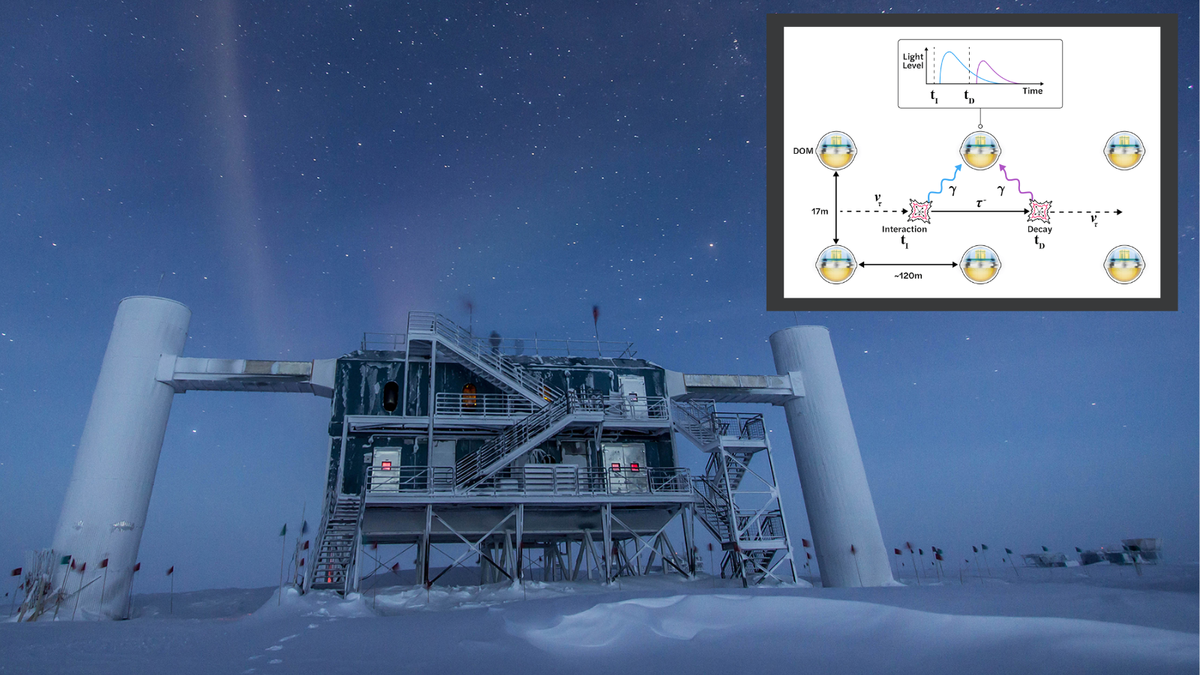
Scientists at the IceCube Observatory have detected seven astrophysical tau neutrinos, also known as "ghost particles," piercing through Earth after 9.7 years of observation. These high-energy neutrinos, which travel at speeds close to that of light, serve as messengers from cosmic sources near the Milky Way. The discovery expands the sample of tau neutrinos and provides a strong confirmation of IceCube's earlier detection of the diffuse astrophysical neutrino flux, offering new insights into particle physics and neutrino oscillations.

"Discovery of 7 Exotic 'Ghost Particles' Piercing Through Earth"
science2 years ago

"Discovery of 7 Exotic 'Ghost Particles' Piercing Through Earth"

Scientists using the IceCube observatory at the South Pole have detected seven elusive and exotic "ghost particle" candidates, likely astrophysical tau neutrinos, as they passed through Earth. Neutrinos are nearly mass-less particles that rarely interact with matter, making them difficult to detect. The discovery of these tau neutrinos could serve as a new type of cosmic messenger and may lead to uncovering new physics. The research has been accepted for publication in the journal Physical Review Letters.

Mapping the Cosmos: Astronomers Harness Neutrinos for Sight
astronomy3 years ago

Mapping the Cosmos: Astronomers Harness Neutrinos for Sight

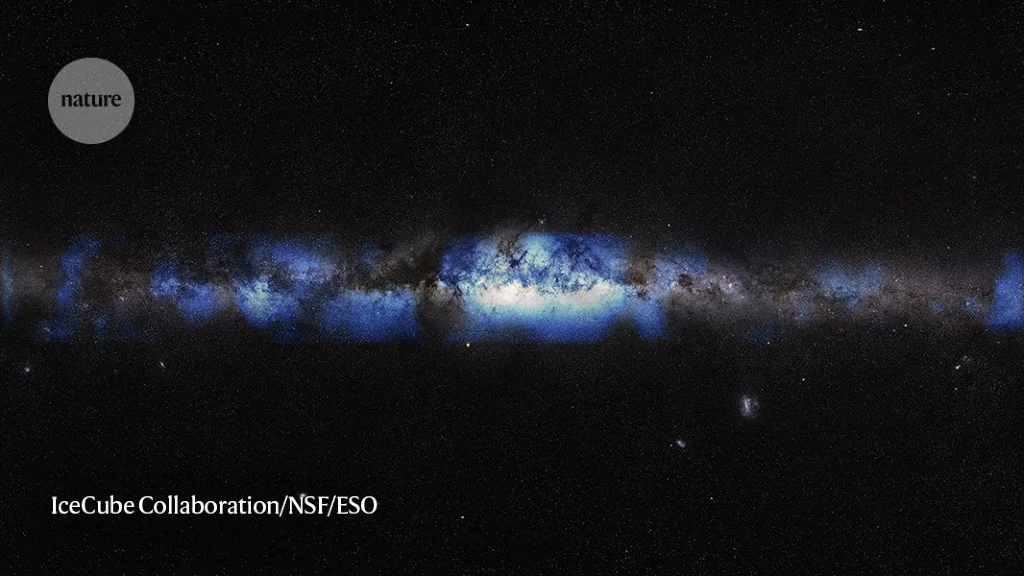
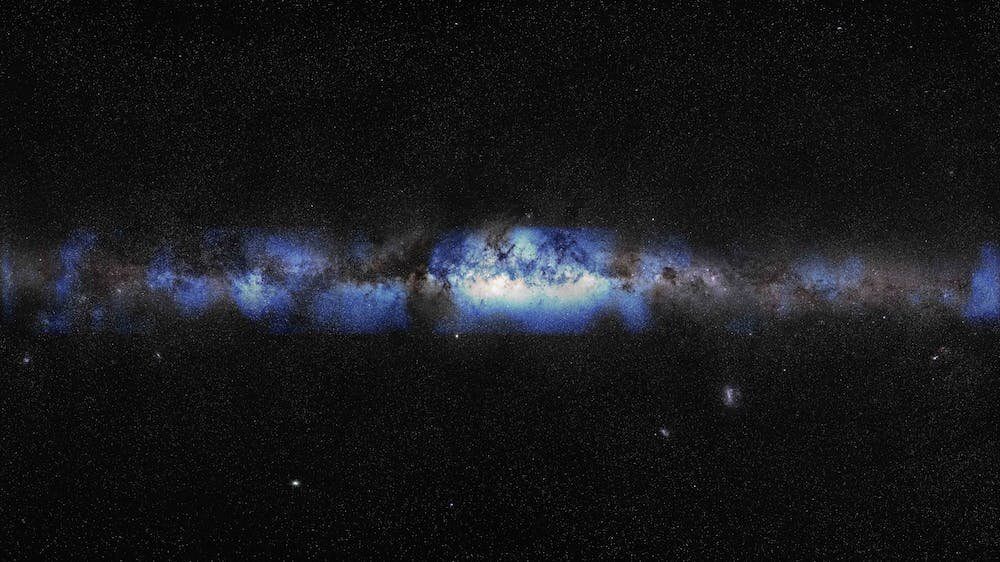
Astronomers have created the first map of the Milky Way using neutrinos, marking a milestone in the field of neutrino astronomy. The IceCube observatory at the South Pole detected neutrinos over a ten-year period and determined their origin to be the center of the Milky Way. Neutrinos, which are the lightest elementary particles in the universe, can provide insights into inaccessible areas such as the dense matter swirling around supermassive black holes. The study also revealed that most high-energy neutrinos come from interstellar space rather than the Milky Way itself. Further data and upgrades to the observatory may help uncover the sources of cosmic rays and reveal new physics.

"Unveiling the Enigmatic Milky Way: Neutrino Particles Reveal a Spectacular View"
science3 years ago

"Unveiling the Enigmatic Milky Way: Neutrino Particles Reveal a Spectacular View"

The first-ever view of the Milky Way galaxy through the lens of neutrino particles has been achieved using data collected by the IceCube Neutrino Observatory in Antarctica. Neutrinos, which have very low mass and weak interactions with matter, provide a new window for studying cosmic rays and highly energetic processes in our galaxy. The IceCube observatory, buried deep in the Antarctic ice, detected neutrinos through Cherenkov radiation emitted by charged particles created by cosmic ray collisions in the galaxy. The breakthrough detection opens the door to a more detailed understanding of our galactic home.