
Amygdala Synchronization Drives Mutual Cooperation in Social Dilemmas
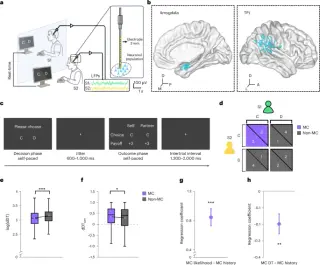
A new study in Nature Neuroscience reveals that mutual cooperation in social dilemmas relies on a specific neural cascade within the amygdala. By recording brain activity in pairs of epilepsy patients playing an iterated prisoner's dilemma, researchers found that cooperation is not an isolated decision but a dynamic process of interbrain alignment. The amygdala first simulates the partner's likely cooperation, then aligns neural patterns to coordinate the final decision, effectively linking individual choices through shared neural dynamics.