
Dietary choline fuels commensal acetylcholine to educate mucosal immunity
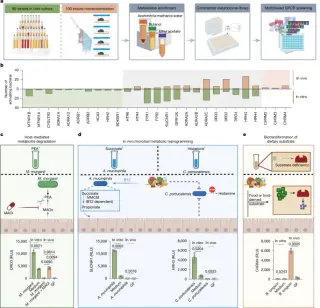
A multi-strain in vivo/vs in vitro comparison using PRESTO-Salsa reveals that gut commensals, notably infant-dominant Bifidobacterium breve and a Pediococcus strain, can convert dietary choline into acetylcholine (ACh) via bacterial ChAT-like enzymes BbChAT and PpChAT. This ACh production in the gut enhances intestinal IgA responses, reshapes microbial communities, and increases resistance to Salmonella infection; the effect is mediated mainly through nicotinic ACh receptors and requires choline as a substrate. The study identifies two previously uncharacterized hexapeptide-repeat acetyltransferases as ACh-synthesizing enzymes, demonstrates BbChAT’s role via a BbChAT knockout, and shows that ACh-producing B. breve offers a fitness and immune-education advantage in complex microbial communities, highlighting a diet–microbiome–host axis that strengthens mucosal defenses.