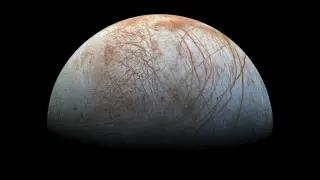
New simulations suggest that while giant impacts can shatter icy moons, large bodies can reform and retain subsurface oceans, whereas smaller moons likely lose or fail to form them due to rapid cooling.
New simulations of head-on collisions between icy moons show that while shattering a moon injects heat, the increased surface area of debris causes rapid heat loss during reaccretion and the reorganized interior often loses its insulating layer; as a result, smaller moons are unlikely to develop long-lived oceans, while larger moons may preserve or even thicken existing ones, but giant impacts rarely create new oceans that wouldn’t have formed otherwise; heat delivery does not equal heat retention over billions of years.