Anthropic is preparing to tell investors its total addressable market exceeds $30 trillion, a figure nearly equal to the entire US GDP. While the company projects $190-$200 billion in revenue by 2028, critics argue the valuation is unrealistic and risks a market crash.
SpaceX shares rose this week despite a challenging environment that included an earnings report and the expiration of a major lockup period. The stock had previously fallen to fresh lows, trading around $108 to $113, which was roughly 30% below its IPO price and 50% off its intraday high. Investors were concerned about the economics of the Starship program, the company's pivot away from Falcon 9, and the potential release of up to 20% of shares. Despite these headwinds, retail investors continued to buy, with net purchases of $22.7 million in the first hour of trading and $405 million over the first five sessions after earnings. The company's revenue and earnings beat expectations, though heavy spending on AI and data centers raised concerns about future costs. The stock's resilience suggests that investors are prioritizing long-term growth potential over immediate volatility and supply risks.
SpaceX’s market debut has investors reeling, with shares down about 30% from IPO as fears of overvaluation mount and losses pile up on platforms like Reddit; a delay to Starship’s thirteenth test flight sparked speculation, and while a successful launch could help win back confidence, a high-profile failure would likely deepen the stock’s woes.
LIV Golf is scrambling for roughly $350 million after Saudi funding wanes, seeking new investors who would receive equity as part of a revamped “LIV 2.0” plan. The core schedule could shrink to 10 events with about $10 million purses, and the bottom portion of fields might see reduced payouts. Complicating the outlook, the Asian Tour split threatens LIV’s promotion path and could leave it frozen out, pushing players to consider DP World Tour Q‑School or other routes as the calendar’s fate remains uncertain beyond Bedminster and a few remaining stops.
LIV Golf’s $40 million season finale at The Cardinal in Michigan is highly unlikely to go ahead, with captain Martin Kaymer saying a decision is expected next Tuesday as investors’ funding remains unresolved ahead of a September deadline after the Saudi PIF pulled back; Indianapolis’s event appears more likely to proceed, while Michigan could be canceled or replaced. The league has also lost its Asian Tour partnership and is pursuing a leaner, investor-driven plan for 2027.
Returning from a seven-week hiatus, LIV Golf’s comeback in England was overshadowed by setbacks: the PGA Tour–DP World Tour–Asian Tour partnership signals an end to the PIF-backed Asian Tour link, reducing LIV’s global leverage; Jon Rahm gave cautious non-committal answers about playing LIV in 2027; Majestics leaders Westwood and Poulter faced tough questions about LIV 2.0 and potential investors, underscoring financial uncertainty and a fragile future for the league.
Anthropic PBC is planning an IPO and arranging investor meetings in the coming weeks ahead of a potential October listing, aiming to beat rivals like OpenAI to the public markets. The offering is being developed with Morgan Stanley, Goldman Sachs, and JPMorgan Chase, and Anthropic was valued at about $965 billion after a May funding round, making it one of the world’s largest private companies. If timing holds, the fall debut would precede China’s DeepSeek in IPO plans, though details may still change. The company has faced regulatory questions over its relationship with the Trump administration and has previously sued the Defense Department.
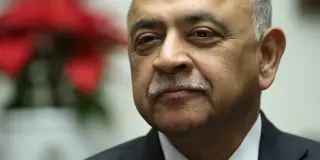
IBM CEO Arvind Krishna publicly owned the quarterly shortfall, attributing it to underestimated client spending shifts and pledging faster, clearer action; analysts say his candor could bolster credibility with investors, employees, and customers as IBM presses its hybrid cloud and AI strategy.
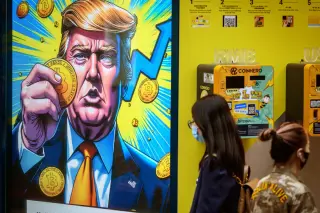
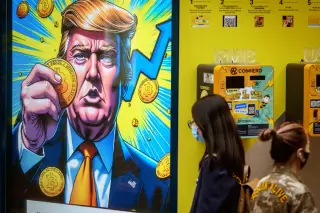
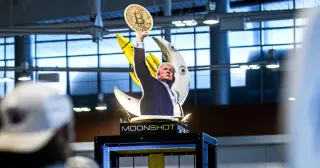
Josh Marcus reports that Trump and his family have built a crypto fortune via World Liberty Financial and related meme coins, including a $636 million windfall, while thousands of ordinary investors have lost billions as token prices collapsed; a foreign Abu Dhabi royal bought a large stake in World Liberty before Trump’s inauguration, and Trump has said he knew little about the crypto fortune, highlighting the clash between political power and crypto gains amid a broader crypto downturn.
The Independent reports that Donald Trump and his family profited massively from crypto ventures—most notably World Liberty Financial and related meme tokens—while hundreds of thousands of ordinary investors lost billions; two-thirds of Trump meme-coin buyers were in the red, with some tokens plummeting up to 97% from their peak. The UAE royal investor and other elites backed World Liberty, raising questions about conflicts of interest as Trump’s fortunes in crypto soared during a broader downturn in the sector, which he has said he knew little about.
Forbes reports that Donald Trump’s post‑White House ventures—Truth Social, World Liberty Financial, and related memecoins—left investors about $7 billion poorer, while Trump reportedly netted roughly $3 billion; the piece highlights individual losses, including a truck driver who poured life savings into Trump-linked assets, and dramatic declines in the associated tokens.
Data from blockchain analytics firm Nansen shows about 66% of the 1.48 million wallets that bought the $TRUMP memecoin—roughly 988,905—had lost money by the end of June, totaling about $3.81 billion in losses, even as President Trump disclosed $636 million in earnings from the token. The losses largely fell on retail investors, with fewer than 500,000 people profiting, mostly early buyers, while insiders (including Trump-affiliated entities) hold a large stake and collect fees as trading continues.
Nearly 1 million investors in Trump's WLFI-backed memecoin lost about $3.8 billion as the token TRUMP plunged from a peak of $75.35 to around $1.76, while Donald Trump reportedly profited about $636 million from the venture; critics called the operation a Ponzi-like scheme, and there was no immediate comment from Trump’s team or the White House.
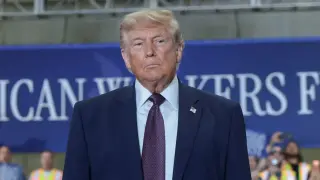
Trump disclosed earning more than $1 billion from cryptocurrencies tied to his family businesses, while about 1 million wallets holding his memecoin have incurred roughly $4.5 billion in net losses since trading began in January 2025, highlighting a stark contrast between his gains and investors' losses.
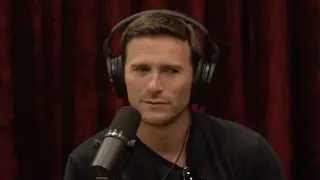
Scott Eastwood discussed on The Joe Rogan Experience a recent on-set dispute in which a director backed out after pre-production and reportedly did not reimburse investors. He urged accountability and condemned the behavior as “unacceptable,” noting he wouldn’t name the individuals involved.