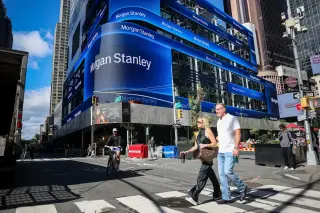
Morgan Stanley reported a third-quarter profit surge, driven by record inflows into its wealth management arm from initial public offerings and a strong performance in equity trading that exceeded analyst expectations.
The global initial public offering (IPO) market has stalled in late 2026 as investors reject high valuations and worry about AI sector sustainability. Major listings by EG Group, Oura, and SB Energy have been paused, while Anthropic and OpenAI delay their debuts. Although the S&P 500 remains near record highs, the IPO window has narrowed significantly, with many deals slipping into 2027 due to poor post-listing performance and regulatory hurdles.
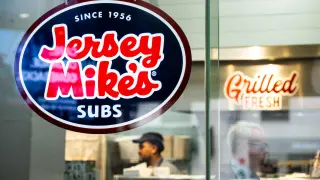
The US IPO market has cooled significantly since the 2021 boom, with consumer companies increasingly staying private longer. Recent listings like Jersey Mike’s and Reformation saw weak performance, reflecting broader hesitation. Experts cite deep private secondary markets, robust venture capital, and regulatory burdens as key reasons firms avoid public markets. While some may eventually list, many prefer the flexibility and privacy of remaining private.
SpaceX priced its IPO at $135, peaked near $202, and has since fallen about 36% to roughly $129. Using historical data from the last decade’s large IPOs, the median first-year drop suggests potential further downside, with a path to about $112 by June 2027 (roughly 13% below today) and a risk of around $101 in a deeper early dip (about 20% below today). Consequently, a $10,000 investment today could be worth about $8,820 by mid-2027 under the median scenario. The piece notes SpaceX’s rich valuation (roughly 88x sales) and compelling growth prospects (Starlink, AI satellite ambitions), but argues investors should wait for a more attractive entry point rather than buying now, given the timeline to orbital data centers and the high multiple.
China’s ChangXin Memory Technologies aims to raise about 57.9 billion yuan (~$8.6B) in a Shanghai STAR Market IPO, with Yangtze Memory Technologies in a formal pre-IPO process; AI-driven memory demand and a current price spike bolster the offering, but risks include a potential glut and export controls. Apple has urged the U.S. to keep CXMT off the Entity List. Foreign access to STAR listings is limited, making direct CXMT investments hard for many, leaving Micron as the straightforward U.S.-listed play, while CXMT could reshape industry dynamics if China scales up memory capacity.
Newly minted SpaceX IPO millionaires helped Morgan Stanley’s wealth management attract about $148bn in net new assets in Q2, roughly half from IPOs including SpaceX and Cerebras Systems, pushing total client assets to about $10tn and lifting quarterly profits 58% to $5.6bn. Equities trading rose about 70% to $6.3bn, investment banking revenue jumped ~60% to $2.4bn (with SpaceX fees around $100m), and wealth management fees benefited from IPO inflows. The results reflect an AI-driven trading boom across Wall Street; Morgan Stanley shares were slightly lower in late trading.
U.S. megabanks JPMorgan Chase, Bank of America, Citigroup, Wells Fargo and Goldman Sachs posted about $49 billion in Q2 profits, up 39% year over year, powered by AI-driven trading, underwriting fees, and deal activity. The AI wave lifted equity trading revenues to records and spurred IPOs and capital raises (notably SpaceX’s IPO and Alphabet’s follow-on), with executives signaling a continuing pipeline of AI-backed deals and a multi-year investment cycle.
SK Hynix’s US Nasdaq listing aims to raise about $28bn, with underwriters set to collect roughly $140m in fees, potentially making it one of Wall Street’s largest public-offering windfalls as demand for memory chips from AI data-centres drives the market.
San Francisco’s housing market is in a hyper-bidding phase, with 144 homes selling for at least $1 million over asking in the first half of 2026 and May averages about 25% over asking, as buyers rush to secure properties ahead of AI/tech IPOs and lockups. Limited inventory, rising rents, and strong demand in luxury and downtown condos show the market heat shifting from Silicon Valley to San Francisco.
Milan-based Bending Spoons, owner of Vimeo and Eventbrite, priced its Nasdaq IPO at $29 and raised $1.68 billion in an $18.4 billion offering, sending the stock up about 40% and turning the co-founders into billionaires. The company has pursued aggressive acquisitions (including Vimeo in 2025 and Eventbrite this year), with more targets named and a revenue of $1.31 billion in 2025 against 2023’s $387 million. While marketed as a software-sector bellwether, its aggressive transformations have drawn scrutiny over potential large job cuts as it seeks to sustainably grow earnings.
Direxion CEO Douglas Yones says demand for Elon Musk–linked investments is expanding from Tesla to SpaceX as the space company begins trading publicly, with Direxion launching the 2x levered SpaceX ETF LOFF to give investors a leveraged Musk exposure. The move follows the Tesla-led mania in Musk-era investments and signals growing interest from both retail and institutional buyers, suggesting SpaceX could extend the “all things Elon” trade beyond electric vehicles.
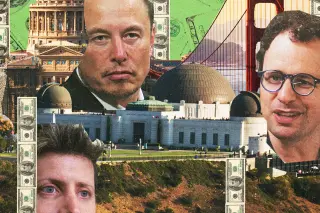
AI- and SpaceX-led IPOs could create about 12,000 new multi-millionaires in Silicon Valley, even as rising housing costs and job-security worries spark anxiety about the tech boom’s next phase.
Morningstar’s full note, cited by Alphaville, argues SpaceX’s $135 per-share IPO is likely overvalued: fair value around $63 a share (about a 53% discount), an addressable market of roughly $129bn instead of $1.6tn claimed, and a moonshot scenario of up to $1.97tn with only a 7% probability; Starlink’s market is also smaller than SpaceX’s claim. The piece also notes the challenge of independent research when 23 banks are involved in an IPO.
Nasdaq slips about 1% in volatile trading as AI-linked stocks and chipmakers pull back ahead of SpaceX’s IPO, with intraday losses up to 3.7%. Dell fell 4.8% and the Philadelphia Semiconductor index dropped around 1.9% even as the S&P 500 dipped modestly, highlighting a rotation into defensives as volatility rises and investors digest big AI spending and looming mega-IPOs from Alphabet, Meta, OpenAI and Anthropic, plus SpaceX’s potential listing.
Rob Arnott argues SpaceX’s mega-IPO would not break capital markets but would stress them, potentially widening the valuation gap between index constituents and non-members. While index funds would absorb the stock under float-based rules, such mega-IPOs could still trigger sizable inflows and entrench the advantages of benchmark membership—leaving long-run returns more favorable for non-members if their cash-flow growth overtakes that of the giants.